Unknown - i a3f9967826fa0ec9
Здесь есть возможность читать онлайн «Unknown - i a3f9967826fa0ec9» весь текст электронной книги совершенно бесплатно (целиком полную версию без сокращений). В некоторых случаях можно слушать аудио, скачать через торрент в формате fb2 и присутствует краткое содержание. Жанр: Старинная литература, на английском языке. Описание произведения, (предисловие) а так же отзывы посетителей доступны на портале библиотеки ЛибКат.
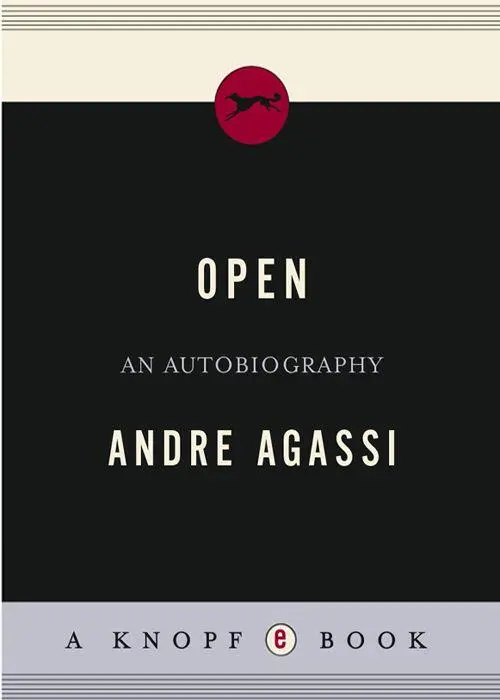
- Название:i a3f9967826fa0ec9
- Автор:
- Жанр:
- Год:неизвестен
- ISBN:нет данных
- Рейтинг книги:5 / 5. Голосов: 1
-
Избранное:Добавить в избранное
- Отзывы:
-
Ваша оценка:
i a3f9967826fa0ec9: краткое содержание, описание и аннотация
Предлагаем к чтению аннотацию, описание, краткое содержание или предисловие (зависит от того, что написал сам автор книги «i a3f9967826fa0ec9»). Если вы не нашли необходимую информацию о книге — напишите в комментариях, мы постараемся отыскать её.
i a3f9967826fa0ec9 — читать онлайн бесплатно полную книгу (весь текст) целиком
Ниже представлен текст книги, разбитый по страницам. Система сохранения места последней прочитанной страницы, позволяет с удобством читать онлайн бесплатно книгу «i a3f9967826fa0ec9», без необходимости каждый раз заново искать на чём Вы остановились. Поставьте закладку, и сможете в любой момент перейти на страницу, на которой закончили чтение.
Интервал:
Закладка:
Of course, he says. When we get back.
I’m so shaken by the confrontation that in the Halle tournament I fall on my face in my first-round match against Steeb. He beats me in three sets. So much for the tune-up.
I’ve barely played in the last year, and when I’ve played, I’ve played badly, so I’m the lowest-seeded defending champ in Wimbledon history. My first match on center court is against Bernd Karbacher, a German whose thick hair always looks the same, from the beginning of the match to the end, which irks me, for obvious reasons. Everything about Karbacher seems designed to distract. Apart from his enviable locks, he’s bowlegged. He walks as if he not only sits on a horse all day, but as if he just dismounted, and it’s been a long ride, and his ass is chapped. Befitting his appearance, he plays a very odd game. His backhand is huge, one of the game’s best, but he uses it to avoid running. He hates running. Hates moving. At times he doesn’t care much for serving, either. He has an aggressive first serve, but not much of a second serve.
With my numbed wrist I have my own serve issues. I’ll have to alter my motion, taking only a small backswing, limiting sudden movements. Naturally this causes problems. I fall behind quickly in the first set, 2–5. I’m about to become the first defending champion in decades to get knocked out in the first round. But I collect myself, force myself to make peace with my new serve, and tough out the win. Karbacher hops on his horse and rides away.
British fans are kind. They cheer, they roar, they appreciate the effort it’s taken to get my wrist ready. British tabloids, however, are another matter. They’re filled with venom. They carry strange stories about, of all things, my chest, which I’ve recently shaved. Just a bit of innocent manscaping, but you’d think I’d cut off a limb. My wrist is broken, and they talk only about my chest. My news conferences turn into Monty Python skits, every other question about my newly smooth pectorals. British reporters are hair obsessed—if they only knew the truth about the hair on my head. Several tabloids also say I’m fat, and writers take malicious joy in calling me Burger King. Gil tries to blame my appearance on the cortisone injection in my wrist, which can cause bloating, but no one is buying it.
Nothing, however, fascinates the Brits quite like Barbra Streisand. She arrives at Centre Court to watch me play and there is practically a flurry of trumpets. Celebrities attend Wimbledon all the time, but Barbra’s appearance causes a stir like none I’ve seen. Reporters harass her, then later pester me about her, and the tabloids take great pains to dissect and belittle our relationship, which is nothing more than a passionate friendship.
They want to know how we met. I refuse to tell them, because Barbra is the shyest, most private person I know.
It began with Steve Wynn, the casino impresario, whom I’d known since I was a kid. He and I were playing golf one day, and I mentioned that I enjoyed Barbra Streisand’s music. He said she was a good friend. Thus began a series of phone calls, during which Barbra and I connected. When I won Wimbledon, she sent a sweet telegram, congratulating me, telling me, sarcastically, it was nice to put a face with the voice.
She invited me weeks later to a small get-together at her ranch in Malibu. David Foster would be there, she said, and a few other friends. Finally we’d meet.
Her ranch was dotted with cottages, one of which was a movie theater. After a luncheon we wandered down there for a sneak preview of The Joy Luck Club, a quintessential chick flick, during which I thought I might expire of boredom. Then we all wandered over to another cottage, a music salon, with a grand piano under a window. We stood around eating and talking while David sat at the piano, playing a medley of torch songs. He made several attempts to get Barbra to sing. She wouldn’t. He persisted. She refused. He kept after her until it became awkward. I wished he would stop. Barbra’s elbows were resting on the piano, and her back was to me. I saw her stiffen. She was clearly petrified about performing in front of other people.
Not five minutes later, however, she let fly a few bars. The sound filled the room from the rafters to the floorboards. Everyone stopped talking. Glasses shook. Flatware rattled. The bones in my ribs and wrist vibrated. I briefly thought someone had put one of Barbra’s albums on a Bose sound system and turned the volume up full blast. I couldn’t believe that a human being was capable of producing that much sound, that a human voice could pervade every square inch of a room.
From that moment I was even more intrigued by Barbra. The idea that she possessed such a devastating instrument, such a powerful talent, and couldn’t use it freely, for pleasure, was fascinating. And familiar. And depressing. We met soon after that day. She invited me to the ranch. We shared a pizza and talked for hours, discovering many things in common. She was a tortured perfectionist who hated doing something at which she excelled. And yet, despite years of semiretirement, despite all her self-doubts and nagging fears, she admitted that she was pondering a comeback to the concert stage. I urged her to do it. I told her it was wrong to deprive the world of that voice, that astonishing voice. Above all, I told her that it would be dangerous to surrender to fear. Fears are like gateway drugs, I said. You give in to a small one, and soon you’re giving in to bigger ones. So what if she didn’t want to perform?
She had to.
Naturally I felt like a hypocrite every time I said this to Barbra. In my own struggles with fear and perfectionism, I was losing more than I won. I talked to her the way I talked to reporters: I told her things I knew to be true, and things I hoped to be true, most of which I couldn’t bring myself to fully believe and act on.
After we’d spent one long spring afternoon playing tennis, I told Barbra about a new singer I’d seen in Vegas, a woman with a big voice not unlike Barbra’s. I asked, Do you want to hear her?
Sure.
I brought her out to my car and put in a CD by this new sensation, a Canadian named Céline Dion. Barbra listened closely, biting her thumbnail. I could tell she was thinking: I can do that. She was picturing herself back in the game. Again, I felt helpful, but also like a raging hypocrite.
My sense of hypocrisy reached a crescendo when Barbra finally did push herself to perform. There I was, front row—wearing a black baseball cap. My hairpiece was malfunctioning again, and I feared what people would think and say. Beyond being a hypocrite that night, I felt a slave to fear.
More often than not, Barbra and I laugh at the shock and scandal our dates cause. We agree that we’re good for each other, and so what if she’s twenty-eight years older? We’re simpatico, and the public outcry only adds spice to our connection. It makes our friendship feel forbidden, taboo—another piece of my overall rebellion. Dating Barbra Streisand is like wearing Hot Lava.
Still, if I’m fatigued, if I’m not in the right mood, as is the case at Wimbledon, then the public belittling can sting. And Barbra plays into the hands of the belittlers by telling a reporter that I’m a Zen master. Newspapers have a field day with this comment. I begin to hear the Zen master quote constantly; it briefly replaces Image Is Everything. I don’t understand the reaction, maybe because I don’t know what a Zen master is. I can only assume it’s a good thing, since Barbra’s a friend.
BRUSHING ASIDE THE SUBJECT OF BARBRA, avoiding newspapers and TV, I stay on task at the 1993 Wimbledon. After surviving Karbacher, I beat João Cunha-Silva, from Por-tugal, Patrick Rafter, from Australia, then Richard Krajicek, from the Netherlands. I’m in the quarters, facing Pete. As always, it’s Pete. I wonder how my wrist can possibly hold up against his serve, which he’s developed into a force. But Pete’s suffering his own aches and pains. His shoulder is sore, his game is a tad off. Or so they say. You’d never know it the way he comes out against me. He wins the first set in less time than I spent getting dressed for the match. He wins the second set just as fast.
Читать дальшеИнтервал:
Закладка:
Похожие книги на «i a3f9967826fa0ec9»
Представляем Вашему вниманию похожие книги на «i a3f9967826fa0ec9» списком для выбора. Мы отобрали схожую по названию и смыслу литературу в надежде предоставить читателям больше вариантов отыскать новые, интересные, ещё непрочитанные произведения.



Обсуждение, отзывы о книге «i a3f9967826fa0ec9» и просто собственные мнения читателей. Оставьте ваши комментарии, напишите, что Вы думаете о произведении, его смысле или главных героях. Укажите что конкретно понравилось, а что нет, и почему Вы так считаете.