Unknown - i a3f9967826fa0ec9
Здесь есть возможность читать онлайн «Unknown - i a3f9967826fa0ec9» весь текст электронной книги совершенно бесплатно (целиком полную версию без сокращений). В некоторых случаях можно слушать аудио, скачать через торрент в формате fb2 и присутствует краткое содержание. Жанр: Старинная литература, на английском языке. Описание произведения, (предисловие) а так же отзывы посетителей доступны на портале библиотеки ЛибКат.
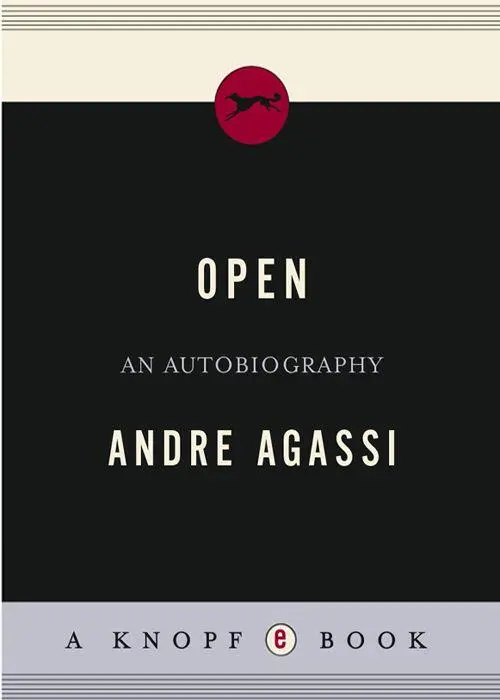
- Название:i a3f9967826fa0ec9
- Автор:
- Жанр:
- Год:неизвестен
- ISBN:нет данных
- Рейтинг книги:5 / 5. Голосов: 1
-
Избранное:Добавить в избранное
- Отзывы:
-
Ваша оценка:
i a3f9967826fa0ec9: краткое содержание, описание и аннотация
Предлагаем к чтению аннотацию, описание, краткое содержание или предисловие (зависит от того, что написал сам автор книги «i a3f9967826fa0ec9»). Если вы не нашли необходимую информацию о книге — напишите в комментариях, мы постараемся отыскать её.
i a3f9967826fa0ec9 — читать онлайн бесплатно полную книгу (весь текст) целиком
Ниже представлен текст книги, разбитый по страницам. Система сохранения места последней прочитанной страницы, позволяет с удобством читать онлайн бесплатно книгу «i a3f9967826fa0ec9», без необходимости каждый раз заново искать на чём Вы остановились. Поставьте закладку, и сможете в любой момент перейти на страницу, на которой закончили чтение.
Интервал:
Закладка:
As the fourth set opens, I lose twelve of the first thirteen points. Am I unraveling or is Courier playing better? I don’t know. I’ll never know. But I do know that this feeling is familiar.
Hauntingly familiar. This sense of inevitability. This weightlessness as momentum slips away.
Courier wins the set, 6–1.
In the fifth set, tied 4–4, he breaks me. Now, all at once, I just want to lose.
I can’t explain it any other way. In the fourth set I lost the will, but now I’ve lost the desire.
As certain as I felt about victory at the start of this match, that’s how certain I am now of defeat. And I want it. I long for it. I say under my breath: Let it be fast. Since losing is death, I’d rather it be fast than slow.
I no longer hear the crowd. I no longer hear my own thoughts, only a white noise between my ears. I can’t hear or feel anything except my desire to lose. I drop the tenth and decisive game of the fifth set, and congratulate Courier. Friends tell me it’s the most desolate look they’ve ever seen on my face.
Afterward, I don’t scold myself. I coolly explain it to myself this way: You don’t have what it takes to get over the line. You just quit on yourself—you need to quit this game.
THE LOSS LEAVES A SCAR. Wendi says she can almost see it, a mark as if I’ve been struck by lightning. That’s about all she says on the long flight back to Vegas.
As we walk through the front door of my parents’ house, my father meets us in the foyer.
He starts right in on me. Why didn’t you make adjustments after the rain delay? Why didn’t you hit to his backhand? I don’t answer. I don’t move. I’ve been expecting his tirade for the last twenty-four hours and I’m already numb to it. But Wendi isn’t. She does something no one’s ever done, something I always hoped my mother would do. She throws herself between us. She says, Can we just not talk about tennis for two hours? Two hours—no tennis?
My father stops, gapes. I fear that he’ll slap her. But then he wheels and storms up the hall to his bedroom.
I gaze at Wendi. I’ve never loved her more.
· · ·
I DON’T TOUCH MY RACKETS. I don’t open my tennis bag. I don’t train with Gil. I lie around watching horror movies with Wendi. Only horror movies can distract me, because they capture something of the feeling in that fifth set against Courier.
Nick nags me to play Wimbledon. I laugh in his tanned face.
Back on the horse, he says. It’s the only way, my boy.
Fuck that horse.
Come on, Wendi says. Honestly, how much worse can it get?
Too depressed to argue, I let Nick and Wendi push me onto a plane to London. We rent a beautiful two-story house, hidden from the main road, close to the All England Lawn Tennis and Croquet Club. It has a charming garden in the back, with pink roses and every variety of songbird, a little haven where I can sit and nearly forget why I’m in England. Wendi makes the house feel like home. She fills it with candles, groceries—and her perfume. She fixes delicious meals at night, and in the morning she packs box lunches for me to bring to the practice courts.
The tournament is delayed five days by rain. On the fifth day, though the house is cozy, we’re going stir crazy. I want to get out on the court. I want to get rid of the bad taste in my mouth from the French Open, or else lose and go home. Finally the rain lets up. I play Grant Connell, a serve-and-volleyer who’s made his living off fast surfaces. It’s an awkward first-round opponent for my first grass match in years. He’s expected to trounce me. Somehow I eke out a five-set win.
I reach the quarters, where I play David Wheaton. I’m up two sets to one, up two breaks in the fourth set, and all of a sudden I pull something in my hip flexor, the muscle that bends the joint. Hobbled, it’s all I can do to finish the match. Wheaton wins easily.
I tell Wendi that I could have won the thing. I started to feel better than I’d felt at the French Open. Damned hip.
The good news, I suppose, is that I wanted to win. Maybe I’ve got my desire turned around and pointed in the right direction.
I’M A FAST HEALER. After a few days my hip is fine. My mind, however, continues to throb. I go to the U.S. Open and lose in the first round. The first round. But the scary part is the way I lose. I play Krickstein, good old Krickstein, and again I just don’t want it. I know I can beat him, and yet it’s not worth the trouble. I don’t expend the necessary energy. I feel a strange clarity about my lack of effort. It’s lack of inspiration, plain and simple. I don’t question it. I don’t bother wishing it away. While Krickstein is running and leaping and lunging, I’m watching him with only mild interest. Only afterward does the shame set in.
I NEED TO DO SOMETHING RADICAL, something to break the seductive grip that losing seems to have on me. I decide to move out on my own. I buy myself a three-bedroom tract home in southwest Vegas and turn it into the ultimate bachelor pad, almost a parody of a bachelor pad. I make one bedroom an arcade, with all the classic games—Asteroids, Space Invaders, Defender. I’m terrible at them, but I intend to get better. I turn the formal living room into a movie theater, with state-of-the-art sound equipment and woofers in the couches. I turn the dining room into a billiard room. Throughout the house I scatter fantastically plush leather chairs, except in the main living room, where I install a massive, modular, green chenille, double-stuffed goosedown couch. In the kitchen I place a soda machine stocked with Mountain Dew, my favorite, and beer taps. Out back I install a hot tub and a black-bottomed la-goon.
Best of all, I make the bedroom a cave, everything jet black, with blackout curtains that don’t admit the tiniest slit of daylight. It’s the house of an arrested adolescent, a boy-man determined to shut out the world. I walk around this new house, this deluxe playpen, daring to think how grown-up I am.
I skip the Australian Open again at the start of 1992. I’ve never played it, and now doesn’t seem like the time to start. Still, I play Davis Cup and do fairly well, maybe because it’s in Hawaii. We face Argentina. I win both my matches. Then, the night before the last day, Wendi and I go out drinking with McEnroe and his wife, Tatum O’Neal. We overdo it, and I go to bed at four in the morning, assuming someone will take my place on Sunday, in a meaningless match, often called a dead rubber.
Apparently that’s not the case. Though I’m hungover and dehydrated, I need to go out and play Jaite, whose serve I once caught with my hand. Happily, Jaite’s hungover too. It’s fitting that this is a dead rubber; we both look dead and rubbery. To conceal my bloodshot eyes I play wearing Oakley sunglasses, and somehow I play well. I play relaxed. I walk off the court a winner, wondering if there’s a lesson in this. Can I tap this sort of relaxation when the stakes are real, when it’s a slam? Should I just go into every match hungover?
The next week I find myself on the cover of Tennis magazine, hitting a winner in my Oakley glasses. Hours after the magazine hits the newsstands, Wendi and I are at the bachelor pad when a delivery truck pulls up to the door. We go outside. Sign here, the deliveryman says.
What is this?
Gift. From Jim Jannard, founder of Oakley.
The back of the truck comes down, and a red Dodge Viper slowly descends.
Nice to know that, even if I’ve lost my game, I can still move product.
MY RANKING PLUMMETS. I fall out of the top ten. The only time I feel fairly competent on the court is when I play Davis Cup. In Fort Meyers I help the U.S. beat Czechoslovakia, winning both matches. Otherwise, the only game at which I show any improvement is Asteroids.
Читать дальшеИнтервал:
Закладка:
Похожие книги на «i a3f9967826fa0ec9»
Представляем Вашему вниманию похожие книги на «i a3f9967826fa0ec9» списком для выбора. Мы отобрали схожую по названию и смыслу литературу в надежде предоставить читателям больше вариантов отыскать новые, интересные, ещё непрочитанные произведения.


Обсуждение, отзывы о книге «i a3f9967826fa0ec9» и просто собственные мнения читателей. Оставьте ваши комментарии, напишите, что Вы думаете о произведении, его смысле или главных героях. Укажите что конкретно понравилось, а что нет, и почему Вы так считаете.