Richard Patterson - Conviction
Здесь есть возможность читать онлайн «Richard Patterson - Conviction» весь текст электронной книги совершенно бесплатно (целиком полную версию без сокращений). В некоторых случаях можно слушать аудио, скачать через торрент в формате fb2 и присутствует краткое содержание. Жанр: Старинная литература, на английском языке. Описание произведения, (предисловие) а так же отзывы посетителей доступны на портале библиотеки ЛибКат.
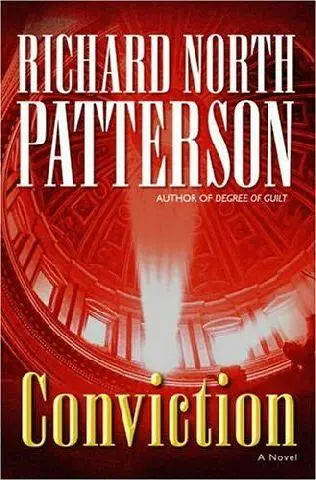
- Название:Conviction
- Автор:
- Жанр:
- Год:неизвестен
- ISBN:нет данных
- Рейтинг книги:3 / 5. Голосов: 1
-
Избранное:Добавить в избранное
- Отзывы:
-
Ваша оценка:
Conviction: краткое содержание, описание и аннотация
Предлагаем к чтению аннотацию, описание, краткое содержание или предисловие (зависит от того, что написал сам автор книги «Conviction»). Если вы не нашли необходимую информацию о книге — напишите в комментариях, мы постараемся отыскать её.
Conviction — читать онлайн бесплатно полную книгу (весь текст) целиком
Ниже представлен текст книги, разбитый по страницам. Система сохранения места последней прочитанной страницы, позволяет с удобством читать онлайн бесплатно книгу «Conviction», без необходимости каждый раз заново искать на чём Вы остановились. Поставьте закладку, и сможете в любой момент перейти на страницу, на которой закончили чтение.
Интервал:
Закладка:
Carlo looked up from his notes. "What about that in particular?"
"The misery part was obvious. Payton and Rennell saw their mother stab their father to death, and I guess it took him a while to die. Before that, the police records make pretty clear, Dad beat Mom—at least from time to time. Some of the neighbors thought he hit the brothers as well. They tended to stay away from him—they thought he was unpredictable, or maybe a little crazy."
"What did Rennell say about him?" Terri inquired.
"Not a lot—just that 'sometimes he took a belt to us.' Even that was like pulling teeth." Finney's voice held the edge of frustration. "See Rennell once, and you've pretty well experienced his full emotional range—from sullen to merely uncommunicative, with minor variations in between."
"How often did you see him?"
"Two or three times a year. There wasn't a lot to tell him, and he sure didn't have a lot to say to us, on any subject. Let alone the tribulations of childhood."
Two or three times a year, Terri thought, was not enough to gain any trust Rennell Price might have to offer. "Still," she said, "he did have an abusive home. How did you frame the argument?"
"The theory, more or less, was that trauma, combined with drug use, diminished his capacity to make moral judgments." Finney adjusted her glasses at the bridge. "The principal proponent of that theory was the state public defender, on behalf of Payton. We more or less piggybacked on that for Rennell—given the lack of investigative money, there was no point in duplicating their work."
At this, Carlo caught Terri's eye: she could imagine him thinking, as she did, that Kenyon and Walker, like Yancey James, had never tried to separate Rennell's defense from that of his older brother. "Did you uncover any evidence that James had looked into Rennell's background? Or, for that matter, Payton's?"
"None. As near as we could tell, James's assertion to Judge Rotelli that he offered no mitigation evidence for tactical reasons—the insinuation being that background evidence would have hurt both brothers—was a cover-up for laziness. In fact, we argued in our habeas papers that there was no indication whatsoever that he'd done any work on behalf of Rennell, whether in the guilt or in the mitigation phase." Finney paused to grimace. "As with our direct appeal," she continued, "the California Supreme Court made short work of that without a hearing—a one-page order, the gist of which was that Rennell had knowingly waived any conflict arising from James's joint representation of Payton and him. And that even if James should have offered evidence of Rennell's first eighteen years of life, nothing we offered outweighed the heinous nature of Thuy Sen's death. As you can guess, that pretty much doomed our federal habeas petition."
At this, Terri turned to Carlo. "Since 1996," she explained, "the federal habeas corpus procedure is governed by a nasty piece of legislation called the Antiterrorism and Effective Death Penalty Act, inspired by the Oklahoma City bombing. Its purpose is to make it as hard as possible to overturn a state court denial of a habeas corpus petition. And the federal district judge in Rennell's case, Gardner Bond, pretty much views the death penalty as a form of population control."
This first mention of Judge Bond, Terri saw, ignited in Finney a spark of indignation. "We asked Bond for an evidentiary hearing," she told Carlo. "He denied it. The Ninth Circuit affirmed Bond without a hearing, and the U.S. Supreme Court turned down our petition. It was like Rennell was doomed from the time that Grandma hired Yancey James."
Which, Terri believed, was a fair summary of the truth, defective only in Laura Finney's failure to assign Kenyon and Walker its portion of responsibility. "I respect you for taking this on," Finney continued in a tone which combined rationalization with commiseration. "I wish I could see any promise in what you're doing. But the State of California wants to execute this man, and I don't see any way of stopping it."
As though hearing something in her mother's voice, the little girl came to Finney's side, silently tugging at the sleeve of her sweatshirt. Evenly, Terri asked, "In the end, how did you feel about Rennell?"
Finney paused to consider this. "Except for his one mantra," she said with some reluctance, "there was no sign that he gave a damn about Thuy Sen, or us, or anyone but maybe Payton. Almost like he was already dead."
Terri thanked Finney for her time and left with Carlo.
THREE
CHRISTOPHER PAGET SAT WITH HIS WIFE AND SON. "HOW WAS your time at Kenyon and Walker?" he asked.
It was late afternoon of the following day, and a slanting sunlight grazed the waters of the bay, uncommonly serene. While Terri and Carlo had reviewed the files of Kenyon and Walker, Chris had amused Elena and Kit by taking them sailing. Now the family gathered on Chris's sailboat moored along the Marina District—Elena sprawled on her stomach reading a fashion magazine, Kit constructing an intricate fortress from Legos, and the three adults gathered around an improvised picnic. Carlo glanced at his stepmother. "According to Terri," he answered with some amusement, " 'just good enough to lose.' "
Turning to Terri, Chris raised his eyebrows. "They should stick to representing Merrill Lynch," she told him. "Assigning them Rennell's appeal was like putting the Good Housekeeping Seal of Approval on his death warrant."
"How so?"
"Because they know enough law to raise all the issues. And next to nothing about digging into a murder, or probing the lives of a dysfunctional black family in a subculture like the Bayview." Terri spread cheese on a cracker, her first nourishment since breakfast. "Laura Finney was right about this much—they made our job on a second petition as uphill as the evil geniuses who drafted AEDPA intended."
To his father, Carlo saw, this was all the explanation required: the acronym AEDPA—pronounced "edpa"—seemed to carry a totemic power. "Walk me through this," Carlo requested. "Terri mentioned it yesterday, but AEDPA's a new concept to me."
"AEDPA," his father answered promptly, "exists to keep folks like Rennell Price from delaying their own deaths. Let alone preventing them.
"The statute has two principal aims: to make state court impositions of the death penalty—no matter how biased or defective—nearly impossible to challenge; and to ensure that after the first habeas petition is ruled on, a second petition—even one based on new evidence of innocence—has almost no chance of staving off an execution."
"All Rennell's got left," Terri interjected, "is a second petition—under AEDPA the dregs of habeas corpus, bristling with restrictions." Preparing another cracker, she continued, "A claim presented in a first petition, however badly, is barred in a second—no matter how skimpy Kenyon and Walker's underlying inquiry. Habeas lawyers can be as lousy as they care to be."
At the corner of Carlo's vision, a seagull was creeping closer along the bow, perhaps preparing to snatch Terri's cracker in his bill. "Mind shooing him off?" he asked Kit. With far too much good cheer, Kit attempted a roar. But only when he half-rose, imitating a scarecrow, did the bird retreat.
"Impressive," Carlo assured his half brother and turned back to Terri. "Go on."
"Second, if Rennell is making an argument that the law has changed—for example, that we no longer execute the retarded—it can be based only on a Supreme Court ruling, and then only if the Court expressly held that it should apply to inmates who've already filed a habeas corpus petition. Otherwise, it's too late—the state can execute you, even if everyone who comes after you in a similar position would be saved—"
"Timing," Chris interjected dryly, "is truly all."
Читать дальшеИнтервал:
Закладка:
Похожие книги на «Conviction»
Представляем Вашему вниманию похожие книги на «Conviction» списком для выбора. Мы отобрали схожую по названию и смыслу литературу в надежде предоставить читателям больше вариантов отыскать новые, интересные, ещё непрочитанные произведения.









Обсуждение, отзывы о книге «Conviction» и просто собственные мнения читателей. Оставьте ваши комментарии, напишите, что Вы думаете о произведении, его смысле или главных героях. Укажите что конкретно понравилось, а что нет, и почему Вы так считаете.