Richard Patterson - Conviction
Здесь есть возможность читать онлайн «Richard Patterson - Conviction» весь текст электронной книги совершенно бесплатно (целиком полную версию без сокращений). В некоторых случаях можно слушать аудио, скачать через торрент в формате fb2 и присутствует краткое содержание. Жанр: Старинная литература, на английском языке. Описание произведения, (предисловие) а так же отзывы посетителей доступны на портале библиотеки ЛибКат.
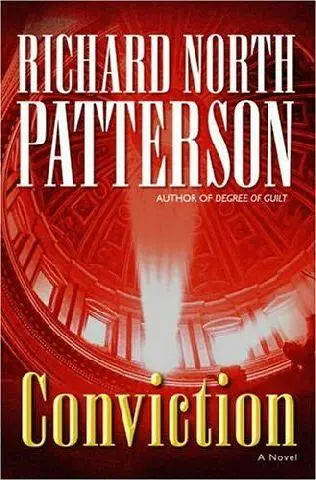
- Название:Conviction
- Автор:
- Жанр:
- Год:неизвестен
- ISBN:нет данных
- Рейтинг книги:3 / 5. Голосов: 1
-
Избранное:Добавить в избранное
- Отзывы:
-
Ваша оценка:
Conviction: краткое содержание, описание и аннотация
Предлагаем к чтению аннотацию, описание, краткое содержание или предисловие (зависит от того, что написал сам автор книги «Conviction»). Если вы не нашли необходимую информацию о книге — напишите в комментариях, мы постараемся отыскать её.
Conviction — читать онлайн бесплатно полную книгу (весь текст) целиком
Ниже представлен текст книги, разбитый по страницам. Система сохранения места последней прочитанной страницы, позволяет с удобством читать онлайн бесплатно книгу «Conviction», без необходимости каждый раз заново искать на чём Вы остановились. Поставьте закладку, и сможете в любой момент перейти на страницу, на которой закончили чтение.
Интервал:
Закладка:
Rotelli steepled his hands. "Mr. Mauriani?"
"The defense has concluded its argument for mitigation," the prosecutor began. "By my calculation, in eleven minutes. Mr. James has called no witnesses, or attempted to introduce any mitigating factors—for example, regarding the defendants' background." Pausing, Mauriani added pointedly, "On behalf of either client.
"In light of this, I believe it's appropriate for the Court to inquire as to the nature of counsel's preparations for the sentencing phase, and the options he considered on behalf of Rennell and Payton Price—as individuals. Including his investigation with respect to their personal histories."
James drew himself up. "Your Honor," he said in a defensive tone, "I can assure you that defense counsel has been nothing less than diligent. Mr. Mauriani is seeking privileged information—an unwarranted peek beneath the veil of my strategy. At whatever prejudice to both of my clients."
Turning to Mauriani, the judge raised his eyebrows. James's implication was clear—that any material he had uncovered was so damning it would grease the skids toward execution. That it was also, Mauriani suspected, a cover for James's sloth could not be helped. Mauriani had done what he could—raised the issue, and forced James to put his excuses on the record. With luck, Angelo Rotelli had helped him bury a potential claim that the brothers had ineffective assistance of counsel—at least during the sentencing phase.
"Thank you, Your Honor," Mauriani said solemnly.
* * *
Rising in rebuttal, Mauriani walked toward the jury box. "Defense counsel," he began with quiet scorn, "has argued that there is 'lingering doubt.' What about this case would leave you any doubt—about who killed Thuy Sen, or about the agony of this child's last moments of life, asphyxiated by an act no child should ever know about?"
For the first time, Henry Feldt nodded. "There is only one question," Mauriani told him. "What penalty does justice to Thuy Sen and her family?
"That penalty is death."
With this, Mauriani sat, a minute after he had risen.
* * *
Alone, Terri reviewed the last few pages; Carlo had skipped out for a quick cup of coffee with a new woman in his life, a medical student, almost as busy as he.
The judge, Terri found, had given the jury clear instructions on the option of life without parole. But in Terri's experience, few jurors believed that this alternative was real, and these jurors had probably despised the brothers as deeply as they sorrowed for the Sens.
In less than an hour their foreman, Henry Feldt, announced the verdict: death for both defendants.
* * *
The final decision was Rotelli's.
He could confirm the penalty of death or impose life without parole. In the courtroom, Mauriani watched as Rotelli, in his first capital murder trial as a judge, gravely began fulfilling a new role in a familiar play. Rotelli had become a judge by prosecuting high-profile murder cases; the question was whether he could enter a death sentence as readily as he once had sought it.
The courtroom was still: the Price brothers, James, the Sen family, and Eula Price were united in their sobriety by this final, fateful moment. With great deliberation, Rotelli began reciting the factors before him—the odious nature of the crime, the youth and innocence of the victim, the lack of remorse shown by the defendants, and their effort to cause the murder of the principal witness against them. Then he turned to the defendants. "The defense," Rotelli told them in somber tones, "has introduced no mitigating factors, and this Court is aware of none."
For an instant, the judge seemed to pause at the duty before him, then intoned for Payton Price—now as impassive as his brother—and then for Rennell the awesome words Mauriani had come to think of as, quite literally, a sentence of death.
"Rennell Price, it is the judgment of this Court, and it is hereby ordered, adjudged, and decreed, that you shall be put to death in accordance with California law within the walls of the State Prison at San Quentin.
"The defendant Rennell Price is therefore remanded to the custody of the Sheriff of San Francisco County to be delivered to the administrator of that prison, within ten days from this date, for execution of the sentence of death for the murder of Thuy Sen . . ."
To Mauriani's astonishment, Rennell Price stood. For the only time, his deep voice sounded in the courtroom. "I didn't do that little girl . . ."
* * *
Closing the transcript, Terri prepared to go home, try to get some sleep. There were fifty-four days until the date of execution.
PART TWO
THE INVESTIGATION
ONE
IT WAS THAT KIND OF SAN FRANCISCO MORNING WHEN DRIZZLE spattered through a mistlike fog which clung chill and close to the slick pavement. As Carlo drove, Terri sipped coffee from a porcelain mug, warming her cupped hands. The breath of the defroster cleared circles on the windshield of her cluttered Jeep.
Carlo turned down Pine Street toward Laurel Heights. "So tell me about Laura Finney," he said.
"Until a few weeks ago she was a senior counsel at Kenyon and Walker. She's the only lawyer who worked on Rennell's appeal from the start." Pausing, Terri sipped her coffee. "In theory, Kenyon and Walker's as different from Yancey James as you can get—six hundred lawyers from top-tier law schools, the elite of their profession, with resources to burn. More help than most would think Rennell deserved."
"You don't sound impressed."
"We'll see," Terri answered with a shrug. "What struck me about their filings was how neatly prepared they were. Perfect margins—not a typo I could find. The only thing missing was Rennell."
* * *
Laura Finney snatched at a stray hair which had eluded the rubber band pulling her brown curls back in a bun.
Dressed in blue jeans, she was slender and pale, her eyes unsmiling behind wire-rim glasses. In the living room of her one-story stucco bungalow a toddler girl watched Sesame Street while an infant boy writhed in a playpen, vainly attempting to master the art of flipping on his stomach. The circles beneath her eyes made Finney look so tired that Carlo could imagine her on the treadmill of new motherhood.
"The second baby got to be too much," she told them. "I took maternity leave one month before the Supreme Court turned down Rennell's habeas corpus petition. By then I was the senior lawyer on the case—the only one who had been there since Rennell's direct appeal got assigned to us, when I was just out of law school." Pausing, she added in a tone Carlo heard as bemusement. "That was fourteen years ago."
"Why so long?" he asked.
Finney shot a glance of wan amusement at Terri, sitting beside her stepson on the gray wool couch. "Bureaucracy," she told Carlo. "Inertia. Despite all the right-wing politicians bleating about tricky lawyers abusing the system to put years between our death row clients and the needle, thus extending the agony of people like Thuy Sen's parents.
"Truth is, it's the process that's excruciating, and all we needed to invoke it was show up." Leaning forward in her chair toward Carlo, she began ticking off its stages on her fingers. "Let's review the stations of the cross. First three were the so-called direct appeal of Rennell's conviction to the California Supreme Court. The Court hears only about twenty or so direct appeals a year. And direct appeals include only issues which are presented by the record of the trial itself. That made our direct appeal pretty close to worthless when it came to whether 'Lawyer James' greased the wheels of death for his own client."
"Why? You can see that much from the trial transcript."
"All you can see," Finney rejoined, "is that James was a crummy lawyer with terrible judgment. The courtrooms of America are crawling with those. What you can't tell is whether he's what the Sixth Amendment right to counsel supposedly guarantees: a lawyer who investigates, with at least minimal competence, all the options for sparing his client death."
Читать дальшеИнтервал:
Закладка:
Похожие книги на «Conviction»
Представляем Вашему вниманию похожие книги на «Conviction» списком для выбора. Мы отобрали схожую по названию и смыслу литературу в надежде предоставить читателям больше вариантов отыскать новые, интересные, ещё непрочитанные произведения.









Обсуждение, отзывы о книге «Conviction» и просто собственные мнения читателей. Оставьте ваши комментарии, напишите, что Вы думаете о произведении, его смысле или главных героях. Укажите что конкретно понравилось, а что нет, и почему Вы так считаете.