Ted Bell - Spy
Здесь есть возможность читать онлайн «Ted Bell - Spy» весь текст электронной книги совершенно бесплатно (целиком полную версию без сокращений). В некоторых случаях можно слушать аудио, скачать через торрент в формате fb2 и присутствует краткое содержание. Жанр: Старинная литература, на английском языке. Описание произведения, (предисловие) а так же отзывы посетителей доступны на портале библиотеки ЛибКат.
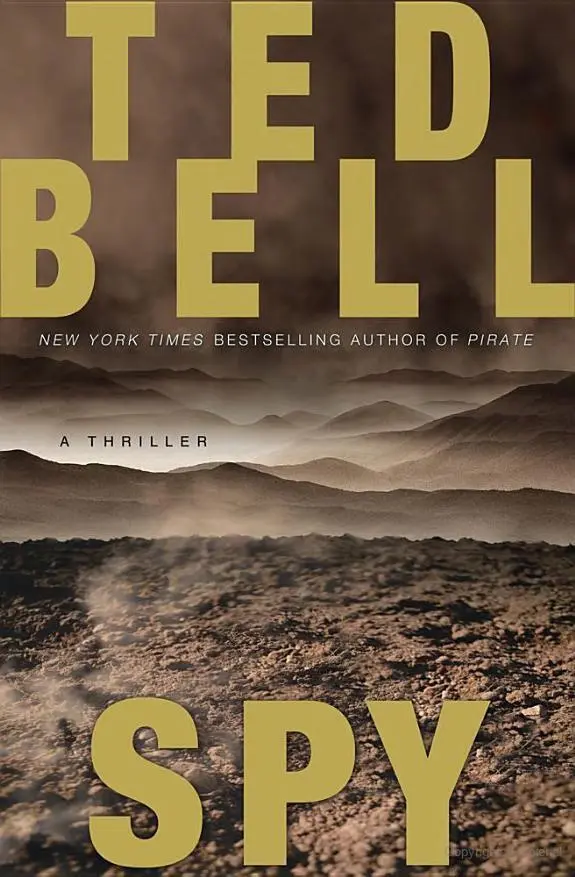
- Название:Spy
- Автор:
- Жанр:
- Год:неизвестен
- ISBN:нет данных
- Рейтинг книги:5 / 5. Голосов: 1
-
Избранное:Добавить в избранное
- Отзывы:
-
Ваша оценка:
Spy: краткое содержание, описание и аннотация
Предлагаем к чтению аннотацию, описание, краткое содержание или предисловие (зависит от того, что написал сам автор книги «Spy»). Если вы не нашли необходимую информацию о книге — напишите в комментариях, мы постараемся отыскать её.
"Think Tom Clancy and Robert Ludlum meet Stephen King...
is THE BOOK of the summer!" - Glenn Beck, CNN Headline Prime
"Outstanding." - Lou Dobbs, CNN
Alex Hawke is on the hunt...
In this exhilarating tale of international suspense,
bestselling author Ted Bell's "larger-than-life hero" (
), counterterrorist operative Alexander Hawke, must save the United States from a devastating terrorist operation.
When a mysterious explosion destroys his research vessel in search of a lost river, Alex Hawke is captured indigenous cannibals and enslaved deep within the Amazonian jungle. Before he escapes, he learns that a fearsome foe is preparing for war - but against whom?
When he regains contact with his American and British intelligence counterparts, Alex's worst fears are confirmed. The men in the jungle are highly trained Hezbollah warriors who are planning an unspeakably violent jihad against America. While the United States focuses its efforts on the escalating border disputes with Mexico, Alex was to put a stop to the deadly plot. Aware that his mission may be the country's only hope, he travels back into the jungle to destroy the lawless mastermind who dares to threaten America's very existence.
Spy — читать онлайн бесплатно полную книгу (весь текст) целиком
Ниже представлен текст книги, разбитый по страницам. Система сохранения места последней прочитанной страницы, позволяет с удобством читать онлайн бесплатно книгу «Spy», без необходимости каждый раз заново искать на чём Вы остановились. Поставьте закладку, и сможете в любой момент перейти на страницу, на которой закончили чтение.
Интервал:
Закладка:
Stoke checked his remaining air. Time to go. He looked at the pilot one last time before he swam out of the cockpit.
Hasta luego, amigo, he said silently.
Fly below the radar.
Die below the radar.
17
HAMPSTEAD HEATH
C ongreve pushed back from the table and laced his fingers atop the plump pillow of his tightly buttoned yellow waistcoat. Suppressing a sigh of pleasure, he surveyed the sunny scene of domesticity before him. Basking in the morning light, shafts of pure gold streaming through his windows, the famous detective had the look of a man who had finally grabbed life by the lapels and shook it for all it was worth.
Life was worth, he was now convinced, a very great deal. He’d had a near miss a year ago. A would-be killer’s bullet had lodged very near his spine. It had all been quite touch and go for a while. To be honest, though he’d never told a soul, there were not a few times, lying there in the dark in his hospital bed, when he’d heard the angels calling. It was sweet and seductive, the music from heaven. But he’d turned a deaf ear, and it had finally stopped.
Yes, yes, Ambrose thought. Life was certainly hurrying by, running away at breakneck speed. Too fast to stop, and too sweet to lose.
May Purvis, his housekeeper, who’d been quietly arranging a dozen dewy peonies in a silver jug, was suddenly up on her toes. She had her hands clasped to her bosom, and seemed on the verge of a pirouette.
“Well, well, Chief Inspector, look who’s come to call of a morning,” said a beaming Mrs. Purvis. Ambrose looked over his shoulder and saw Alex Hawke framed in the doorway.
“Ah, good morning, Alex,” Congreve said, putting down his Times crossword. The man was half an hour early. He’d called the night before. Something about visiting some diplomat in hospital. Very tight-lipped about it and wouldn’t say more.
Hawke, never one for a lazy entrance, didn’t falter now. Before you could blink, he was kissing the back of Mrs. Purvis’s fluttering hand.
“Mrs. Purvis’s younger daughter, are you not?” Hawke said, bowing slightly from the waist. “We meet at last!”
“Oh, my! Don’t be ridiculous! It’s only me, of course. It’s poor old May, you silly boy!” she said, giving a half-curtsy.
Hawke took a seat.
“Tea?” May asked Alex, pouring.
She was buzzing about his lordship, teapot in hand, like a bee round a stamen. It was a bit much this early in the morning.
“You might put a patch on mine as well, please, Mrs. Purvis,” Congreve said, holding up his cup, a trace of peevishness in his voice.
“Did I tell you I bumped into C, of all people,” Hawke said, putting down his cup and passing the linen over his lips. “After our splendid luncheon at Black’s yesterday.”
“Did you indeed?” Congreve affected his most innocent smile, his baby blue eyes conveying nothing but simple curiosity. For now he’d decided to let the green ink on the dropped note remain where it had fallen.
“Yes. Bumped into him at Harrods, believe it or not. Buying a tie.”
“Harrods?”
“Yes, Harrods. Rather large emporium in Knightsbridge. Surely you know it?”
“Alex. Please. Spare me this day your ridiculous sense of humor.”
“Anyway, I saw him.”
“Hmm. Anything in particular on his mind? Other than neckwear?”
“Nothing in particular, really.”
“I don’t believe you for a moment. Marching to the colors again, are we? That’s my guess. Drawing steel once more. Is that right, Alex?”
“Hmm.”
“What was on that formidable mind?”
“This and that.”
Hawke looked at his watch. “We’re late. Our meeting with this German chap. We’d better shove off.”
“German? Who said anything about Germans?”
“I did. Let’s take your Morgan, shall we? The Yellow Peril?”
“ZIMMERMANN IS his name?” Ambrose asked above the wind and engine noise. “This chap I’m to interrogate?”
“That’s it.”
“Why does that name sound so familiar?”
“Just thinking that very thing. Something to do with the Great War, wasn’t it?” Hawke replied.
“Hold on, it will come to me. Ah, yes, the Zimmermann Telegram. The cryptographic lads in Room 40 at Whitehall intercepted and decoded it. Dispatched by the German Foreign Secretary in 1917. Instructing his German Ambassador in Mexico City to approach the Mexicans about forming an alliance against the United States.”
“Exactly. To keep the Yanks out of Europe while the dreaded Hun polished us off?”
“Yes. The Kaiser believed the Americans would get so bogged down fighting a war on their southern border they’d leave us in the lurch. The Mexicans were leaping at the chance to recover Texas, Arizona, and California. Might have worked, too, but for the fact that we cut the Germans’ suboceanic cables and rerouted all their transmissions to—”
“Ambrose,” Hawke said, “the man you’re about to meet was somehow involved in a plot to blow up Heathrow. Herr Rudolf Zimmermann is also the former German ambassador to Brazil. C is a clever man. He’s read my report and now he’s sending us to interview someone who may possess vital information relevant to the region.”
“I still need more details before I interrogate this man.”
“I’m afraid details are incomplete.”
Congreve smiled. “I pray we make them less so.”
Hawke swung the Morgan into the car park. Twenty minutes later, the two men were standing at the dying man’s door.
A burly SIS type, an ill-concealed weapon bulging beneath his jacket, sat outside chatting up a pretty nurse.
The SIS man stood, opened the door, and waved them inside an ill-lit and ill-smelling room. It was also stifling. Someone had sealed the windows and pushed the thermostat to ninety. The bed was against the far wall, surrounded by more new technology devoted to keeping people around when by all rights they should be gone.
The patient was a sickish shade of gray and breathing rapid, shallow breaths. Tubes and electrodes ran from all parts of his being to the anti-death machinery. Hawke bent forward and peered at the fellow, bending the gooseneck light so that it shone on his face. He was clearly feverish and suffering chills beneath his blankets. There was something else, Hawke saw, lifting the covers back.
The man was covered with the beginnings of blood blisters. Identical to the same awful thing he’d seen on the man crashing through the jungle. One of the untouchables from the medical compound.
“He looks like death,” Hawke whispered, glad of his gloves and mask.
Zimmermann’s eyelids fluttered and he croaked something indecipherable. It was German all right, but not any German Hawke had ever heard before.
“It’s Hochdeutsch,” Ambrose said, as if that explained the matter. “Leavened by some strange continental accent. Must be his dementia speaking.”
Congreve leaned down close to the man’s face and spoke quietly. “Grüss Gott, Herr Zimmermann. Ich bin Dr. Franz Tobel. Wie geht es Ihnen?”
The pale face turned away and faced the wall.
After a minute or so of this, the man feebly slid his hand under his pillow and withdrew an envelope attached to a small package in gift wrapping of faded roses. His hoarse whisper was full of incomprehensible pleading as he handed these to Congreve.
“What’s he saying?” Hawke asked. “What’s he given you?”
“He says these are gifts for his wife in Manaus. A book, perhaps, and a farewell poem of some sort. He wants me to make absolutely sure she receives them.”
“One has to honor a deathbed wish,” Hawke said.
“Hmm,” Congreve allowed.
“I think I’ll bid you both auf wiedersehen,” Hawke said to Ambrose, taking the wrapped gift and letter. Hawke looked around as if searching for an escape hatch.
Читать дальшеИнтервал:
Закладка:
Похожие книги на «Spy»
Представляем Вашему вниманию похожие книги на «Spy» списком для выбора. Мы отобрали схожую по названию и смыслу литературу в надежде предоставить читателям больше вариантов отыскать новые, интересные, ещё непрочитанные произведения.









Обсуждение, отзывы о книге «Spy» и просто собственные мнения читателей. Оставьте ваши комментарии, напишите, что Вы думаете о произведении, его смысле или главных героях. Укажите что конкретно понравилось, а что нет, и почему Вы так считаете.