Berry, Steve - the Third Secret
Здесь есть возможность читать онлайн «Berry, Steve - the Third Secret» весь текст электронной книги совершенно бесплатно (целиком полную версию без сокращений). В некоторых случаях можно слушать аудио, скачать через торрент в формате fb2 и присутствует краткое содержание. Жанр: Старинная литература, на английском языке. Описание произведения, (предисловие) а так же отзывы посетителей доступны на портале библиотеки ЛибКат.
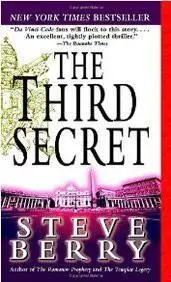
- Название:the Third Secret
- Автор:
- Жанр:
- Год:неизвестен
- ISBN:нет данных
- Рейтинг книги:3 / 5. Голосов: 1
-
Избранное:Добавить в избранное
- Отзывы:
-
Ваша оценка:
the Third Secret: краткое содержание, описание и аннотация
Предлагаем к чтению аннотацию, описание, краткое содержание или предисловие (зависит от того, что написал сам автор книги «the Third Secret»). Если вы не нашли необходимую информацию о книге — напишите в комментариях, мы постараемся отыскать её.
the Third Secret — читать онлайн бесплатно полную книгу (весь текст) целиком
Ниже представлен текст книги, разбитый по страницам. Система сохранения места последней прочитанной страницы, позволяет с удобством читать онлайн бесплатно книгу «the Third Secret», без необходимости каждый раз заново искать на чём Вы остановились. Поставьте закладку, и сможете в любой момент перейти на страницу, на которой закончили чтение.
Интервал:
Закладка:
Jakob Volkner’s.
The German was dressed in full papal regalia. He wore the robes, the miter, the pallium—everything Valendrea should be wearing. Above the cheers, the music, and the choir, he heard Volkner’s every word, as clear as if they were standing side by side.
I’m glad it’s you, Alberto.
What do you mean?
You’ll see.
He’d awakened in a clammy sweat and eventually drifted back to sleep, but the dream reoccurred. Finally, he relieved his tension with a scalding shower. He’d nicked himself twice while shaving and nearly slipped on the bathroom floor. Being unnerved was unsettling. He was not accustomed to anxiety.
I wanted you know what awaits you, Alberto.
The damn German had been so smug last night.
And now he understood.
Jakob Volkner knew exactly what happened in 1978.
Valendrea reentered the Riserva. Paul had commanded that he return, so the archivist had been specifically instructed to open the safe and provide him with privacy.
He reached for the drawer and removed the wooden box. He’d brought with him wax, a lighter, and the seal of Paul VI. Just as John XXIII’s seal once was stamped on the outside, now Paul’s would signify that the box should not be opened, except by papal command.
He hinged open the top and made sure that two packets, four folded sheets of paper, remained inside. He could still see Paul’s face as he’d read the top packet. There’d been shock, which was an emotion rarely seen on the face of Paul VI. But there’d been something else, too, only for an instant, but Valendrea had seen it clearly.
Fear.
He stared into the box. The two packets containing the third secret of Fatima were still there. He knew he shouldn’t, but no one would ever know. So he lifted out the top packet, the one that had brought such a reaction.
He unfolded and set aside the original Portuguese page, then scanned its Italian translation.
Comprehension took only an instant. He knew what had to be done. Perhaps that was why Paul had sent him? Maybe the old man realized that he would read the words and then do what a pope could not.
He slipped the translation into his cassock, joined a second later by Sister Lucia’s original writing. He then unfolded the remaining packet and read.
Nothing of any consequence.
So he reassembled those two pages, dropped them back inside, and sealed the box.
Valendrea stood from the table and locked the doors that led out of his apartment. He then strode into his bedroom and removed a small bronze casket from a cabinet. His father had presented the box to him for his seventeenth birthday. Ever since, he’d kept all his precious things inside, among them photos of his parents, deeds to properties, stock certificates, his first missal, and a rosary from John Paul II.
He reached beneath his vestments and found the key that hung from his neck. He hinged opened the box and shuffled through its contents to the bottom. The two sheets of folded paper, taken from the Riserva that night in 1978, were still there. One penned in Portuguese, the other Italian. Half of the entire third secret of Fatima.
He lifted both pages out.
He could not bring himself to read the words again. Once was more than enough. So he walked into the bathroom, ripped both sheets into tiny pieces, then allowed them to rain into the toilet.
He flushed the basin.
Gone.
Finally.
He needed to return to the Riserva and destroy Tibor’s latest facsimile. But any return visit would have to be after Clement’s death. He also needed to talk with Father Ambrosi. He’d tried the satellite phone an hour ago without success. Now he grabbed the handset from the bathroom counter and dialed the number again.
Ambrosi answered.
“What happened?” he asked his assistant.
“I spoke with our angel last evening. Little has been learned. She’s to do better today.”
“Forget that. What we originally planned is immaterial. I need something else.”
He had to be careful with his words as there was nothing private about a satellite phone.
“Listen to me,” he said.
TWENTY-FOUR
BUCHAREST, 6:45 A.M.
Michener finished dressing, then tossed his toiletries and dirty clothes into his travel bag. A part of him wanted to drive back to Zlatna and spend more time with those children. Winter was not far away, and Father Tibor had told them last night what a battle it was simply to keep the boilers running. Last year they’d gone two months with frozen pipes, using makeshift stoves to burn whatever wood could be scrounged from the forest. This winter Tibor believed they should be all right, thanks to relief workers who’d spent all summer repairing an aging boiler.
Tibor had said that his fondest wish was that another three months might pass without losing any more children. Three had died last year, buried in a cemetery just outside the wall. Michener wondered what purpose such suffering could serve. He’d been fortunate. The object of the Irish birthing centers had been to find children homes. But the flip side was that mothers were forever separated from their children. He’d imagined many times the Vatican bureaucrat who’d approved such a preposterous plan, never once considering the pain. Such a maddening political machine, the Roman Catholic Church. Its gears had churned undaunted for two thousand years, unfazed by the Protestant Reformation, infidels, a schism that tore it apart, or the plunder of Napoleon. Why then, he mused, would the Church fear what a peasant girl from Fatima might have to say? What would it matter?
Yet apparently it did.
He shouldered his travel bag and walked downstairs to Katerina’s room. They’d agreed to have breakfast together before he left for the airport. A note was wedged into the doorframe. He plucked it out.
Colin:
I thought it best we not see each other this morning. I wanted us to part with the feeling we shared last night. Two old friends who enjoyed each other’s company. I wish you the best in Rome. You deserve success.
Always, Kate
A part of him was relieved. He’d really not known what to say to her. There was no way they could continue a friendship in Rome. The slightest appearance of impropriety would be enough to ruin his career. He was glad, though, that they were parting on good terms. Perhaps they’d finally made peace. At least he hoped so.
He tore the paper to pieces and stepped down the hall, where he flushed every one of them away. So strange that was necessary. But no remnant of her message could remain. Nothing could exist that might link him and her together. Everything must be sanitized.
Why?
That was clear. Protocol and image.
What wasn’t so clear was his growing resentment of both reasons.
Michener opened the door to his apartment on the fourth floor of the Apostolic Palace. His rooms were near the pope’s, where papal secretaries had long lived. When he’d first moved in three years ago, he’d foolishly thought the spirits of its former residents might somehow guide him. But he’d since learned that none of those souls was to be found, and any guidance he might need would have to be discovered within himself.
He’d taken a taxi from the Rome airport instead of calling his office for a car, still adhering to Clement’s orders that his trip go unnoticed. He’d entered the Vatican through St. Peter’s Square, dressed casually, like one of the many thousands of tourists.
Saturday was not a busy day for the Curia. Most employees left and all the offices, save for a few in the Secretariat of State, were closed. He’d stopped by his office and learned that Clement had flown to Castle Gandolfo earlier and was not due back until Monday. The villa lay eighteen miles south of Rome and had served as a papal retreat for four hundred years. Modern pontiffs used its casual atmosphere as a place to avoid Rome’s oppressive summers and as a weekend escape, helicopters providing transport back and forth.
Читать дальшеИнтервал:
Закладка:
Похожие книги на «the Third Secret»
Представляем Вашему вниманию похожие книги на «the Third Secret» списком для выбора. Мы отобрали схожую по названию и смыслу литературу в надежде предоставить читателям больше вариантов отыскать новые, интересные, ещё непрочитанные произведения.










Обсуждение, отзывы о книге «the Third Secret» и просто собственные мнения читателей. Оставьте ваши комментарии, напишите, что Вы думаете о произведении, его смысле или главных героях. Укажите что конкретно понравилось, а что нет, и почему Вы так считаете.