Phillip Margolin - Ties That Bind
Здесь есть возможность читать онлайн «Phillip Margolin - Ties That Bind» весь текст электронной книги совершенно бесплатно (целиком полную версию без сокращений). В некоторых случаях можно слушать аудио, скачать через торрент в формате fb2 и присутствует краткое содержание. Жанр: Старинная литература, на английском языке. Описание произведения, (предисловие) а так же отзывы посетителей доступны на портале библиотеки ЛибКат.
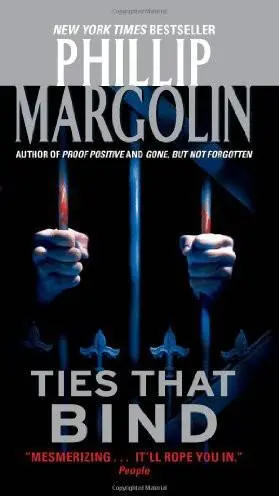
- Название:Ties That Bind
- Автор:
- Жанр:
- Год:неизвестен
- ISBN:нет данных
- Рейтинг книги:3 / 5. Голосов: 1
-
Избранное:Добавить в избранное
- Отзывы:
-
Ваша оценка:
Ties That Bind: краткое содержание, описание и аннотация
Предлагаем к чтению аннотацию, описание, краткое содержание или предисловие (зависит от того, что написал сам автор книги «Ties That Bind»). Если вы не нашли необходимую информацию о книге — напишите в комментариях, мы постараемся отыскать её.
Her client, Jon Dupre, runs an upscale call-girl service and stands accused of murdering a high-profile U.S. senator. To Amanda, Dupre's story of an ultra-secret society of extremely powerful, dangerous, politically motivated men sounds like a criminal's desperate attempt to escape justice. But suddenly too many important people are pressuring her to drop the case . . . and too many people are dying.
But Amanda will not surrender again to her fear. To get her life back, she'll follow this deadly juggernaut of an investigation wherever it leads her: to the graveyard, into the depths of hell . . . or to the highest office in the land.
Ties That Bind — читать онлайн бесплатно полную книгу (весь текст) целиком
Ниже представлен текст книги, разбитый по страницам. Система сохранения места последней прочитанной страницы, позволяет с удобством читать онлайн бесплатно книгу «Ties That Bind», без необходимости каждый раз заново искать на чём Вы остановились. Поставьте закладку, и сможете в любой момент перейти на страницу, на которой закончили чтение.
Интервал:
Закладка:
"Good thinking. But . . ."
The phone rang. Tim looked annoyed as he picked up the receiver. "I'm in conference, Lucy. I don't want to be interrupted."
"I know, but there's a Miss Bennett at the front desk. She's very insistent."
Kerrigan felt the blood drain from his face. Ally Bennett had called several times but he'd had the receptionist tell her that he was out. Kerrigan glanced at Maria to see if she'd noticed his discomfort. She was looking at her notes.
"Okay, patch me through to reception," Kerrigan said. A moment later, Ally was on the line.
"Thank you for coming by," Kerrigan said quickly. "I'm in a meeting, but I do want to get together with you."
"Yeah," Bennett said, "I think you'd better do that."
"Let me call you when I'm through here, say in an hour?"
"I'll be waiting, and I'll be very, very disappointed if I don't hear from you."
The line went dead. Kerrigan could feel sweat beading his forehead. He never expected Ally to show up here. Maria knew who Ally was. What if she'd seen her in reception?
"Are you okay?"
Maria was staring at him. He forced a smile.
"I think I'm coming down with something. Why don't we stop now?"
"Sure." Maria stood and gathered up her files. "I hope you feel better."
"Thanks. You're doing a great job, Maria."
Lopez blushed. She backed out of his office, pulling the door shut behind her. Kerrigan dialed the extension for Harvey Grant's chambers.
"Bennett was here, Judge, in reception," Kerrigan said as soon as Grant was on the line.
"Did anyone see her?"
"I don't know who was out there."
"What did you do?"
"I talked to her over the phone on the reception desk."
"So no one saw you together?"
"No. I got rid of her by promising I'd call her in an hour. That's fifty minutes from now."
"Okay, calm down."
"What am I going to tell her?"
There was silence on the line. Kerrigan waited, his hand clammy against the plastic, his stomach in a knot.
"Tell Miss Bennett that you think you'll have everything worked out by next week."
"How am I going to do that?"
"Say that you've almost put the money together, then intimate that you're working with a detective who owes you a favor. Be vague. Tell her that this detective can make evidence disappear, but won't tell you how he's going to work it."
"What happens next week, when Dupre is still in jail?"
"We'll discuss that tonight."
Kerrigan fortified himself with scotch before meeting with Harvey Grant. He looked like he'd slept in his clothes. Victor Reis opened the door before Tim could ring the bell. The bodyguard's craggy face broke into a smile. Kerrigan was certain that Victor noticed his disheveled state, because he noticed everything, but Reis made no mention of Tim's condition.
"Come on in. The judge is in the den. Have you eaten?"
"I'm fine. I'll find him. Thanks."
Kerrigan walked down the hall to the room where he and Grant had last met. The judge was dressed in khaki slacks, a plaid shirt, and a baggy sweater. A book on English military history was lying at his elbow. He smiled warmly and waved Tim onto a seat.
"How are you holding up?" Grant asked.
"Not real well," Tim answered as he slumped into an armchair.
"Can I get you a drink?"
Tim shook his head. "I've had a couple already."
Grant's smile became wistful. "How long have I known you, Tim?"
"My whole life."
Grant nodded. "I was at your baptism, your first birthday, and your first communion. I've always been very proud of you."
Kerrigan cast his eyes toward the floor. They misted and his voice caught in his throat.
"I'm sorry I let you down."
"You haven't, son. You're just human. We all make mistakes."
"This is more than a mistake."
"No, no. What's happening to you is a bump in the road. No more. It seems colossal now, but we'll take care of it. A year from now you won't remember how upset you were."
Kerrigan looked up hopefully.
"Tim, do you trust me?"
"Yes."
"And you know that I have only your best interests at heart?"
Tim wanted to tell the judge that he felt closer to him than he did to his own father, but he could not say the words.
"I have a solution to your problem," the judge said. "This woman is a whore, gutter trash. We're not going to let someone like that destroy your life."
Kerrigan leaned forward, eager to hear Grant's plan.
"Do you remember Harold Travis's musings about the existence of God when we were on the terrace of the Westmont, after we played golf?"
"It was the last time I saw him alive."
"Let me ask you something, Tim. Do you think that there is a God, a supreme being who sees everything that we do and punishes our bad acts?"
Tim didn't know how to answer. He'd been raised to believe in God, and there were times when life itself seemed like a miracle. He remembered having the most certainty when Megan was born; and now and then he'd have days when the world around him was so filled with beauty that he had to believe in a divine plan. But most of the time he found it hard to accept the idea of such a plan. It was difficult to believe in a merciful God when you were interviewing an abused child whose face was devoid of all emotion and whose body was covered by evidence of a life that had known only pain and despair. The everyday routine in the district attorney's office tended to erode faith.
"It's natural to hesitate when asked a question like this," Grant said, "and it's difficult for a person trained to use logic to accept the existence of anything--let alone a supernatural, all-knowing being--without evidence. That's one of the downsides of a legal education, I guess."
"But you believe in God?"
"Harold believed that the concept of God was invented to keep the riffraff in line," Grant answered, sidestepping Tim's question. "He was very cynical, but was he right? If the poor didn't believe in a reward in the afterlife, would they suffer in this one or would they rise up against their betters? Harold believed that God and Law were invented by superior men to control the masses, and he believed that morality was relative."
"There are rules, Judge. Morality isn't relative. We know in our heart when we do something wrong." Kerrigan hung his head. "I know."
"That's guilt, which we experience when we believe--on faith--that there are divine rules of conduct. But what if you knew for a fact that there was no God and no rules other than those that you made? If that were true, you would be a free man, because the restraints that kept your desires in check would be released."
"What does this have to do with Ally Bennett?"
"If God does not exist, if superior men play by their own rules, if there is no divine punishment, then Ally Bennett would cease to be a problem."
"You mean that she could be killed?"
"Removed, Tim, the way you erase a disquieting sentence in a brief that you're writing or slap away an insect that has interfered with your peace of mind."
"But there are rules, there are laws."
"Not for everyone. Harold knew that for a fact."
"What are you getting at, Judge? I'm not following you."
"You're afraid to follow me. There's a difference. Answer me this: What would you do if I could assure you that there would never be any consequences if you removed Ally Bennett from your life?"
"You can't give me that assurance. No one can."
"Pretend that I could."
"I . . . I couldn't kill someone even if I knew that I could get away with it."
"What if a burglar broke into your house and was going to kill Megan? Are you telling me that you wouldn't kill him?"
"That's different. That's self-defense."
"Aren't we talking about self-defense? Isn't this woman threatening your life and the lives of those you love? Imagine yourself as a United States senator. That's within your grasp, Tim. Now think forward a few years. Can you see yourself as president of the United States, the most powerful person in the world?"
Читать дальшеИнтервал:
Закладка:
Похожие книги на «Ties That Bind»
Представляем Вашему вниманию похожие книги на «Ties That Bind» списком для выбора. Мы отобрали схожую по названию и смыслу литературу в надежде предоставить читателям больше вариантов отыскать новые, интересные, ещё непрочитанные произведения.







Обсуждение, отзывы о книге «Ties That Bind» и просто собственные мнения читателей. Оставьте ваши комментарии, напишите, что Вы думаете о произведении, его смысле или главных героях. Укажите что конкретно понравилось, а что нет, и почему Вы так считаете.