Jonathan Dunn - The Forgotten King
Здесь есть возможность читать онлайн «Jonathan Dunn - The Forgotten King» весь текст электронной книги совершенно бесплатно (целиком полную версию без сокращений). В некоторых случаях можно слушать аудио, скачать через торрент в формате fb2 и присутствует краткое содержание. Жанр: Старинная литература, на английском языке. Описание произведения, (предисловие) а так же отзывы посетителей доступны на портале библиотеки ЛибКат.
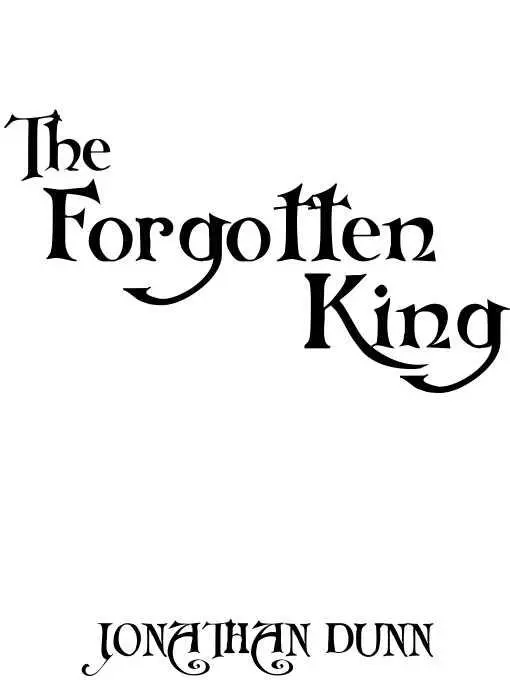
- Название:The Forgotten King
- Автор:
- Жанр:
- Год:неизвестен
- ISBN:нет данных
- Рейтинг книги:4 / 5. Голосов: 1
-
Избранное:Добавить в избранное
- Отзывы:
-
Ваша оценка:
The Forgotten King: краткое содержание, описание и аннотация
Предлагаем к чтению аннотацию, описание, краткое содержание или предисловие (зависит от того, что написал сам автор книги «The Forgotten King»). Если вы не нашли необходимую информацию о книге — напишите в комментариях, мы постараемся отыскать её.
The Forgotten King ebook is a history of the Dark Ages, of the forgotten ages that followed the fall of Rome. Civilization did not collapse with the Roman empire, however, but grew again on an island nation off the coast of Europe. It was called Atilta, a land of ancient forests and great, maritime capitals. At this time, it was at war with itself as its people fought for freedom. Yet the freedoms they desired were contradictory: some longed to overthrow their tyrannical king, others their tyrannical God. It was a fight of forest against city, and nature against civilization; of man against beast, and beast against God. But whom was the victor? For the island of Atilta is no longer to be found. Yet its history remains, embedded into the myths and legends of an exiled people. This is its story. This is the history of The Forgotten King.
The Forgotten King — читать онлайн бесплатно полную книгу (весь текст) целиком
Ниже представлен текст книги, разбитый по страницам. Система сохранения места последней прочитанной страницы, позволяет с удобством читать онлайн бесплатно книгу «The Forgotten King», без необходимости каждый раз заново искать на чём Вы остановились. Поставьте закладку, и сможете в любой момент перейти на страницу, на которой закончили чтение.
Интервал:
Закладка:
“But what will we do?” and de Casanova regained his zeal in the presence of action. “Will we trust to fate, to see what course has been planned for us?”
“You learn,” Gylain sighed at the jest. “We will see what is sent.”
“Look!” Montague cried at that instant, “Look: a battle fleet is coming into the bay. Its rear extends beyond my view. They fly the colors of the Three Kingdoms.”
“So it is!” Gylain laughed, “Lyndon has joined our banner, as has victory. By fate’s declaration, we sail today – for war and for revenge!”
Chapter 76
The King of France leaned against the window sill, his elbows bent and his arms folded. He wore a majestic cloak over his clothing and a simple golden crown on his head that named him the king. His hair was a twilight sun – gray and grasping – his face ruddy, his hands womanly, and his stature shapely, though in a manner that denotes an indulgent diet.
The room was small and not as grand as others in the palace at Bordeaux, for it was the king’s private study on the second floor of the western wall. A secret passage connected it to his bedchamber. Since few servants but Vahan and his captain of the guards knew of its existence, he was not disturbed. Through the windows could be seen the streets; the passers-by could be observed in detail. Behind him – in the center of the room – stood a square table, at which Vahan Lee was looking over a pile of papers. The whole palace was in stone, but here it was covered again by maple boards and that by an ornate rug from Istanbul. In all, the study was made up with inviting – if expensive – furnishings.
“What will it be?” the king asked gaily, and his tone was strangely carefree for an old king. “What will I have for dessert, blond or brunette? My tongue is cleared for action, yet I cannot decide. The day is pleasant, the sun radiant, the sky clear – and the mood is set for blond. But in the distance storms approach and the sky darkens – and the mood is set for brunette. With such decisions, I do not now how I manage to stay above it all,” and he sighed, though in a pleasant manner.
“I should say there will be no dessert for your majesty tonight,” and Vahan’s voice ran out with a serious undertow, washing away the light-hearted mood. When in his position, Vahan was not unconscious of his power; and when he knew of it, he did not let it idly sit.
“No dessert? But my health will suffer from such deprivations.”
“I say only this, my lord: there is war ahead. And war is won by hungry men.”
“Perhaps, since we make war, not love. But what trouble it is to be king! I am burdened with decisions and turmoil; without you I would simply dry up and be gone. If only I were someone else.” He sighed. “I sometimes wonder how a tailor makes love. His mind is clear from troubles and his time from burdensome tasks. He must have a good time of it!” He returned his eyes to the window. “I wish I were a tailor.”
“But, my lord, tailors make love but once or twice a lifetime,” and Vahan did not look up from his business.
“Truly? That is the strange, for were I in their position I would make it every day, with no responsibilities hanging over me to keep me dry. I wonder why they do not.”
“Because they cannot afford it.”
“Cannot afford it? I did not mean with the harlots, but with their wives! Truly Vahan, you have such odd ideas on these matters.” He laughed, “Cannot afford it!”
“I insist they cannot,” Vahan grew warm, “For children are formed in the act, and children are expensive. The tailors are fined too heavily to raise children. Thus, they cannot make love. If they do, they must work harder to support them, and so have no more time for it.”
“An abomination,” cried the king. “What scoundrel devised this love making fine? I will have it out with him, to be sure! The audacity!”
“Your majesty, it has been since there were records.”
“I should think not, my dear Vahan, for I have never before heard of it. To fine a tailor’s love making! That is too far, indeed, for a government’s arm to reach.”
“It is not called the love making fine, sire, and it is not for merely tailors.”
“For more than tailors? You mean, it is for all citizens? What a horrid idea! It is no wonder they seem always unhappy – for I would die myself if I could not release my passions. Let us repeal it: my conscience cannot bear taxing the only pleasure in this life.”
“My lord, it has other benefits, which you have supported so strongly in the past.”
“Have I? If so, it was not named the love making fine. What are these benefits, though I cannot see how they are worth their price in happiness.”
“My lord, would there be so much dessert for you and the court if the tailors went untaxed in these matters?”
“No, the wells would soon run dry. But still, I must not be selfish. What is this fine called, that I can repeal it.”
“It is not so much the love making fine as it is the love making tax, for that is the effect of our taxes: on imports, on linens, and on grain.”
“Now I understand,” and the king paused, still staring out the window. “I have reached a decision, Vahan.”
“I am ready, your majesty. Will we repeal the love making tax?”
“What? I have decided on my desserts, I meant – for I will have both blond and brunette, to celebrate our coming victory. As for the tax, my health is not what it once was.”
There was a knock at the door, hurried and important.
“Enter,” Vahan said, and he did not wait for the king’s approval.
The door swung open and a soldier replaced it in the doorway. He was fully armed and armored, bearing a sealed letter in his hand. Vahan evidently knew him, for he beckoned him to come over, while the king continued looking after the passing women.
“A message?” Vahan asked the soldier.
“Yes, sir: from Captain De Seinaly. I have not stopped since I was given it yesterday evening.”
“Well done, Horace, though I did not expect less. Your service will be remembered when the time is right. But for now, let me read the letter,” and Vahan took his penknife from the table and carefully opened the seal. It was written in a hasty, untidy script, with the ending words omitted, and the sentences incomplete. After he had read it to himself, Vahan read it aloud, “Your Majesty, the fleet sails from the Three Kingdoms. We send word immediately. There is nothing to spare. They sail at ten knots.”
The king sighed deeply, “Then I will have no dessert.”
The soldier was surprised, “My lord, why should you have less than the soldiers? For we bring our dessert with us when we sail.”
“Genius!” cried the king, “I had not thought of it, but it will do nicely!”
“If we have time,” and Vahan sighed, though in a different manner than the king. “We are needed at the fortress at once.” The fortress was a military compound two miles beyond the city walls, along an inlet.
“Yes, you are right,” the king moaned. “And we had best leave now, as there is much to be done if we are to reach Atilta in time. But wait – we cannot have more than two days, and that beginning yesterday,” and the king hung his head.
The three men – Vahanlee, the king, and Horace – took the hall to the king’s coach, and set off at a quick trot through the streets toward the city’s end. On the way, the carriage passed through the crowded, narrow streets of Bordeaux, jostling those inside. Horace sat on the left and Vahan Lee on the right, both of the rear seat, and the king occupied the front seat by himself, making a positive or negative sigh in relation to each of the ladies they passed. Several minutes were spent gaining the highway, which ran straight through the city and was kept well-tended by the merchants’ guilds. No one walked along the highway, and the king, thus deprived of his attentions, turned to Vahan and began to speak.
Читать дальшеИнтервал:
Закладка:
Похожие книги на «The Forgotten King»
Представляем Вашему вниманию похожие книги на «The Forgotten King» списком для выбора. Мы отобрали схожую по названию и смыслу литературу в надежде предоставить читателям больше вариантов отыскать новые, интересные, ещё непрочитанные произведения.







Обсуждение, отзывы о книге «The Forgotten King» и просто собственные мнения читателей. Оставьте ваши комментарии, напишите, что Вы думаете о произведении, его смысле или главных героях. Укажите что конкретно понравилось, а что нет, и почему Вы так считаете.