Jonathan Dunn - The Forgotten King
Здесь есть возможность читать онлайн «Jonathan Dunn - The Forgotten King» весь текст электронной книги совершенно бесплатно (целиком полную версию без сокращений). В некоторых случаях можно слушать аудио, скачать через торрент в формате fb2 и присутствует краткое содержание. Жанр: Старинная литература, на английском языке. Описание произведения, (предисловие) а так же отзывы посетителей доступны на портале библиотеки ЛибКат.
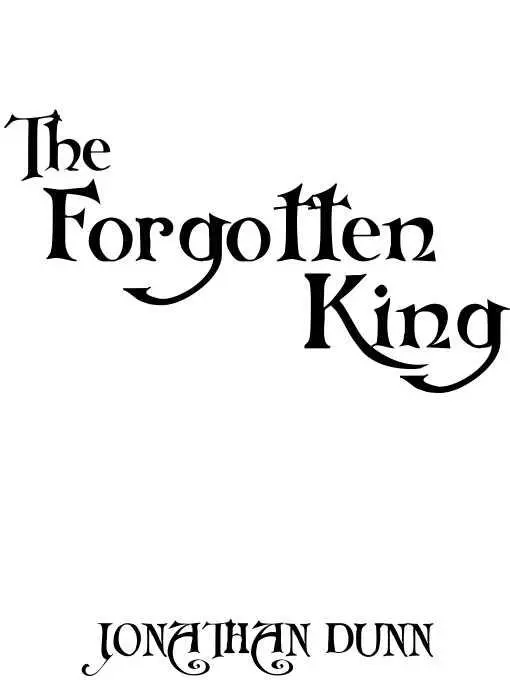
- Название:The Forgotten King
- Автор:
- Жанр:
- Год:неизвестен
- ISBN:нет данных
- Рейтинг книги:4 / 5. Голосов: 1
-
Избранное:Добавить в избранное
- Отзывы:
-
Ваша оценка:
The Forgotten King: краткое содержание, описание и аннотация
Предлагаем к чтению аннотацию, описание, краткое содержание или предисловие (зависит от того, что написал сам автор книги «The Forgotten King»). Если вы не нашли необходимую информацию о книге — напишите в комментариях, мы постараемся отыскать её.
The Forgotten King ebook is a history of the Dark Ages, of the forgotten ages that followed the fall of Rome. Civilization did not collapse with the Roman empire, however, but grew again on an island nation off the coast of Europe. It was called Atilta, a land of ancient forests and great, maritime capitals. At this time, it was at war with itself as its people fought for freedom. Yet the freedoms they desired were contradictory: some longed to overthrow their tyrannical king, others their tyrannical God. It was a fight of forest against city, and nature against civilization; of man against beast, and beast against God. But whom was the victor? For the island of Atilta is no longer to be found. Yet its history remains, embedded into the myths and legends of an exiled people. This is its story. This is the history of The Forgotten King.
The Forgotten King — читать онлайн бесплатно полную книгу (весь текст) целиком
Ниже представлен текст книги, разбитый по страницам. Система сохранения места последней прочитанной страницы, позволяет с удобством читать онлайн бесплатно книгу «The Forgotten King», без необходимости каждый раз заново искать на чём Вы остановились. Поставьте закладку, и сможете в любой момент перейти на страницу, на которой закончили чтение.
Интервал:
Закладка:
“Have you any final words, Montague.”
“Not yet,” Willard said.
“What?” But the captain could say no more, for at that moment a massive, hairy arm swiped his head to the side with such force that he fell over unconscious. Before his body hit the platform, Willard had taken his sword from his belt and held it out before him. Behind them, another soldier led de Garcia. Willard turned before the soldier could react and struck him down. De Garcia reclaimed his sword from the soldier – who had taken it as his own – and held it before him, his prayer and salvation.
“My faith is renewed!” and he held the long, cylindrical blade in his hands while flourishing it in the air: a skillful move with bound hands.
The other soldiers, however, saw what was up and pushed the other prisoners back into the circle of soldiers that had formed around the gallows. They drew their weapons and formed ranks, leaving the rebellious prisoners no where to flee. Thus, Willard, Horatio, and de Garcia stood by themselves on the high platform, their wrists still bound. They stood in an outward circle and looked over the legions. It was clear they could not escape.
“We cannot win,” de Garcia said.
“Yet we can keep from losing,” and Willard flicked his sword at a soldier who thought to approach them. He fell back, and Willard went on, “Can you see the road that stretches off into the distance?” Willard nodded his head to the southwest, toward Bordeaux. From the height of the gallows they could see over the surrounding fortress at one point, and thus the road beyond. A solitary carriage raced along, shooting dust behind it.“Vahan comes to our rescue. We need only delay a few moments.”
Just then, Khalid came to his senses at Willard’s feet.
“A desperate attempt,” he said.
“Give us half an hour to prepare ourselves for death,” de Garcia said in a French heavily influenced by his native Spanish. “We will yield if you give us but one half hour.”
“I have orders; duty renders me unable.” De Garcia whipped his sword down and smote the captain with the blunt sides. He fell unconscious once more.
“Deliver our comrades to us and we will deliver the captain to you,” Willard called to the soldiers, his voice a symbol of authority.
Rather than answer, the soldiers charged the platform. It was a terrible onslaught. The stairs were narrow and allowed only one man to cross at a time; yet the sides were too steep to be climbed while anyone stood on top to stop the advance. A whole horde of soldiers surrounded them, but only one at a time could attack. The first struck at Willard’s head with a downward blow; Willard dodged to the left and the blade passed innocently beside him. By this time a second soldier had come up and lashed his weapon sideways at Willard’s chest. With his wrists bound, the latter could not parry it correctly, so he diverted it by holding his sword before him at a gentle angle. When the two swords met, Willard’s tree-limb arms did not give way and the soldier’s sword was forced away like water down a hill. The first soldier, meanwhile, was still recovering from his missed strike. Willard lunged forward at him, running him through the center and throwing him from the platform. But by this move he left the circle, and thus the protection which de Garcia and Horatio had of his back. A third soldier came just at this instant and thought to dispatch the foreign king for good. Yet the second soldier’s blade still hung in the air and it came to a stop against the new soldier’s head, piercing his forehead and dropping him to the ground. These things happened in the same second of time.
In the same instant, de Garcia was fencing three French soldiers who had scaled the far side of the gallows. His sword flew in every direction as it parried and returned each blow with his fluid agility. His wrists were bound, yet as always he found a way to use it for his advantage: with his right hand he held the sword and with his left he held his right wrist, supporting its weight and freeing his other wrist for swordplay. The soldiers swung with their arms, thus making their strokes stronger and slower. But de Garcia whipped his blade and it sang as it rebuked each of the stronger strokes. He could deal three parries by the time the first soldier had regained his balance to strike again. It did not last, however, for as the soldiers grew tired, others took their places. De Garcia, however, had no reserve.
“It is time we ended this,” he called to Willard over the clash of steel. “For if we go down fighting, we are dead; but if we surrender, they will have to hang us.”
“How so?”
“The rules of war. If we yield, they cannot kill us by sword but by execution. This Khalid is a hard man when it comes to duty – like many men I have met as a warrior – so let us play him in our hand.”
“The laws of men are strange. But we are among men and the carriage will arrive any moment. We have delayed long enough.”
With that, the two dropped their swords and gestured for parley, while Horatio lowered his paws to the same effect. Khalid was beginning to regain himself a second time. When he saw them yield he called to his men, “Do not attack them! They have surrendered.”
He stood – unsteadily for a moment – and faced Willard. The platform was empty but for a few soldiers. The other captives were once more brought to the front.
“Well done, Montague,” Khalid said, “But to no avail: you are still caught.”
“We will see. The future brings hope and every delay brings it closer.”
“I see. Then we will have no more delays, if you expect a rescue of some sort. Men, place the nooses,” and he led Willard to the furthest noose, looped it around his neck, and left him standing on the trap door. As he did this, the soldiers did the same to the other six comrades.
Horatio was placed next to Willard, still wearing his monk’s frock. The noose had been placed around his neck outside the hood and the soldiers did not know he was not human. In their minds, perhaps, no monk was fully human, so they did not trouble their consciences over his portly figure. Horatio silently allowed them to do what they would, for he followed Willard and Willard allowed it. After a week of feigning humanity Horatio was beginning to feel human. As he stood there, he had a very human thought, “What of the forest creatures? Who will they follow?”
Next was de Garcia. His hair was long and unruly, his face unshaven. On the outside his thoughts could not be pierced, for his face was immutable, fearless. He wondered, at that last moment, where a different path would have led. “If I had not betrayed Alfonzo,” he thought, “I would have been able to stop Montague long before he could lead us to France. But look, what have I become? Before, I was a zealous man – an honorable man – because of my fighting glory. Yet now those same talents have brought me to ruin. And what will my brother, de Garmia, think when we are never reunited? On his deathbed, what will he tell his children of me, that I was a traitor to my cause, a coward? Oh, but that I had not listened to de Casanova and his foul-mouthed advice! Oh, but that I had slain him when I had him, all those years ago!”
Leggitt stood beside de Garcia. He was as trim as ever, as perfectly manicured, in spite of the recent troubles. His hair was haggard though – aging and worn like so much mown grass – for he was no longer fueled by the passions of youth. His mouth was small and terse, as one of silence, and that is what he had become. In his youth: a rebel spy; in his age: a mere prison master and captain of the guards. Such years of service and so easily discarded – even if the whole of it had been in treachery. “Or was it?” he thought to himself, “If I was truly a spy, why did I not take the numerous chances to assassinate Gylain? I told myself I would have patience for something greater, yet what is above that? Montague might have replaced him, but not with the same restraint or foresight, the same passionless vigor that reigns over Gylain. Here I die, an outlaw in France in the service of Atiltian rebels, while at heart I cannot know which side I am truly on. But so should it be: I deserve death.”
Читать дальшеИнтервал:
Закладка:
Похожие книги на «The Forgotten King»
Представляем Вашему вниманию похожие книги на «The Forgotten King» списком для выбора. Мы отобрали схожую по названию и смыслу литературу в надежде предоставить читателям больше вариантов отыскать новые, интересные, ещё непрочитанные произведения.










Обсуждение, отзывы о книге «The Forgotten King» и просто собственные мнения читателей. Оставьте ваши комментарии, напишите, что Вы думаете о произведении, его смысле или главных героях. Укажите что конкретно понравилось, а что нет, и почему Вы так считаете.