Jonathan Dunn - The Forgotten King
Здесь есть возможность читать онлайн «Jonathan Dunn - The Forgotten King» весь текст электронной книги совершенно бесплатно (целиком полную версию без сокращений). В некоторых случаях можно слушать аудио, скачать через торрент в формате fb2 и присутствует краткое содержание. Жанр: Старинная литература, на английском языке. Описание произведения, (предисловие) а так же отзывы посетителей доступны на портале библиотеки ЛибКат.
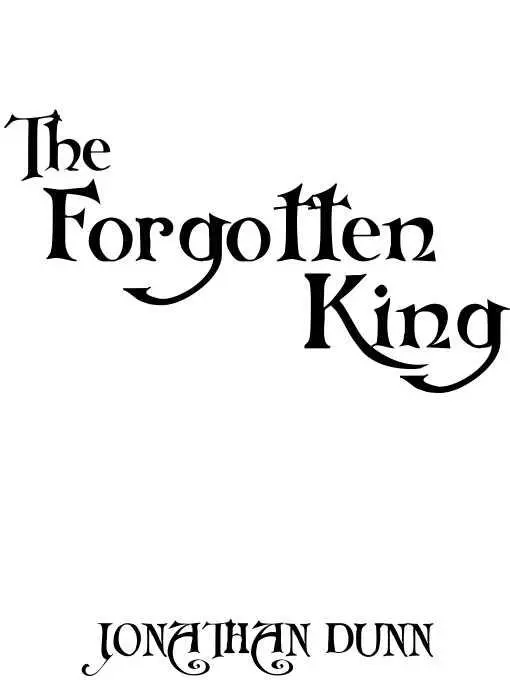
- Название:The Forgotten King
- Автор:
- Жанр:
- Год:неизвестен
- ISBN:нет данных
- Рейтинг книги:4 / 5. Голосов: 1
-
Избранное:Добавить в избранное
- Отзывы:
-
Ваша оценка:
The Forgotten King: краткое содержание, описание и аннотация
Предлагаем к чтению аннотацию, описание, краткое содержание или предисловие (зависит от того, что написал сам автор книги «The Forgotten King»). Если вы не нашли необходимую информацию о книге — напишите в комментариях, мы постараемся отыскать её.
The Forgotten King ebook is a history of the Dark Ages, of the forgotten ages that followed the fall of Rome. Civilization did not collapse with the Roman empire, however, but grew again on an island nation off the coast of Europe. It was called Atilta, a land of ancient forests and great, maritime capitals. At this time, it was at war with itself as its people fought for freedom. Yet the freedoms they desired were contradictory: some longed to overthrow their tyrannical king, others their tyrannical God. It was a fight of forest against city, and nature against civilization; of man against beast, and beast against God. But whom was the victor? For the island of Atilta is no longer to be found. Yet its history remains, embedded into the myths and legends of an exiled people. This is its story. This is the history of The Forgotten King.
The Forgotten King — читать онлайн бесплатно полную книгу (весь текст) целиком
Ниже представлен текст книги, разбитый по страницам. Система сохранения места последней прочитанной страницы, позволяет с удобством читать онлайн бесплатно книгу «The Forgotten King», без необходимости каждый раз заново искать на чём Вы остановились. Поставьте закладку, и сможете в любой момент перейти на страницу, на которой закончили чтение.
Интервал:
Закладка:
Chapter 75
De Casanova sat alone at the top of Castle Plantagenet, in the same room in which Celestine had been imprisoned. The only addition was a writing table before the window and a stool before the table. It was there that he sat, his back perfectly straight and his arms resting on the table before him. His head was extended toward the window, but even this he did with a controlled bearing. Only his countenance was not so well-mannered. His hair changed to the light, cut short but not combed, and sat high on his forehead. His thick side-burns remained trimmed, the rest of his face clean.
With de Casanova, method was the arm of madness. His plots were achieved systematically, rather than with daring or rash courage. Once an objective formed in his mind it could not be finished but with success. He was a bureaucratic warrior, a terror to those either passionate or pedantic. To commit evil in a desperate passion is an abomination, but to make it an institution of one’s person beyond the mere animal nature is something far worse. Generally, the righteous work assiduously to keep themselves from sin and the evil lazily allow themselves to fall into their own sinful natures. But de Casanova was an assiduous worker of evil, going beyond the lust or pride that drives a man to a self-sacrifice that denies himself.
“What is this pressure which attacks my chest?” he moaned to himself. “What is this throbbing which fills my body and this tingling which oppresses my veins? Can it be?” and he fell silent as he gazed out the window. “Lydia!”
Gylain had come in during the pause and heard the final word.
“What is this?” he asked.
De Casanova turned, saw it was Gylain, and returned his face to the window.
“I have lost,” he sighed. “I can crush him and kill him; I can burn his honor and feed its charred remains to the beasts of history. But still I have lost; I am defeated.”
“Your strength forsakes you in your emotion. This is not the time to be forsaken.”
“But what am I to do? For above all, I love her.”
“De Casanova, you do not know what love is. If you did, you would see it to be emotion and thus to be disregarded. There are but two things in this world: strength and weakness. Anything else is only a way of viewing or denying them. Is God righteous? His strength makes him so. Is Satan evil? His weakness makes him so. Right and wrong, justice and injustice, liberty and oppression – these things are strength and weakness in a different dress. Love is emotion and emotion weakness. Therefore, flee from it before it steals your robe, lest you sleep with it.”
“And you do not love Cybele, nor her mother, nor her sister?”
“I do not,” and Gylain hesitated. “I hate,” he said at last, “And what love I have serves only to increase my hatred.”
“And yet, as you say, it is weakness.”
“It is, and I will defeat it. It will die with William Stuart.”
“And you? Overconfidence is a vice,” the other returned. “To defeat the rebels will take more than we have given. The people—”
“The people!” Gylain laughed. “They are horns to the bull and claws to the leopard, but they do not swing themselves. This democracy they flout is tyranny in a harlot’s dress; for it must have strength the same as any dictator, and something cannot be strong unless another thing is made weak in contrast. If democracy follows the will of the people, why is it needed? As far as it needs power to enforce its rule, it is not freedom; and if its rule is not enforced, it does nothing.”
“What I was saying, my lord, is that the people would not care if we were deposed. So we should not care if they are destroyed: give and take.”
“There you are wrong. We rule for power and receive our due. But without the people there would be no power to be had. We cannot take what they do not give. Therefore, we let them go their way.”
“Emotion is to be feared in leaders, but cultivated in followers. And this is our disadvantage: our soldiers are trained beyond humanity, while theirs fight for self – albeit under the guise of woman and country. The emotions of self are a powerful ally in matters of justice.”
“I doubt their emotion. Still, we will see, for I have the heart of William’s daughter as a security and it may have to be used. But will he hesitate when the time comes? He will not flinch.”He paused. “The end will come and he will not care.”
“There are many ends.”
“But this will be the end of Atilta, its final battle. I have seen it in my dreams, and what God has dictated no man can turn aside.”
De Casanova replaced his eyes to the window and Gylain paced the floor.
“The end is dictated, de Casanova, and our actions are without consequence. Evil is weakness, and strength righteousness. Thus God is the creator of evil, because it can exist only under his own strength. We are made only to fuel his pride: the contrast, the lone tree that stands against the sunset to give it depth . Evil is weakness and the inability to be like God, and it was God who made beings who had no chance of being like him. He made us evil.” Gylain groaned. “But I will have him yet; for the stronger we become the weaker he seems.”
The air grew heavy. And it was not lightened by the appearance of Jonathan Montague, who at that moment entered the room. His countenance was drenched in sweat and sorrow, his eyes in despair.
“I have seen my brother,” he said without waiting, “I have seen him just now.”
Gylain leapt to action. “He has returned? Where is he and what news does he bring?”
“No, he has not returned and I fear he never will. I have seen him in a vision,” and Montague’s voice was a rainstorm.
“You have come to speak, so speak,” Gylain said.
“He came to me as I washed, having just returned from patrol. I stood by the water bowl and he appeared as a ghost across the room.
“‘Brother, put your finger into the water, and then upon my lips.’
“‘Why only a finger, when you may have it all,’ and I picked up the bowl as if to bring it to him.
“But he commanded me to stop, ‘Do this only for me, brother. Promise me you will do whatever I ask, lest you follow me where I have gone.’
“‘Am I not your brother? When have you needed my promise?’
“‘This is something more than I have asked before. I pray it will be the last I ever see or speak to you.’
“‘You startle me, brother. What is it?’
“‘Repent!’
“‘Of what, my brother? Only ask and it is done.’
“‘Repent!’
“‘My brother, I have done no wrong. Tell me and it will be done.’
“‘Repent!’
“‘How can I answer you, but that I cannot repent of what I have not done.’
“‘Repent! For you have forsaken the ways of God!’
“‘I cannot! Do you not know me, what I have done?’
“He said nothing, but screamed in agony, then disappeared. I came to you at once.”
“And what will you do?” Gylain asked.
Still shaken, Jonathan Montague answered, “I will wait for my brother’s return and ask him. It must have been a delusion.”
“Those who do not have faith in their heart will not have faith in their eyes,” Gylain whispered.
“I cannot hear you,” Montague said.
But Gylain could not answer, for at that very moment a page stomped noisily into the room.
“My lord, I have a message!” the young man said.
“From whom,” and Gylain gave a solemn countenance.
“Peter, the Captain of the Guards.”
“I know who he is,” Gylain said. “But what is his message? Out with it.”
“The queen of Saxony is not to be found.”
“Very well, begone,” and the page hurried out of the room in fear, lest the three men send him on a dangerous mission. When he was gone, Gylain continued, “It is as I thought. Damn those patient fools.”
Читать дальшеИнтервал:
Закладка:
Похожие книги на «The Forgotten King»
Представляем Вашему вниманию похожие книги на «The Forgotten King» списком для выбора. Мы отобрали схожую по названию и смыслу литературу в надежде предоставить читателям больше вариантов отыскать новые, интересные, ещё непрочитанные произведения.



Обсуждение, отзывы о книге «The Forgotten King» и просто собственные мнения читателей. Оставьте ваши комментарии, напишите, что Вы думаете о произведении, его смысле или главных героях. Укажите что конкретно понравилось, а что нет, и почему Вы так считаете.