Conn Iggulden - Conqueror (2011)
Здесь есть возможность читать онлайн «Conn Iggulden - Conqueror (2011)» — ознакомительный отрывок электронной книги совершенно бесплатно, а после прочтения отрывка купить полную версию. В некоторых случаях можно слушать аудио, скачать через торрент в формате fb2 и присутствует краткое содержание. Жанр: Старинная литература, на английском языке. Описание произведения, (предисловие) а так же отзывы посетителей доступны на портале библиотеки ЛибКат.
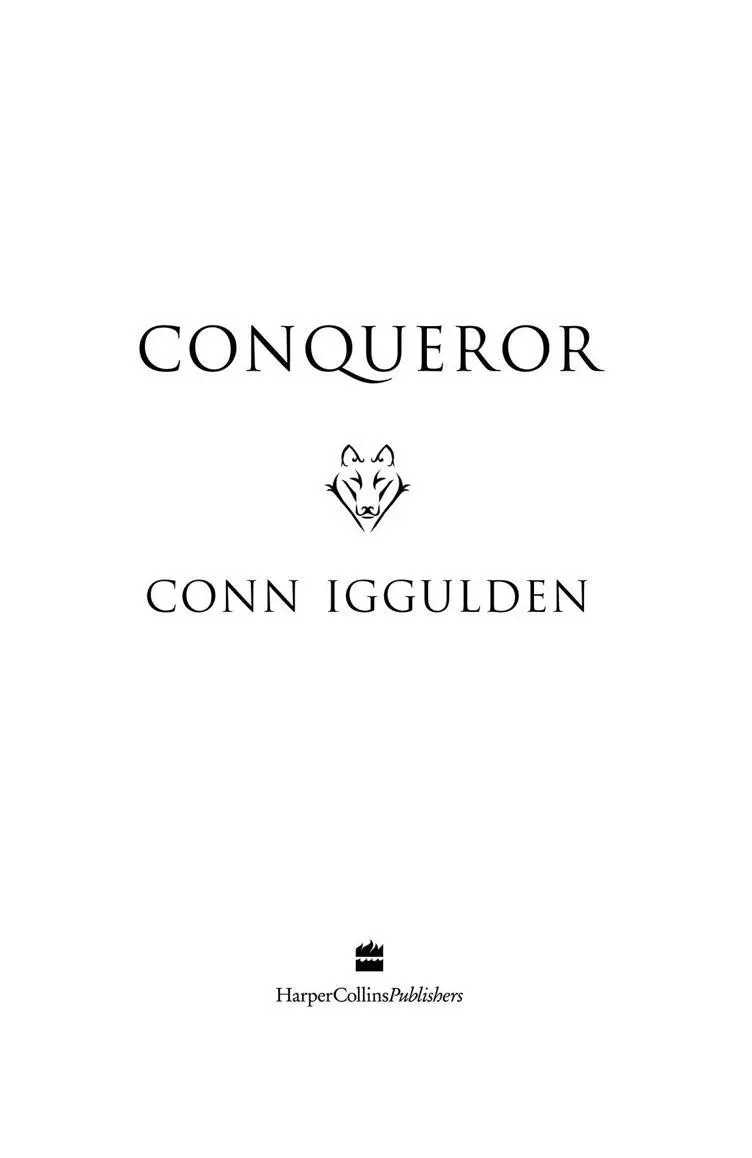
- Название:Conqueror (2011)
- Автор:
- Жанр:
- Год:неизвестен
- ISBN:нет данных
- Рейтинг книги:4 / 5. Голосов: 1
-
Избранное:Добавить в избранное
- Отзывы:
-
Ваша оценка:
Conqueror (2011): краткое содержание, описание и аннотация
Предлагаем к чтению аннотацию, описание, краткое содержание или предисловие (зависит от того, что написал сам автор книги «Conqueror (2011)»). Если вы не нашли необходимую информацию о книге — напишите в комментариях, мы постараемся отыскать её.
Conqueror (2011) — читать онлайн ознакомительный отрывок
Ниже представлен текст книги, разбитый по страницам. Система сохранения места последней прочитанной страницы, позволяет с удобством читать онлайн бесплатно книгу «Conqueror (2011)», без необходимости каждый раз заново искать на чём Вы остановились. Поставьте закладку, и сможете в любой момент перейти на страницу, на которой закончили чтение.
Интервал:
Закладка:
‘You can, but I am not going. I won’t lose another child on a hard journey home, Kublai. I’m staying with the camp until the birth.’
He saw the resolution in her face and sighed.
‘I’m too tired to argue with you, woman.’
‘Good,’ she said.
Kublai begrudged every day lost as his tumans scoured the land for herds for a hundred miles and more. In the winter, it took longer than he hoped and he saw the full moon twice before he brought the families out of the forest. The dark months were colder than the previous year. Ice crackled in the boughs of the forest, beautiful and dead at the same time. There was always wood for the stoves and the gers were surrounded by firewood piled higher than a man’s head.
The ground was still frozen when they began to pack up and leave the forest depths. Behind them, they left the usual marks, from black circles of ground under dismantled gers, to the graves of those who had died. Most were wounded men the shamans could not save, but there were many smaller graves as well, of children who had not lived through their first year. There were no mountains to lay them out for sky burial, where the carrion birds would feast. Cremation fires were too likely to spread or be seen by an enemy, so the frozen ground was broken just deep enough to cover them.
Kublai gathered the camp on an open plain. Hundreds of oxen had been yoked and they were better fed than when he had come upon them. Grain from Sung towns had been brought back with the herds and the massive animals were glossy with care, their muzzles wet and pink. He had ordered two hundred thousand of his people home, mostly the wives and children. Ten thousand men would go with them, those who had been wounded, or maimed in some old war. They could still fight if they had to.
His men griped out of habit at the order, but they too had seen the Sung armies and there was relief amidst the final embraces. The families would go fast to the Chin border, crossing in the spring to safer lands. From there, Kublai had sent scouts to his own estates. They would be safe on their journey north. He had kept only the most skilful craftsmen and herders, the metalsmiths, rope-makers and leather-workers. Most of the gers would go, so the tumans would sleep uncovered in the rain and frost.
Kublai had to keep some carts for the forges and equipment supplies - his silver would go with him into the east. He knew the camp would be less cheerful from that point. It was no longer a moving nation but a war camp, with every man there dedicated to the tumans they supported.
The two massive groups slowly drew apart, with many shouting last words. The mounted tumans watched grimly as their families grew smaller in the distance. Chabi and Zhenjin remained with her servants, but no one dared object to the decisions of the khan’s own brother. They had scouted to the Chin border and there were no armies in that direction. The danger lay only in the east and every man in the tumans knew the work was not finished. It was hard to be cheerful on such a day.
It was still a host that trundled deeper into Sung lands, but there was already a sense of having cut away the fat. They kept a good pace and if there was no singing in the camps at night, at least the men were quietly determined. Without the individual wives, the warriors were fed from communal pots, filled to the brim with a thick broth each night.
As the days began to lengthen, Kublai passed sites of his own battles. He rode in sick horror through fields of rotting corpses. Foxes, wolves and birds had feasted and flesh sloughed off the bones, enemies and friends sliding into one another as they were made soft in sun and rain. His tumans rode through with utter indifference, making Kublai wonder how they could keep their food in their stomachs. His imagination forced him to consider his own death, left in a foreign field. He did not know whether such concerns troubled men like Uriang-Khadai, or whether they would admit the truth if he asked.
His scouts reported contact with a force of cavalry forty miles shy of Shaoyang, but whoever it was retreated at speed before the tumans, staying out of range and riding as if all hell was on their heels. Without an order being given, Kublai’s warriors began to increase their pace each day. The carts in the reduced camp fell back to the maximum range of twenty miles, within reach of a sudden assault if they came under attack. During the cold days, the men drank warm blood from the mares, sharing the slight wounds between three or four spare mounts so that none of the animals grew too weak. They were in their own battle trail and there were no fresh supplies to be had until they passed Shaoyang. Kublai wondered how the prefect there would react when he saw them return. He would survive their passing for a second time, something few men could say.
Kublai had understood at last that he had too few warriors to smash their heads against Sung walls. Eventually, the swarming enemy would grind his tumans into dust. He had made his decision and wondered if he was even the same man who had entered Sung lands with such youthful confidence. He could not have gambled it all back then. Now, he would drive them on to the heart of the empire in one great push. He would not stop for Shaoyang. He would not stop for anything.
His tumans could see men on the roofs of the sprawling city as they rode past. Kublai raised a hand to them, in greeting or farewell, he did not know. He would cut the heart out of the Sung dragon in one strike. The other cities had nothing to fear from him.
Past Shaoyang, the land had not been stripped of everything that might feed a hungry soldier. The first small towns were looted for food, though Kublai forbade their destruction. Back in the forest camp, his men had seen the great store of silver he had taken, handed down from a thousand horses, the bars passing from man to man and then placed in piles on the wet leaves. Though the tumans had not been paid in months, they knew at least that it existed and did not grumble too loudly or too often.
He did not expect yam riders, so far to the south. The lines of way stations had ended in Chin lands and when he saw not one but two of the men, they barely resembled the fast-moving endurance riders he knew. His scouts brought the pair in together and Kublai drew to a halt on a wide plain as he heard the jingle of bells from their saddle cloths. He nodded to Uriang-Khadai and the orlok bellowed orders to dismount and rest.
‘They look half dead,’ Bayar murmured to Kublai as the men rode up with his scouts on either side.
It was true enough and Kublai wondered how the men had been finding food without the yam stations to feed them or give them fresh mounts. Both were unkempt and one of them moved with obvious pain, grunting at every step of his horse. They came to a halt and Bayar told them to dismount. The first one slid from the saddle, staggering slightly as he landed. While he was searched, Bayar looked up into the grey face of his companion.
‘I have an arrow somewhere in my back,’ the yam rider said weakly. ‘It’s broken off, but I don’t think I can get down.’ Bayar saw how his right hand hung limp, flopping in the reins that were wrapped around it. He called one of his men and together they pulled the rider clear of his saddle. He tried not to cry out, but the strangled sound of agony he made was worse.
On the ground, Bayar lowered the man to his knees and looked at the arrow stump sticking out high on his shoulders. Every breath would have hurt and Bayar whistled softly. He reached down and prodded the stub, making the rider jerk away with a stifled curse.
‘It’s rotting the flesh,’ Bayar said. ‘I can smell it from here. I’ll have a shaman cut it out and seal it with fire. You’ve done well.’
Читать дальшеИнтервал:
Закладка:
Похожие книги на «Conqueror (2011)»
Представляем Вашему вниманию похожие книги на «Conqueror (2011)» списком для выбора. Мы отобрали схожую по названию и смыслу литературу в надежде предоставить читателям больше вариантов отыскать новые, интересные, ещё непрочитанные произведения.




Обсуждение, отзывы о книге «Conqueror (2011)» и просто собственные мнения читателей. Оставьте ваши комментарии, напишите, что Вы думаете о произведении, его смысле или главных героях. Укажите что конкретно понравилось, а что нет, и почему Вы так считаете.