Conn Iggulden - Conqueror (2011)
Здесь есть возможность читать онлайн «Conn Iggulden - Conqueror (2011)» — ознакомительный отрывок электронной книги совершенно бесплатно, а после прочтения отрывка купить полную версию. В некоторых случаях можно слушать аудио, скачать через торрент в формате fb2 и присутствует краткое содержание. Жанр: Старинная литература, на английском языке. Описание произведения, (предисловие) а так же отзывы посетителей доступны на портале библиотеки ЛибКат.
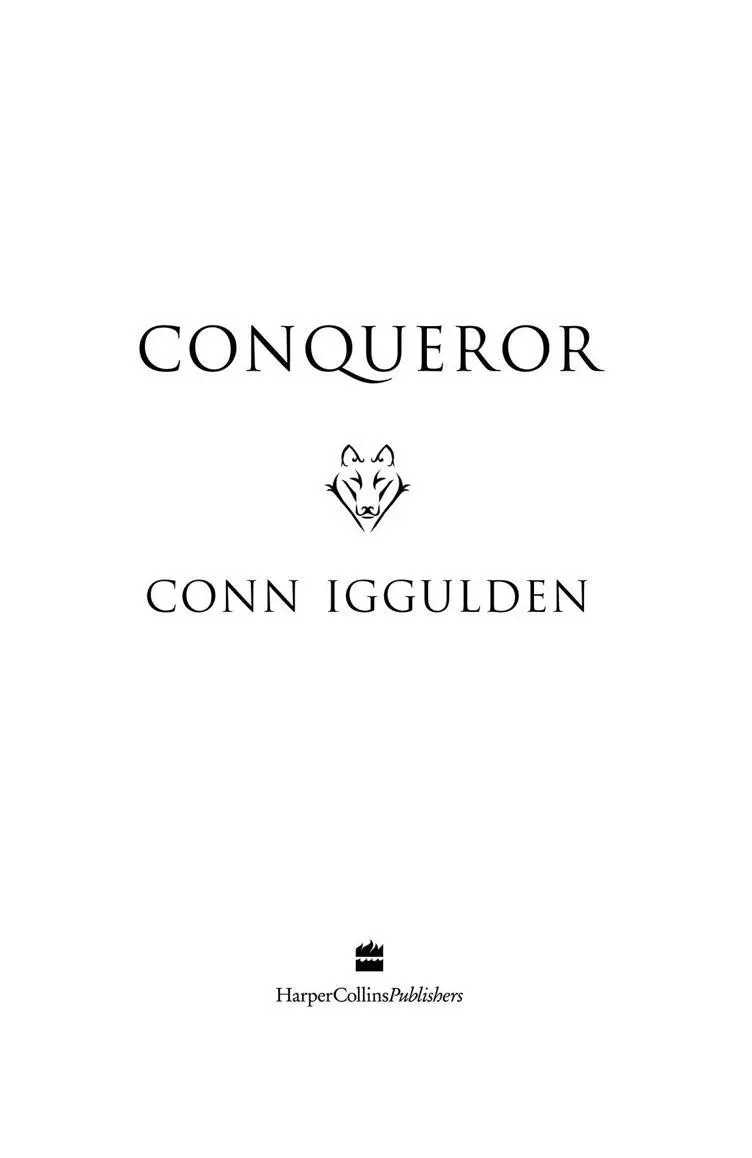
- Название:Conqueror (2011)
- Автор:
- Жанр:
- Год:неизвестен
- ISBN:нет данных
- Рейтинг книги:4 / 5. Голосов: 1
-
Избранное:Добавить в избранное
- Отзывы:
-
Ваша оценка:
Conqueror (2011): краткое содержание, описание и аннотация
Предлагаем к чтению аннотацию, описание, краткое содержание или предисловие (зависит от того, что написал сам автор книги «Conqueror (2011)»). Если вы не нашли необходимую информацию о книге — напишите в комментариях, мы постараемся отыскать её.
Conqueror (2011) — читать онлайн ознакомительный отрывок
Ниже представлен текст книги, разбитый по страницам. Система сохранения места последней прочитанной страницы, позволяет с удобством читать онлайн бесплатно книгу «Conqueror (2011)», без необходимости каждый раз заново искать на чём Вы остановились. Поставьте закладку, и сможете в любой момент перейти на страницу, на которой закончили чтение.
Интервал:
Закладка:
Kublai felt the wrench to his emotions as his power to reach out and strike suddenly vanished. The air was thick with sulphur and steam and he had to wait while the breeze tore it into wisps and he could see again.
When they were revealed, the Sung regiments had taken a vicious battering. Thousands of men were clearing the dead and the officers rode up and down the lines, exhorting them, pointing up to the ridge and no doubt shouting that the worst was already over. Kublai swallowed drily. They had not broken. As he stared into the distance, he saw their own cannon teams swarm around their weapons. Time slowed down for him and he could hear every beat of his heart as he raised his hand. His men had to cross half a mile of land, one hundred and twenty to one hundred and eighty heartbeats. He would feel every one of them. He roared the orders and his tumans came over the ridge, kicking their mounts into a gallop. Kublai remained still as they flowed past him, knowing he had to be the calm centre, the eye above them that could read the battle and react to it, as the men below could not.
They poured down towards the Sung lines and a great shout of anger and challenge went up from those who had been forced to stand through the most terrifying moments of their lives. Kublai barked at his bannermen and they raised the flags that would send Uriang-Khadai and Bayar out wide against the flanks.
He could not trust his heartbeat to judge the time. When he held a finger to his neck, he could not find it at first, then felt such a rapid pulse that he gave up. The tumans hit full gallop on the short plain below the bowl and he could see the black needles of arrows fly before them, a different kind of terror for those Sung who still stood and dared them to come in close.
He winced as the first Sung cannons fired. Below, he could see the paths of the balls, chopping through the galloping ranks. The tumans covered the ground at reckless speed and as the Sung teams reloaded, his men sent arrow shafts whining in among them, so that the Sung gunners fell faster than they could be replaced. On the wings, Uriang-Khadai and Bayar had ridden in close, then halted at two hundred paces. From each ten thousand, arrows soared, punched out from bows too strong for other men to draw. There were no cannons on the wings, but most of Kublai’s archers could hit an egg at fifty paces. They could hit a man at two hundred and the very best of them could pick the spot.
On the ridge, thousands of warriors still poured past him. An entire tuman was pressing on, desperate not to be left out of the battle. The resting gun teams shouted encouragement, knowing they could play no further part. Kublai found himself trembling as the last warrior rode over the ridge. He had a mere twenty men left as a personal guard and a drummer boy on a camel to give signals. Every officer below could see him and he was the only one able to judge the entire battlefield. He wrestled with the urge to give new orders, but at that point it would have been more likely to hamper his officers.
For a time, he raised himself up, standing on his saddle so that he could see exactly what was happening. His mind still ticked away with ideas and plans and he knew he would have to set forges to make iron balls for the cannons. It was difficult work to make a true sphere with no imperfections that might snag on a barrel and burst it or send the ball slicing off in the wrong direction. Iron had to be heated until it ran like water, and the temperatures were far beyond the portable forges he had. Lead balls were a possibility, but the soft metal was too prone to becoming misshapen. Kublai wondered for a moment if the smelter of the mine could be used. It was far easier to polish stone, but the labour took weeks and, as he had seen, he could lose the best part of a year’s supplies in a morning.
He shook his head to clear it of the endless spinning thoughts. The Sung regiments were falling back on themselves, assaulted on all sides. More than half their number lay dead and anyone with an officer’s armour was already cold, fat with arrows. As Kublai watched, his two wings used the last of their shafts. The rear ranks passed lances forward and they kicked into a gallop, lowering the long weapons to open holes into the enemy that they could follow. Those behind drew swords and even at a distance Kublai could hear their battle cry.
Hulegu was tired. In the months since he had burnt Baghdad, he had been busy with the administration of a vast area. He had entered Syria and taken the city of Aleppo, smashing a small army and slaughtering three tribes of Kurds who preyed on the local towns as bandits. The nobles of Damascus had come to him long before he attacked their city. The example of Baghdad had not been lost on them and they surrendered before they could even be threatened. He had a new governor there in his name, and beyond a few token executions, the city lay untouched.
He had been surprised to learn that Kitbuqa was a Christian, though it seemed not to blunt his righteous rage against the Moslem cities. Kitbuqa had begun holding Mass in captured mosques before burning them, a deliberate insult. Hulegu smiled at the memory. Together, they had captured more wealth than Tsubodai, Genghis or Ogedai had ever seen, sending much of it back to his brother in Karakorum. More was used to rebuild the cities he had taken under new governors. Hulegu shook his head in amusement at the thought, still surprised that he could earn gratitude in such a way. Memories were short, or perhaps it worked because he had killed everyone who might object. Baghdad was being rebuilt with a tiny part of the caliph’s own treasury, made new under a Mongol governor. Merchant families came in daily to find homes in the city, where land and houses were suddenly cheap. Business was already growing and the first taxes were being collected, though the city was not a fraction yet of what it had been.
Hulegu rested for that night in a roadside inn, chewing his food slowly and wishing only that the Moslems would turn their considerable ingenuity to alcohol. He had tasted their coffee and found it bitter in comparison, not a drink for a man at all. His stocks of wine and airag had long gone and until they found a new supply, his army was running dry, making the men irritable and short-tempered. Hulegu knew he would have to import a few hundred families to make the fiery spirit he had enjoyed from childhood. With that small reservation, he was pleased with the lands he had won for himself. His sons would have a khanate and Mongke would honour him. Hulegu chuckled wearily to himself as he ate. It was strange how he still looked for Mongke’s approval. At their age, a difference of just a few years should not have mattered, but somehow it did. He emptied a glass of some fruit drink, grimacing at the sickly sweetness, with an aftertaste of metal.
‘A little more, master?’ the servant asked, holding up a jug.
Hulegu waved him away, trying not to think of how good airag would cut the sweetness and make his throat burn. He felt an ache begin in his abdomen and he massaged it with short, blunt fingers. He strained for a time, but there was no wind and the pain increased, sweat breaking out on his face.
‘Bring me water,’ he said, scowling.
The servant smiled. ‘It is too late for that, master. Instead, I have brought you a greeting from Alamut and a peace you surely do not deserve.’
Hulegu gaped at him, then tried to rise. His legs felt weak and he staggered, but he had the strength to shout.
‘Guards! To me!’
He slumped against the table. The door slammed open and two of his men entered with their swords drawn.
‘Hold him,’ Hulegu snarled.
A wave of weakness washed over him and he slid to his knees, pushing two of his fingers deep into his throat. As his men watched in horrified confusion, Hulegu vomited up the contents of his stomach in a great flood. He had eaten well and he heaved again and again, the bitter smell filling the room. Still the pain increased, but his head cleared a little. The servant had not resisted and merely stood between the warriors, watching closely with a worried frown.
Читать дальшеИнтервал:
Закладка:
Похожие книги на «Conqueror (2011)»
Представляем Вашему вниманию похожие книги на «Conqueror (2011)» списком для выбора. Мы отобрали схожую по названию и смыслу литературу в надежде предоставить читателям больше вариантов отыскать новые, интересные, ещё непрочитанные произведения.


Обсуждение, отзывы о книге «Conqueror (2011)» и просто собственные мнения читателей. Оставьте ваши комментарии, напишите, что Вы думаете о произведении, его смысле или главных героях. Укажите что конкретно понравилось, а что нет, и почему Вы так считаете.