Thomas Cook - Sacrificial Ground
Здесь есть возможность читать онлайн «Thomas Cook - Sacrificial Ground» весь текст электронной книги совершенно бесплатно (целиком полную версию без сокращений). В некоторых случаях можно слушать аудио, скачать через торрент в формате fb2 и присутствует краткое содержание. Жанр: Старинная литература, на английском языке. Описание произведения, (предисловие) а так же отзывы посетителей доступны на портале библиотеки ЛибКат.
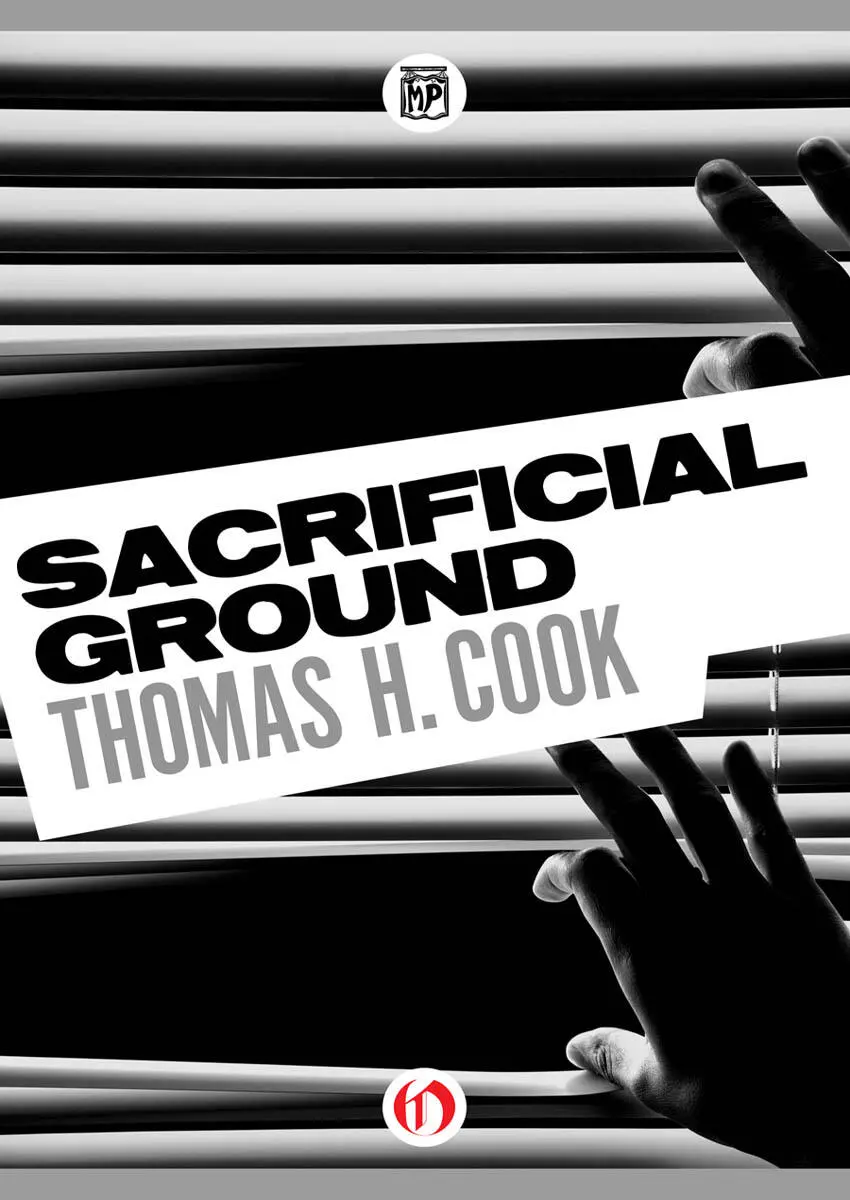
- Название:Sacrificial Ground
- Автор:
- Жанр:
- Год:неизвестен
- ISBN:нет данных
- Рейтинг книги:5 / 5. Голосов: 1
-
Избранное:Добавить в избранное
- Отзывы:
-
Ваша оценка:
Sacrificial Ground: краткое содержание, описание и аннотация
Предлагаем к чтению аннотацию, описание, краткое содержание или предисловие (зависит от того, что написал сам автор книги «Sacrificial Ground»). Если вы не нашли необходимую информацию о книге — напишите в комментариях, мы постараемся отыскать её.
Sacrificial Ground — читать онлайн бесплатно полную книгу (весь текст) целиком
Ниже представлен текст книги, разбитый по страницам. Система сохранения места последней прочитанной страницы, позволяет с удобством читать онлайн бесплатно книгу «Sacrificial Ground», без необходимости каждый раз заново искать на чём Вы остановились. Поставьте закладку, и сможете в любой момент перейти на страницу, на которой закончили чтение.
Интервал:
Закладка:
“Toward the Southside?” Frank asked.
“Well, that’s where she was found, after all.”
“How did you know that?”
“It was in the paper,” Morrison said. He took a folded newspaper from the table behind his desk and handed it to Frank. “See?”
Frank opened the paper. Angelica’s Northfield photograph stared up at him from the front page.
“She should have been in the paper,” Morrison said, “but not like this. As an actress, perhaps, or something else equally meaningful.” He shook his head. “But not this.”
Frank handed the newspaper back to him.
Morrison glanced at it again, then allowed his eyes to drift toward one of the Civil War portraits that hung on the opposite wall. It seemed to calm him, as if he had discovered something sweet and beautiful within it which the hectic world of upper-class education could not give him.
“I believe in tradition, Mr. Clemons,” he said, finally. “I don’t believe I should have to apologize for that.” He looked back toward Frank. “When I think of Angelica, I think of someone who was drifting, who had no traditions to stand on.”
“Maybe she didn’t like them,” Frank said.
“Of course, that’s possible.”
“Why did she go to this school?”
“It was not her choice.”
“Whose was it?”
“Arthur Cummings chose the school.”
“He made her go here?”
“He administered her trust fund,” Morrison said. “Part of it was allocated for Angelica’s education. Arthur elected to spend that money at Northfield.”
Frank wrote it down.
“And may I add that I think Arthur made a wise choice?” Morrison said. “He was trying to help Angelica. But some people simply cannot be helped.”
From the tone of his voice, Frank would have thought that he was talking about the kind of girl who ended up on her back, waiting for the next trick.
“What did Cummings want her to be?” he asked.
“Responsible,” Morrison replied. “A credit to her family. A woman of some standing in the community.” He looked at Frank sadly. “Isn’t that what everyone wants for his children?”
Frank said nothing, but in his mind he suddenly asked himself what he had wanted for his own daughter. It struck him that he’d wanted only for her to live through all the stages of life, and, at the end, to have had some sense that it had been worthwhile.
“If she’d just allowed herself to join in with the other people at Northfield, she’d have been all right,” Morrison said confidently.
For a moment, Frank actually tried to see the world as Morrison did, but he found that he could not comprehend his vision of a clearly divided world where a human being remained safe in one place and was imperiled by another. Instead he saw it as a constantly melding landscape, one in which there were no isolated lands, no insurmountable walls, no places so high that the tide could not rush in and sweep everything away.
“I’ll need copies of the student and faculty directory,” he said.
“I hope you’ll use them discreetly,” Mr. Morrison told him.
“And could you tell me where the theater is? I need to talk to this Mr. Jameson.”
“The building just behind this one,” Morrison said. He walked Frank out of the office and stood with him a moment in the corridor. “I am sorry about Angelica,” he said. “I hope you understand that.”
Frank nodded. There seemed nothing left to say.
11
As he entered the theater, Frank could see a tall, lean man who stood quietly on stage. He adjusted a microphone, then glanced up toward the back of the theater.
“All right, hit the spot,” he called loudly.
Instantly a shaft of bright light cut through the dark interior of the theater. It enveloped the man on the stage, and threw a dark shadow almost to the rear wall of the stage. The man looked at the shadow, studying it closely, as if it were a dark pool of water which had just risen from beneath the boards.
“I like that,” the man said. “Orchestra won’t notice, but it’ll be a nice effect for the people in the balcony.”
Once again he looked up toward the back of the theater.
“Okay, drop it,” he called, and the light flashed off immediately.
It was only then that he caught Frank in his eye. He leaned forward and squinted. “Can I help you with something?”
Frank walked down the center aisle and flashed his badge.
“I’m here about Angelica Devereaux,” he said. “Are you Mr. Jameson?”
“Yes, I am.”
“Well, I guess you’ve—”
“Just a minute, please,” Jameson said hastily. He looked up toward the balcony again. “Okay, Douglas, you can finish up later. Just leave the spot in position and go on to your class.”
Jameson waited until the boy had left, then he made the small leap from the stage to the floor. “The whole faculty had a private meeting about it this morning,” he said. He smiled slightly. “All that matters is that Angelica not be associated with Northfield.”
“Does everyone feel that way?”
“The board feels that way,” Jameson said. “That’s all that matters. As for the teachers, they’re a bunch of cowards, afraid for their jobs.” He shrugged. “Of course, Morrison has a point. Angelica had already graduated; she really wasn’t a part of the school anymore.”
“She was in a play, I understand,” Frank said.
“That’s right.”
“Which you directed?”
Jameson laughed. “Does that make me a suspect?”
“We’re not sure how she died.”
“Well, what does that make me then?”
“Just someone who had contact with her,” Frank said. He let his eyes drift down slightly. Jameson was dressed in a plain sweatshirt, spattered jeans and worn, unwashed sneakers. It was the sort of outfit that singled him out as a good deal less straitlaced than Northfield appeared to be.
“You did know her, didn’t you?” he asked.
“Yes, a little. Like you said, I was her director.”
“Did you know she was pregnant?”
“I heard she was.”
“From whom?”
“Morrison,” Jameson said. “That’s got them more uptight than her being dead.”
“Do you know who the father might be?”
Jameson shifted lightly on his feet. “Not me, if that’s what you’re thinking.”
It wasn’t beyond imagining, and Frank had already considered it. Jameson was young, perhaps thirty-five. He was handsome in a rough-and-tumble, scraggly-clothed sort of way, and he seemed to have a definite energy in his body and his eyes, the sort that might draw a young girl to it.
Jameson smiled slowly, and as he did so, Frank caught the un-evenness of his teeth. It gave him an odd, predatory look.
“Do you really think I might be the father?” Jameson asked.
“I don’t know,” Frank told him. “Are you?”
“Isn’t there some sort of test you can do if you really want to find out?”
Frank said nothing.
“Well, Mister …”
“Clemons.”
“Clemons. You can test me until the cows come home, but I didn’t fuck Angelica.” He waited for Frank to answer, peering intently at his face. “By the way,” he said, after a moment, “what happened to you?” He smiled. “You look like a mine blew up in your face.”
“When was this play?” Frank asked.
“Two months ago.”
“And rehearsals before that?” Frank asked.
“Yes.”
Frank took out his notebook. “For how long?”
“Six weeks.”
“Were they during the day or at night?”
“Both,” Jameson said. “When it got close to opening night, we had more evening rehearsals.”
“Did she come to most of them?”
“Yes, she did,” Jameson said, “and that surprised me. Kids sometimes burn out. I thought she would be one of the first. You know how it is, kids have different priorities than adults.”
Читать дальшеИнтервал:
Закладка:
Похожие книги на «Sacrificial Ground»
Представляем Вашему вниманию похожие книги на «Sacrificial Ground» списком для выбора. Мы отобрали схожую по названию и смыслу литературу в надежде предоставить читателям больше вариантов отыскать новые, интересные, ещё непрочитанные произведения.









Обсуждение, отзывы о книге «Sacrificial Ground» и просто собственные мнения читателей. Оставьте ваши комментарии, напишите, что Вы думаете о произведении, его смысле или главных героях. Укажите что конкретно понравилось, а что нет, и почему Вы так считаете.