Jack Whyte - The Eagles' Brood
Здесь есть возможность читать онлайн «Jack Whyte - The Eagles' Brood» весь текст электронной книги совершенно бесплатно (целиком полную версию без сокращений). В некоторых случаях можно слушать аудио, скачать через торрент в формате fb2 и присутствует краткое содержание. Жанр: Старинная литература, на английском языке. Описание произведения, (предисловие) а так же отзывы посетителей доступны на портале библиотеки ЛибКат.
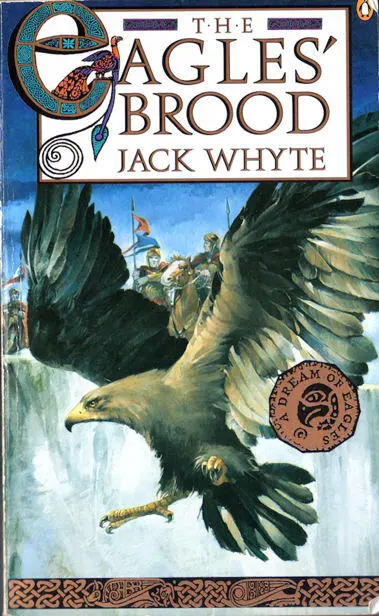
- Название:The Eagles' Brood
- Автор:
- Жанр:
- Год:неизвестен
- ISBN:нет данных
- Рейтинг книги:4 / 5. Голосов: 1
-
Избранное:Добавить в избранное
- Отзывы:
-
Ваша оценка:
The Eagles' Brood: краткое содержание, описание и аннотация
Предлагаем к чтению аннотацию, описание, краткое содержание или предисловие (зависит от того, что написал сам автор книги «The Eagles' Brood»). Если вы не нашли необходимую информацию о книге — напишите в комментариях, мы постараемся отыскать её.
In the author's The Skystone (1996), set in the last years of the Roman occupation of fifth-century Britain, the sword Excalibur was forged, presaging the reign of King Arthur years later. This time, the narrator, grand-nephew of the forger of the sword, is none other than that (traditionally) eerie being, Merlin the sorcerer--sanitized here to the most high-minded of soldiers who survives wars, betrayal, and a tragic love affair. Caius Merlyn Britannicus, born in a.d. 401, is the son of the Commander in Chief of the forces of the fortress/town of Camulod, a community of Romans and Britons. Merlyn's best friend from boyhood is his cousin Uther Pendragon, a mighty warrior and the son of a Celtic king, though with a terrible temper that can show itself off the fields of war. Torturing Merlyn is the suspicion that it might have been Uther who brutally beat the waif whom Merlyn will name Cassandra after she violently resists Uther's sexual games. The deaf and dumb Cassandra (her real identity will be a surprise) is healed and then secluded, eventually becoming Merlyn's wife until her savage death. There are wars and invasions, waged principally by King Lot of Cornwall, wars that bring awful innovations like poisoned arrows. There are also theological conflicts, since the free-will doctrines of Pelagius are condemned as heretical by the Church. Merlyn's trek to a seminal debate of theologians is marked by skirmishes--he rescues the warrior/bishop Germanus at one point--and by the discovery of a half-brother. All ends with the deaths of those fierce antagonists Lot and Uther, and with Merlyn holding up Uther's baby son by Lot's dead queen, a baby who hasthe deep golden eyes of . . . a mighty bird of prey . . . a King perhaps, to wield Excalibur.'' With plenty of hacking and stabbing, pontifications, dogged sex, and a few anachronistic mind-sets: another dipperful from the fertile Arthurian well, sans magic but brimful of action.
The Eagles' Brood — читать онлайн бесплатно полную книгу (весь текст) целиком
Ниже представлен текст книги, разбитый по страницам. Система сохранения места последней прочитанной страницы, позволяет с удобством читать онлайн бесплатно книгу «The Eagles' Brood», без необходимости каждый раз заново искать на чём Вы остановились. Поставьте закладку, и сможете в любой момент перейти на страницу, на которой закончили чтение.
Интервал:
Закладка:
I had long since given up making any attempt to entice her to leave the valley and return with me to Camulod. Several times I had tried it, and she had come to recognize the attempts, so that now she would not even venture with me to the pathway leading up the hill. I made no serious effort to convince her that her return was important to me. I was really quite content to keep her there, all to myself, sharing her with no one, knowing that she was there, waiting to comfort me whenever the realities of life at Camulod became overpowering.
For a very long time after the events surrounding the death of my father, however, life around Camulod remained quiet, pleasant and peaceful. The upheavals caused by Lot's invasion, or by Caspar and Memnon's invasion, soon died down and passed into memory, and life regained its normal tenor. Donuil's education in our ways continued with a swiftness that surprised and gratified all of us. He was quickly accepted by the entire garrison—thanks to Centurion Rufio, who also flourished under his new responsibilities—and by the colonists themselves, and the friendship between us grew steadily as we discovered more of each other's character and disposition. Summer faded into autumn, with a fine harvest, which advanced slowly into another mild winter and a brilliant spring. All awareness of threats from outside seemed to have vanished, except that patrols still came and went regularly and there was no lessening of vigilance among the military guardians of the peace.
In the spring, however, Aunt Luceiia's ubiquitous bishops brought news of another kind: tidings from Rome.
I heard the news on my return from one of my frequent three-day visits to Cassandra in the springtime of the new year, when I was summoned to visit Luceiia. I found her in unusually high spirits, even for her. She informed me that, now that spring had arrived, she intended to return with me to Avalon—she herself used the name—to meet my Cassandra and convince her to come back with us and live a civilized life in Camulod, where she and I would be married.
I was nonplussed, and immediately at war within myself. Part of me saw the sense of what she was proposing, but another, possibly stronger part, was unwilling even to consider forsaking the private happiness I had known with Cassandra in our tiny valley. Aunt Luceiia, however, would brook no argument, and when I finally managed to insert a few words into her animated monologue I agreed that it would be wonderful, at least, for her to meet my love. I also asked her, although without much real interest, to be more specific about her "news from Rome," news of which I knew nothing.
Her eyebrows rose slightly in shock. "What do you mean, you know nothing about it? Everyone knows about it!"
I shook my head. "Forgive me, Auntie, but I have no idea what 'it' is."
She blinked at me, still looking slightly astonished. "Why, Germanus of course."
"I beg your pardon?"
"Germanus. Germanus is 'it.'"
"I see. Which Germanus are you talking about?"
Her eyebrows quirked into a fleeting frown of impatience. "General Germanus, your father's friend, the former Legate who served with him in Asia Minor under Stilicho. He is now the Bishop of Auxerre."
I was thoroughly confused and held up my hand, in an appeal for patience. "Please, Auntie, forgive me. I've been away for a time, and all of this has happened in my absence, so be patient with me if I seem confused. General Germanus is the Bishop of Auxerre, in Gaul?"
"That is correct."
I shook my head again, thoroughly confused. "But how can that be? How can a Legate be a bishop?"
My aunt sniffed eloquently. "Easily, it seems. Germanus retired from the Legions, as all men must at some time, and entered the priesthood, which few Legates, or other soldiers, for that matter, ever do. He was always a deep-thinking man, apparently, and he is now the Bishop of Auxerre, and a very highly respected theologian, according to the reports I have received."
"From your own bishops, of course."
"Yes." My aunt was unconscious of any irony.
"I see. So what else have your bishops told you?"
She bridled like a proud pony and answered me with an indignant expression and a condescending tone to her voice as though explaining the obvious to one who was already well informed. "That, in spite of the teachings of Pelagius being condemned as wickedly controversial, we the people here in Britain still cling to them."
"But we always have, Auntie, and we have always known it. What is so new about that?"
Luceiia drew herself upright. "The novelty, Nephew, lies in the fact that there is almost open, holy war among our British bishops. Not all of them are followers of Pelagius. There are many, it seems, who adhere to the teachings of Augustine of Hippo and the hierarchical powers of the churchmen in Rome. Those bishops, the Orthodox Bishops of Britain, as they call themselves, have written to Pope Celestine, begging him to intercede for them here in this country."
She paused for a moment, then went on. "Pelagius is dead. He died last year in Palestine. He died excommunicate."
"How so? Pope Innocent exonerated him!"
"No," she corrected me, "Innocent excommunicated him. It was Pope Zosinus, Innocent's successor, who absolved Pelagius, eleven years ago. That was short-lived, however. Zosinus changed his mind, and his decree, the following year, under pressure from the combined bishops at the Council of Carthage. Pelagius lived his last ten years apostate."
"Thereby proving the validity of his own beliefs. How can such total condemnation be Christian? I understood no sin was too big to be forgiven." Another thought occurred to me. "What of his followers?"
Aunt Luceiia sniffed. "We have all been declared heretics, although we have not yet been actively declared excommunicate. We are being told now that the Church Fathers in Rome consider us to have been misled for many years, seduced from the proper path of the Church's teaching through no fault of our own. They now wish us to submit voluntarily to the will and the teachings of Rome. The Holy Father in Rome, Pope Celestine, is sending Germanus of Auxerre, the warrior bishop, here to Britain to debate the question of Pelagianism—that is the name they are giving to our beliefs versus their 'orthodoxy'—with our own British bishops, in the great theatre at Verulamium."
She had my full attention. This was what my father had called for in his confrontation with the zealot priests. "A debate, you say? A public debate? When, Auntie? When is this to take place?"
She looked me in the eyes shrewdly, assessing the sudden interest in my voice. "In September, six months from now, but why do you ask? You wouldn't be thinking of going to listen, would you?"
Her tone made me smile. "Why not? Would it surprise you very much if I showed that much interest?"
"In matters of the Church? You?" she scoffed. "My dear boy, whatever hopes I might once have had for your salvation are long dead. You are my nephew, and I love you, but you are a scandalous libertine." She laughed aloud. "I can no more imagine you travelling from here to Verulamium for a debate between bishops than I could imagine my Publius, God rest him, earning his living as a fisherman."
I grinned with her. "Why not, Auntie? Publius Varrus, having decided he must be a fisherman, would have had boats sink beneath him from the weight of his catch." I paused, sobered. "Seriously, Auntie, I think it would be irresponsible of me to miss this debate, if I could possibly arrange to be there."
"Irresponsible, Cay?" She had caught my mood change, and leaned back in her chair to scrutinize me more closely, squinting her eyes slightly as she sought to read my expression. "Why irresponsible? That is a weighty word."
"This is a weighty matter, Auntie."
Читать дальшеИнтервал:
Закладка:
Похожие книги на «The Eagles' Brood»
Представляем Вашему вниманию похожие книги на «The Eagles' Brood» списком для выбора. Мы отобрали схожую по названию и смыслу литературу в надежде предоставить читателям больше вариантов отыскать новые, интересные, ещё непрочитанные произведения.







Обсуждение, отзывы о книге «The Eagles' Brood» и просто собственные мнения читателей. Оставьте ваши комментарии, напишите, что Вы думаете о произведении, его смысле или главных героях. Укажите что конкретно понравилось, а что нет, и почему Вы так считаете.