Vilmos Kondor - Budapest Noir
Здесь есть возможность читать онлайн «Vilmos Kondor - Budapest Noir» — ознакомительный отрывок электронной книги совершенно бесплатно, а после прочтения отрывка купить полную версию. В некоторых случаях можно слушать аудио, скачать через торрент в формате fb2 и присутствует краткое содержание. Жанр: Старинная литература, на английском языке. Описание произведения, (предисловие) а так же отзывы посетителей доступны на портале библиотеки ЛибКат.
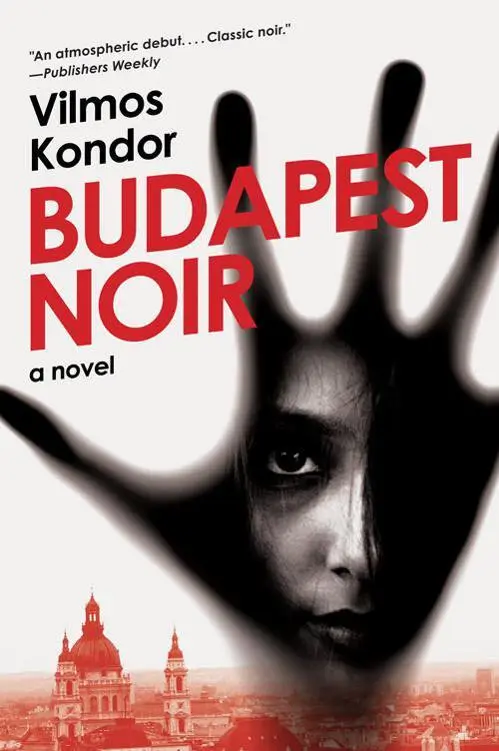
- Название:Budapest Noir
- Автор:
- Жанр:
- Год:неизвестен
- ISBN:нет данных
- Рейтинг книги:3 / 5. Голосов: 1
-
Избранное:Добавить в избранное
- Отзывы:
-
Ваша оценка:
Budapest Noir: краткое содержание, описание и аннотация
Предлагаем к чтению аннотацию, описание, краткое содержание или предисловие (зависит от того, что написал сам автор книги «Budapest Noir»). Если вы не нашли необходимую информацию о книге — напишите в комментариях, мы постараемся отыскать её.
A gripping and evocative thriller, brimming with suspense and breathtaking political intrigue, Vilmos Kondor's
is a richly atmospheric tale of murder and betrayal from a remarkable new voice in noir detective fiction.
Budapest Noir — читать онлайн ознакомительный отрывок
Ниже представлен текст книги, разбитый по страницам. Система сохранения места последней прочитанной страницы, позволяет с удобством читать онлайн бесплатно книгу «Budapest Noir», без необходимости каждый раз заново искать на чём Вы остановились. Поставьте закладку, и сможете в любой момент перейти на страницу, на которой закончили чтение.
Интервал:
Закладка:
“I’m g-g-glad you were here,” he said with a smile. “C-c-come again.”
Czövek started off, and they hadn’t even turned back out onto the road in front of the hunting lodge when Krisztina’s head slumped onto Gordon’s shoulder.
When they arrived back at the hotel, Krisztina woke with a start. “Are we here?”
“We are,” replied Gordon, helping her out of the car. He then signaled to Czövek that he shouldn’t go anywhere just yet. On reaching the room, Krisztina sat on the edge of the bed and tried but failed to get undressed. Gordon helped her, then tucked her in. A couple of minutes later, Krisztina was fast asleep.
Gordon sat down at the desk, found a sheet of hotel stationery, and, after several attempts, finally found the position he needed to properly hold the pen. He leaned over the sheet of paper and began to write slowly:
Krisztina, I’ve returned to Budapest. I didn’t want to wake you up. I hope you slept well. By the time you get back tomorrow with Czövek, I’ll know a lot more. But I couldn’t stay here with you now. I know you’re disappointed and mad, too, but I still ask that you not be angrier than necessary. I don’t want trouble to come your way. I hope I’m wrong, but I think these people are capable of anything. I have to act fast to head them off. I’ll leave the car here for you. By no means should you head back before lunch. Go to Mór, not home. I’ll explain everything.
He put the letter on the nightstand, then took his suitcase and went quietly out the door.
At the reception desk he asked when the last train from nearby Miskolc left for Budapest. The man glanced at his watch.
“At eight, but I doubt you’ll reach it, sir.”
“I’ll give it a try,” said Gordon. “Tally up my bill. The woman will check out tomorrow. Add breakfast and lunch, too, and throw in another ten pengős.”
A couple of moments later the man slid the bill across the counter. Gordon didn’t even wince on seeing the sum. He filled out a check for fifty pengős, slid it back to the man, and hurried out to Czövek.
“Giddyup, Czövek, we’ve got to make the eight o’clock train.”
“And the little lady?”
“You’ll take her to Budapest tomorrow.”
Czövek jumped in the car, cracked his fingers, shifted into gear, and after careening along downhill into Miskolc at breakneck speed, he screeched the Opel to a halt in front of the station at two minutes before eight.
“Here are fifty pengős. Will that be enough for the two days?” said Gordon, extending three banknotes—two twenties and a ten—to Czövek.
“Yes, sir,” said Czövek. “Plenty.”
“Don’t head off tomorrow before two, and take the lady to the Circle.”
“Hitler Square, you mean?”
“That’s what I mean,” said Gordon, taking his suitcase and hurrying into the station. The conductor was already blowing his whistle when Gordon boarded the train. He sat down in an empty compartment and pulled his hat over his eyes. The conductor woke him up in Gyöngyös. Gordon paid for the ticket, stared out at the black landscape all the way into Budapest, and pondered where he would begin Wednesday and where it would all end.
In front of the East Railway Station, Gordon waved down a cab and asked to be taken home. It was well past midnight when he opened the door of his flat on Lovag Street. He threw aside his suitcase and blazer, soaked a rag with cold water, and rebandaged his right hand. Still in his clothes, Gordon lay down on his bed.
Nine
Gordon woke up early. Standing in front of the bathroom mirror, he saw that the wounds on his mouth and his forehead were healing nicely indeed. But since he looked at least ten years older on account of his stubble, he got out his razor and whipped up some cream. He tried shaving with his right hand. It worked, even if it wasn’t a rousing success. He’d cut himself in several places and had torn up a few scabs, but a block of alum solved this problem, too.
He got dressed, checked that he had everything he needed, and then headed toward the Grand Boulevard. At the corner of Szondi Street, he entered the stencil shop, and after a bit of persuasion he convinced the man that, no, he didn’t need a hundred copies of his couple of pages of notes but that five would be enough. They settled on a price of twenty fillérs, which was nearly five times the usual rate. Then Gordon walked to the Abbázia. The headwaiter greeted him warmly and apologized for the fact that Gordon’s usual table was occupied. Gordon gave a little wave of the hand and ordered breakfast at another table. Skimming the papers, he saw he hadn’t missed a thing. Citing his health, Béla Ivády had resigned as president of the National Unity Party. Meanwhile Darányi had wasted no time in submitting to Parliament the proposals accepted at the first cabinet meeting. Great, thought Gordon, taking a gulp of coffee. Ivády could resign all he wanted, but doing so was pointless; for the party wouldn’t find a suitable replacement. After all, any leadership role for Béla Márton, the party’s combative secretary-general, who was causing enough trouble as it was, was out of the question. Gordon read on. The usual internal struggles. Ivády, he concluded, was the least of all evils. Gordon turned the page. Miklós Kozma expressed his hope that the ban on public gatherings could soon be lifted. Gordon closed the paper, downed the remaining coffee, and headed off toward Berlin Square. Along the way, he picked up his stenciled notes. On the square he boarded Tram No. 5 and opened 8 O’Clock News.
Dr. Pazár had arrived at the Institute of Forensic Medicine not long before. Gordon found him in his office. His secretary was still announcing Gordon’s arrival as he followed her into the room. With evident annoyance, Pazár continued arranging the papers on his desk. In the ashtray was a lit cigarette.
“I’m sorry, Gordon,” he said, looking up, “but I’ve got a million things to do. There’s been restructuring in the ministry; I can’t even tell my head from my toes just now.”
“I don’t want to hold you up,” said Gordon. “The only thing I ask for is a copy of the autopsy report.”
“The only thing?” said Pazár, jerking up his head. “It was quite enough that I showed you, and I shouldn’t even have done that.”
“I know, and I appreciate it. But I still need a copy of the report.”
“And I need a house on Lake Balaton. I can’t give it to you.”
“All right, then I’ll borrow it.”
“You know full well we’re not a lending library. Or did the sign out front say, ‘Institute and Library of Forensic Medicine’? If that’s what you saw, of course we’ll get you a copy right away.”
Gordon didn’t reply.
“What do you need it for?” Pazár finally asked.
“Let’s just say it’s for personal use. I’m not planning to write about it, but if I do, I’d let you know.”
“Personal use? You’ve started collecting autopsy reports? Who’s kidding whom?”
“No kidding,” replied Gordon, “really. But maybe I know what happened to that girl, and maybe I’d like to do something about it.”
“Do?” said Pazár, looking up for a moment. “So you want to do something, do you? Well, I can’t do a thing myself, but if you go downstairs right now to the autopsy room, you won’t find anyone there. I’m the one who should be there, but instead I’m here, having a completely pointless argument with you, and I’ve even left the filing cabinet open.”
“Then I won’t disturb you any longer,” said Gordon, opening the door.
“Mici!” shouted Pazár. “Call up the ministry at once and find someone I can speak with.”
Читать дальшеИнтервал:
Закладка:
Похожие книги на «Budapest Noir»
Представляем Вашему вниманию похожие книги на «Budapest Noir» списком для выбора. Мы отобрали схожую по названию и смыслу литературу в надежде предоставить читателям больше вариантов отыскать новые, интересные, ещё непрочитанные произведения.






Обсуждение, отзывы о книге «Budapest Noir» и просто собственные мнения читателей. Оставьте ваши комментарии, напишите, что Вы думаете о произведении, его смысле или главных героях. Укажите что конкретно понравилось, а что нет, и почему Вы так считаете.