Upton Sinclair - Love's pilgrimage
Здесь есть возможность читать онлайн «Upton Sinclair - Love's pilgrimage» весь текст электронной книги совершенно бесплатно (целиком полную версию без сокращений). В некоторых случаях можно слушать аудио, скачать через торрент в формате fb2 и присутствует краткое содержание. Год выпуска: 1911, Издательство: New York : M. Kennerley, Жанр: Старинная литература, на английском языке. Описание произведения, (предисловие) а так же отзывы посетителей доступны на портале библиотеки ЛибКат.
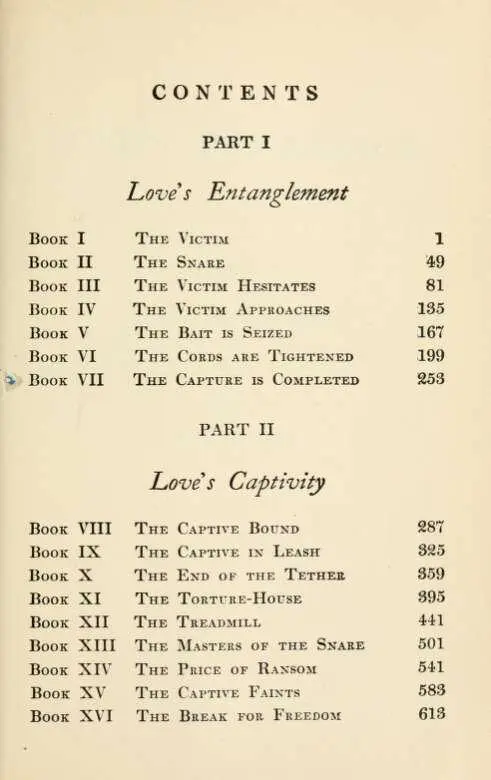
- Название:Love's pilgrimage
- Автор:
- Издательство:New York : M. Kennerley
- Жанр:
- Год:1911
- ISBN:нет данных
- Рейтинг книги:4 / 5. Голосов: 1
-
Избранное:Добавить в избранное
- Отзывы:
-
Ваша оценка:
Love's pilgrimage: краткое содержание, описание и аннотация
Предлагаем к чтению аннотацию, описание, краткое содержание или предисловие (зависит от того, что написал сам автор книги «Love's pilgrimage»). Если вы не нашли необходимую информацию о книге — напишите в комментариях, мы постараемся отыскать её.
Love's pilgrimage — читать онлайн бесплатно полную книгу (весь текст) целиком
Ниже представлен текст книги, разбитый по страницам. Система сохранения места последней прочитанной страницы, позволяет с удобством читать онлайн бесплатно книгу «Love's pilgrimage», без необходимости каждый раз заново искать на чём Вы остановились. Поставьте закладку, и сможете в любой момент перейти на страницу, на которой закончили чтение.
Интервал:
Закладка:
He tried a new plan. He wrote out a "scenario" of
his projected novel, and sent this to his publisher, to see if he could get a contract in advance. He asked for five hundred dollars—with that he could build the house he wanted, and live for another six months, until the book was done. The publisher wrote him to come to the city, where, after some parleying, he submitted a proposition; he would advance the money and publish the book, paying ten per cent, royalty; but he must also have the option to publish the author's future writings for ten years upon the same basis.
This rather staggered Thyrsis. He was businessman enough by this time to realize that if he ever had a real success he could get fifteen or twenty per cent, upon his future work—there were even some authors who got twenty-five per cent. And moreover, he did not like to tie himself to this publisher, who was of the hard and grasping type. He went home to think it over, and in the end he wrote to Henry Darrell. He set forth the situation, and showed how much money it might mean to him—money which he would otherwise be able to devote to some useful purpose. It all depended upon what Darrell could do in the emergency.
He waited three weeks, and then came Darrell's reply, saying that he could not possibly do what Thyrsis wished. There were so many calls upon him—the Socialist paper was in trouble, and so on. Thereupon Thyrsis wrote to the publisher to say that he accepted the offer and would sign the contract; but in a couple of days he received a curt reply, to the effect that the publisher had changed his mind, and no longer cared to consider the arrangement. He had, as Thyrsis found afterwards, got rid of the enthusiastic young man who had inveigled him into "The Hearer of Truth"; and
perhaps also he had been reading the ridicule which the critics were pouring out upon that unhappy book.
So once more Thyrsis wrote to Darrell—a letter of agonized entreaty. He was at the most critical moment of his life; and now, at the very culmination of his effort, to have to give up would be a calamity he could simply not contemplate. If only he could finish the task, he would be saved; for this was a book that would grip men and shake them—that it should fail was simply unthinkable. He could make out with two hundred dollars ; and he besought his friend at any sacrifice to stand by him. He asked him to cable; and when, a couple of weeks later, the message came—"all right"—to Thyrsis it was like waking up and escaping from the grip of some terrible dream.
§ 6. AND so began the house-building. It was high time, too—the latter part of September, and the nights were growing chill. He sought out a carpenter to help him, and had an interview with his friend the farmer, who agreed to rent a bit of land, in a corner of his orchard, by the edge of the wood. It was under the shade of a great elm-tree, and sufficiently remote from all the world to satisfy the taste of any literary hermit.
For months before this he and Corydon had discussed the plans of their future home; every square inch of it had been a subject of debate. In its architectural style it was a compromise between Corydon's aesthetic yearnings, and the rigid standards of economy which circumstance imposed. It was to be eighteen feet long and sixteen feet wide—six feet high at the sides and nine in the centre. It was to be "weather-boarded", and roofed with paper, instead of shingles— this being so much cheaper. Corydon heard with dis-
may that it would be necessary to paint this roofing-paper black; and Thyrsis, by way of compensation, agreed that the weather-boards should have some "natural finish", instead of common paint. There was to be a six-foot piazza in front, and a little platform in back, with steps descending to the spring.
There had been long discussions about the method of heating the mansion. Corydon had been observing the customs of her neighbors in this typical "small-farming" district, and declared that they had two leading characteristics: first, they were not happy until they had had all their own teeth extracted, and a complete set of "store-teeth" substituted; and second, as soon as they moved into a house, they boarded over the open fire-place and covered the boards with wall-paper. But Thyrsis, making investigations along practical lines, found that the open fire-place had a bad reputation as a consumer of fuel; and also, it would take a mason to build a chimney, and the wages of masons were high. So Corydon had to reconcile herself to a house with a stove, and a stove-pipe that went through a hole in the wall!
Nevertheless this house-building time was one of the happiest periods of their lives. For here was something constructive, in which they could both be occupied. Thyrsis would be up and at work early in the morning, before the carpenter came; and in between the baby's various meals, Corydon would come also, and take part in the operations. A miraculous thing it was to see the house of their dreams coming into being, with every feature just as they had planned it. And what a palatial structure it was—with so much space and air! One could actually move about in it without danger of striking one's head; coming into it
from the tent, one felt as if he were entering a cathedral!
They were so consumed with a desire to see it finished, that Thyrsis would stay at the work until darkness came upon him, and sometimes even worked by moonlight, or with a lantern. And how proud they would be when the carpenter came next morning, and found the last roof-boards laid, or the flooring all completed! Thyrsis learned the mysteries of window-sills and doorframes, the excitements of "weather-boarding," and the perils of roof-painting. He realized with wonder how many achievements of civilization the privileged classes take as a matter of course. What a remarkable thing it was, when one came to think of it, that a door should swing true upon its hinges, and fit exactly into its frame, and latch with a precise and soul-satisfying snap! And that windows should slide up and down in their frames, and stop at certain places with a spring-catch !
Corydon too was interested in these discoveries, and became skilled at holding weather-boards while her husband nailed them, and at helping to unroll and measure roofing-paper, and climbing up the ladder and holding it in place. Even the baby became fired with the spirit of achievement, and would get himself a hammer and -i board, and plague his parents until they started a dozen or so of nails for him—after which he would sit and blissfully pound them into the board, and all but pound them through the board in his enthusiasm. Before long he even learned to start them himself; and a most diverting sight it was to see this twenty-two-months old youngster driving nails like an infant Hercules. For the fastening of the roofing-paper they used little circular plates of tin called "cotterels"; and these
also Cedric must learn to use. So a new phrase was added to the vocabulary of "dam-fool talk". "Bongie cowtoos" was the name of the operation; for a couple of years thereafter, whenever Corydon and Thyrsis wished to be let alone to discuss the problems of the universe, they would get the baby a hammer and some nails and a board, and repeat that magic formula, and the problem was solved.
Unfortunately, however, it was not all smooth sailing in the carpentry-business. There were mashed thumbs and sawed fingers; and then, in an evil hour, Thyrsis came upon an advertisement which told of a wonderful new kind of wall-paper which could be applied directly to laths —thus enabling one to dispense with plaster. He sent for ten or twelve dollars' worth of this material, and he and Corydon spent a whole morning making a mixture of glue and flour-paste and water, and boiling it in an iron preserving-kettle. But alas, the paper would not paste; and then they had a painful time. Corydon gave up in disgust, and went away; but Thyrsis, to whom economy was a kind of disease, would not give up, and was angry with the other for urging him to give up. He spent a whole day wrestling with the concoction, and gave himself a headache with the ghastly odor. But in the end he had to dump it out, and clean the kettle, and fasten the paper to the lathes with "bongie cowtoos". As the strips of paper did not correspond with the studding, he found himself driving nails into springy laths, an operation most trying to the temper of any man of letters. One of the trials of this house forever after was that upon the least jar a corner of the ceiling was liable to fall loose; and then one would have to get a ladder, and climb up into a hot region, and pound nails into a broken lath,
Читать дальшеИнтервал:
Закладка:
Похожие книги на «Love's pilgrimage»
Представляем Вашему вниманию похожие книги на «Love's pilgrimage» списком для выбора. Мы отобрали схожую по названию и смыслу литературу в надежде предоставить читателям больше вариантов отыскать новые, интересные, ещё непрочитанные произведения.










Обсуждение, отзывы о книге «Love's pilgrimage» и просто собственные мнения читателей. Оставьте ваши комментарии, напишите, что Вы думаете о произведении, его смысле или главных героях. Укажите что конкретно понравилось, а что нет, и почему Вы так считаете.