Upton Sinclair - Love's pilgrimage
Здесь есть возможность читать онлайн «Upton Sinclair - Love's pilgrimage» весь текст электронной книги совершенно бесплатно (целиком полную версию без сокращений). В некоторых случаях можно слушать аудио, скачать через торрент в формате fb2 и присутствует краткое содержание. Год выпуска: 1911, Издательство: New York : M. Kennerley, Жанр: Старинная литература, на английском языке. Описание произведения, (предисловие) а так же отзывы посетителей доступны на портале библиотеки ЛибКат.
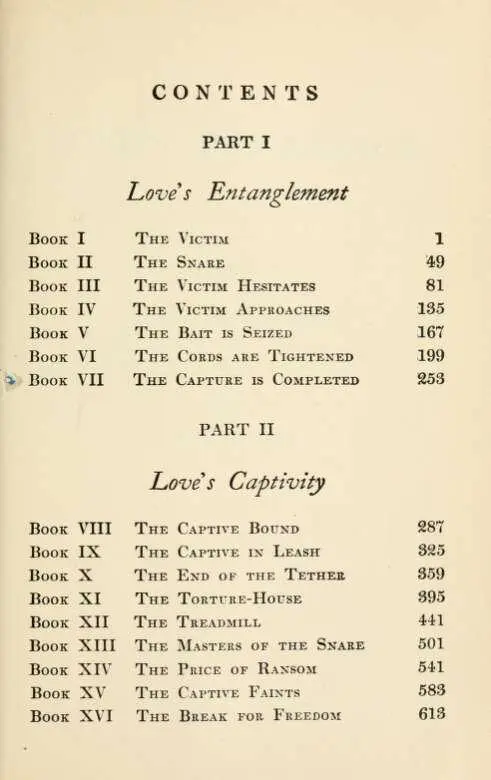
- Название:Love's pilgrimage
- Автор:
- Издательство:New York : M. Kennerley
- Жанр:
- Год:1911
- ISBN:нет данных
- Рейтинг книги:4 / 5. Голосов: 1
-
Избранное:Добавить в избранное
- Отзывы:
-
Ваша оценка:
Love's pilgrimage: краткое содержание, описание и аннотация
Предлагаем к чтению аннотацию, описание, краткое содержание или предисловие (зависит от того, что написал сам автор книги «Love's pilgrimage»). Если вы не нашли необходимую информацию о книге — напишите в комментариях, мы постараемся отыскать её.
Love's pilgrimage — читать онлайн бесплатно полную книгу (весь текст) целиком
Ниже представлен текст книги, разбитый по страницам. Система сохранения места последней прочитанной страницы, позволяет с удобством читать онлайн бесплатно книгу «Love's pilgrimage», без необходимости каждый раз заново искать на чём Вы остановились. Поставьте закладку, и сможете в любой момент перейти на страницу, на которой закончили чтение.
Интервал:
Закладка:
LOVE'S PILGRIMAGE
and the surrender; and last of all the ecstasy of the dying man in the capital, when the grim, war-worn legions were tramping for two days through the city. Such, wrote Thyrsis, was the book that he wished to compose, and that was being stifled in him for the lack of two or three hundred dollars.
Upon the receipt of this letter the philanthropist wrote again, suggesting that the poet come to see him and talk things over. He sent the price of a railroad ticket to Boston; and so Thyrsis made the acquaintance of a new world—one might almost say of a whole new system of worlds.
For here was the Athens of America, the hub of the universe. In Boston they worshipped culture, they lived in literature and art and the transcendental excellences; and by the way of showing that there was no snobbery in them, they opened the gates of their most august mansions to this soul-sick poet, and invited him to tea.
Thyrsis got a strange impression among these people, who were living upon their knees before the shrine of their own literary history. One was treading here upon holy ground; in these very houses had dwelt immortal writers—their earthly forms had rested in these chairs, and their auras yet haunted the dim religious light of these drawing-rooms. There were old people who had known them in the flesh, and could tell anecdotes about them—to which one listened in reverent awe; at every gathering one met people who were writing biographies and memoirs of them, or editing their letters and journals, or writing essays and appreciations, criticisms and commentaries and catalogs and bibliographies. And to be worthy of the visitations of such hallowed influences, one must guard one's mind as a temple, a place of silences and serenities, to which no vulgar things
could penetrate; one excluded all the uproar of these days of undisciplined egotism—above all things else one preserved an attitude of aloofness from that which presumed to call itself "literature" in such degenerate times.
To have become acquainted with these high standards was perhaps worth the rent of a room and the cost of some food and clean collars. So Thyrsis reflected when, after his week of waiting, he had his interview with the benevolent philanthropist, who explained to him, at great length, how charity had the effect of weakening the springs of character, and destroying those qualities of self-reliance and independence which were the most precious things in a man.
§ 8. IT was a curious coincidence, one that seemed almost symbolic—that Thyrsis should have gone from the Brahmins of Boston to the Socialists of the East Side!
In one of the publishing-houses he visited, Thyrsis had met a young man who gave him a Socialist magazine to read; as the magazine was published in the next building, Thyrsis went in and met the editor. About this time they were crowning a new king in England, and Thyrsis, who had no use for kings, wrote a sarcastic poem which the Socialist editor published free of charge. And so the boy discovered a new way in which he could relieve his feelings.
"I see what you want," he admitted, in his arguments with this editor; "and it's the same thing as I want— t every man with any sense must see that, in the ultimate outcome, all this capital will be owned by the public and not by private individuals. But what I object to is the way you go at it. The industrial process is a
necessary thing; it is drilling and disciplining the workers. They are not yet fitted for the responsibility of managing the world."
"But," asked the editor, "what's to be the sign when they are fitted?"
''When they have been educated," Thyrsis answered.
To which the editor responded, "Who is to educate them, if we don't?"
That was an interesting point; and Thyrsis found little by little that a new light was dawning upon him. He had somehow conceived of industrial evolution as something vast and intangible and mechanical, something that went on independent of men, and that could not be hurried or delayed. What this editor pointed out was that the process was a definite one, that it went on in the minds of men, and involved human effort—of which the publishing of Socialist literature was a most essential part.
'You ought to hear Darrell," said the man; and a few days later he wrote Thyrsis a note, asking him to go to a hall over on the East Side that evening.
Thyrsis went, and found a working-men's meeting-room, ill-lighted and ill-ventilated, with perhaps two hundred people in it. The chairman introduced the speaker of the evening; and so Thyrsis got his first glimpse of Henry Darrell.
He was something over forty years of age, slight of build; his face was pale to the point of ghostliness, and this impression was heightened by a jet black mustache and beard. One's first thought was that this man was no stranger to suffering.
He was not a good speaker, in the conventional sense; he fumbled for words, and repeated himself—and yet from his first sentence Thyrsis found himself listening
spellbound. The voice went through him like the toll of a bell; never in all his life had he heard a speaker who put such a burden of anguish into his words-who gave such a sense of gigantic issues, of age-long destinies hanging in the balance, of world-embracing hopes and powers struggling to be born. Here was a prophet who carried in his soul the future of the race; who in the sudden flashes of his vision, in the swift rushes of his passionate pleadings, evoked from the deeps of the consciousness forces that one contemplated with terror—confronted one with martyrdoms and agonies and despairs.
"Revolution" was his title; he pictured modern civilization as it presented itself to the proletarian man-a gigantic Moloch, to which human lives were fed, a monster from whose dominion there was no deliverance, even in the uttermost parts of the earth. He pictured accident, disease and death, unemployment and starvation, child-labor, prostitution, war; he was the voice of the dispossessed of the earth, the man beneath the machine, ground up body, mind and soul in this "worldwide mill of economic might". And he showed how this man dragged down with him all society; how the chain that bound the slave was fastened also to the master— so that from the poverty and oppression and degradation of this "downmost man" came all the ulcers that festered in the social body. He saw the great economic machine grinding on day and night, the mighty forces rushing to their culmination. He saw the toiling millions pressed deeper and deeper into the mire; he saw their blind, convulsive struggles for deliverance; he saw over them the gigantic slave-driver with his thousand-lashed whip—the capitalist state, class-owned and class-administered—backed by the capitalist church
and the capitalist press and capitalist "public sentiment". So the hopes of the people went down in blood, and reaction sat enthroned. The nations, ridden by despotisms, and whirled into senseless wars, ran the old course of militarism, imperialism, barbarism; and so civilization slid back yet again into the melting-pot!
Thyrsis had never heard such a speech as this in his life. When it was over, he went up to the platform, where Darrell sat, looking more exhausted and pain-driven than ever; and in a few hesitating words he told of his interest, and asked for the speaker's address, that he might write to him. And that night he posted a. letter, introducing himself as a young writer, who felt impelled to learn more about DarrelPs ideas.
In reply came a note from the other, asking him to dine with him; and Thyrsis answered accepting.
Then, as chance would have it, he mentioned the circumstance to his mother. "Darrell!" she cried. "You don't mean Henry Darrell!"
"Yes," said Thyrsis. "Why?"
"And you would meet that man?"
Читать дальшеИнтервал:
Закладка:
Похожие книги на «Love's pilgrimage»
Представляем Вашему вниманию похожие книги на «Love's pilgrimage» списком для выбора. Мы отобрали схожую по названию и смыслу литературу в надежде предоставить читателям больше вариантов отыскать новые, интересные, ещё непрочитанные произведения.











Обсуждение, отзывы о книге «Love's pilgrimage» и просто собственные мнения читателей. Оставьте ваши комментарии, напишите, что Вы думаете о произведении, его смысле или главных героях. Укажите что конкретно понравилось, а что нет, и почему Вы так считаете.