Upton Sinclair - Love's pilgrimage
Здесь есть возможность читать онлайн «Upton Sinclair - Love's pilgrimage» весь текст электронной книги совершенно бесплатно (целиком полную версию без сокращений). В некоторых случаях можно слушать аудио, скачать через торрент в формате fb2 и присутствует краткое содержание. Год выпуска: 1911, Издательство: New York : M. Kennerley, Жанр: Старинная литература, на английском языке. Описание произведения, (предисловие) а так же отзывы посетителей доступны на портале библиотеки ЛибКат.
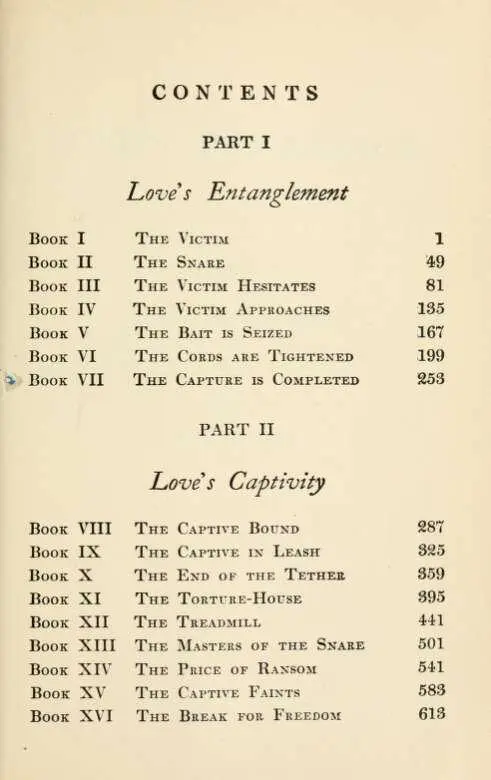
- Название:Love's pilgrimage
- Автор:
- Издательство:New York : M. Kennerley
- Жанр:
- Год:1911
- ISBN:нет данных
- Рейтинг книги:4 / 5. Голосов: 1
-
Избранное:Добавить в избранное
- Отзывы:
-
Ваша оценка:
Love's pilgrimage: краткое содержание, описание и аннотация
Предлагаем к чтению аннотацию, описание, краткое содержание или предисловие (зависит от того, что написал сам автор книги «Love's pilgrimage»). Если вы не нашли необходимую информацию о книге — напишите в комментариях, мы постараемся отыскать её.
Love's pilgrimage — читать онлайн бесплатно полную книгу (весь текст) целиком
Ниже представлен текст книги, разбитый по страницам. Система сохранения места последней прочитанной страницы, позволяет с удобством читать онлайн бесплатно книгу «Love's pilgrimage», без необходимости каждый раз заново искать на чём Вы остановились. Поставьте закладку, и сможете в любой момент перейти на страницу, на которой закончили чтение.
Интервал:
Закладка:
The very next day came the contracts and the money; Thyrsis marvelled at the fact that there were people who could sign checks for a hundred dollars, and apparently not mind it in the least. With the money he was able to pay all his debts, and also a bill which Corydon had received from a "specialist" who had been treating her. This was a new habit that Corydon was developing, as a result of headaches and backaches and other obscure miseries. These amiable "specialists" permitted one to run up a bill with them; and so, whenever Thyrsis made a new "strike", there were always debts to eat up the greater part of it.
They had now another hope to lure them; new proofs to read, and in due time, new reviews. But it would be fall before they could expect more money from the book, and meantime there was still the problem of the summer. So, as usual, Thyrsis was plotting and planning, groping about him and trying one desperate scheme after another; his head was like a busy workshop, from which came every hour new plans, new expedients, new experiments. And meanwhile, of course, deep down in his soul there was forming the new work, that some day would emerge and take possession of him, driving everything else from his consciousness.
People would repeat to him, over and over, their dreary formula—"Get a position! Get a position!" And patiently, unwearyingly, Thyrsis would set himself to explain to them what it was like to be inspired. It was not perversity upon his part, it was not conceit; it
was no more these than it was laziness. It was something that was in him—something that he had not put there himself, something that he could not take out of himself; a thing that took possession of him, without any intention upon his part, without any permission; a thing that required him to do certain acts, and that tore him to pieces if he did not do them. And how should he be blamed because he could not do as other men—because he could not take care of himself, nor even of his wife and child? Because he could not have any rights, because he could not possess the luxuries of manhood and self-respect? Because, in short, he was cast out into the gutter for every dog to snarl at and for every loafer to spurn? Could it be that in this whole civilization, with its wealth and power, its culture and learning, its sciences and arts and religions—there was not to be found one single man or woman who could recognize such a state of affairs, and realize what it meant?
§ 6. ABOUT this time Thyrsis thought of another plan. Perhaps he might get some one to publish the play in book form—that would bring him a little money, and possibly also it might help him to interest some other manager or actor. So he took the manuscript to his friend Mr. Ardsley, who told him it would not sell, and then gave him another lecture upon his folly in not having written the "practical" novel; and then he took it to the publisher for whom Prof. Osborne acted as reader. So he had another conference with that representative of authority.
"I'll get him some day," Thyrsis had said to himself, after their last interview; and he found that he had almost "got" him now. There was no chance of the play's selling, said the professor, and therefore
no recommending it for publication; but it was indeed a remarkable piece of work—one might possibly say that it was a great piece of work.
To which the author responded, "Why can't one say that surely?"
"I'm not quite sure," said the other, "whether your violinist is a genius, or only thinks he is."
Thyrsis pondered this. "That's rather an important question," he said.
"Yes," admitted the other.
"There ought to be some way of deciding such a question definitely."
"Yes, there ought to be."
"But there isn't?"
"No —I'm afraid there isn't. We know too little about genius as yet."
"But, professor," said Thyrsis, "you are a critic— you write books of criticism. And that's the one question a critic has to answer."
"Yes, I know," said Prof. Osborne.
"And yet, when you face the issue, you give up."
"It has generally taken a long time to decide such a matter," was the professor's reply.
"Yes, it has," said the other; "and meantime the man is starved out."
There was a pause. "You have never had any such experience yourself?" asked Thyrsis. "Of inspiration, I mean."
"No," was the answer. "I couldn't pretend to."
"So your judgments are never from first-hand knowledge ?"
The professor hesitated. "I am dealing with you frankly " he began.
"I know," said Thyrsis, "and I appreciate that. You
understand that it's an important point for me to get clear. I've felt that all along about you—I've felt it about so many others who set themselves against me. And yet I have to bear the burden of their condemnation "
"I never condemned you," interposed the other.
"Ah, but you did!" cried Thyrsis. "You told me that I knew less about writing than anyone in your class! And you spoke as one who had authority."
"But you had given no indications in the classroom
"I know! I know! I tried to get you to see the reason. I wanted to create literature; and you set me down with a lot of formulas—you told me to write about 'The Duty of the College Man to Support Athletics!' "
"It's difficult to see," began Prof. Osborne, "how we could teach college boys to create literature "
"At least," said the other, "you need not follow a method which would make it impossible for one of them to create literature if he had it in him."
"Does it seem to you as bad as that?" asked the professor, a little disturbed.
"It truly does," said Thyrsis.
"But what would you say we could do?"
To which the boy replied, "You might try to get your pupils to feel one deep emotion about life, or to think one worth-while thought; then they might stand a chance of knowing how it feels to write."
§ 7. THYRSIS was still reading in the papers and magazines of philanthropists and public-spirited citizens ; and he was still sitting down to write them and explain his plight. He would beg them to believe that
he wanted nothing but a bare living; and he would send copies of his books or articles or manuscripts, and ask these people to read them. And about this time an unusual thing happened—one of these philanthropists answered his letter. He wrote that he did not agree with Thyrsis' ideas, by any means, but appreciated the power of his writing, and was certain that he had a career before him. Whereupon Thyrsis made haste to follow up his advantage, and wrote another letter—one of the most intense and impassioned that he ever composed in his life.
He told about the new book he was dreaming. For years he had read his country's history, and lived in it and thrilled with it. Especially had he read the Civil War; and now he was planning a book that should hold the War, and all the meanings of the War, as a wine-cup holds the rich flavors and aromas of the grape. A titan struggle it had been, the birth-agony of a nation ; and it was a thing to be contemplated with amazement, that it should have produced so little in the way of art. Half a dozen poems there were; but of novels not one above the grade of juvenile fiction.
What Thyrsis was planning was a new form; a series of swift visions, of glimpses into the very heart of the nation's agony. He described some of the scenes that were haunting him and driving him. The winter's night in the ditches in front of Marye's Heights, when the dead and dying lay piled in windrows, and the soul of a people sobbed in despair! The night on the field of Gettysburg, when the young soldier lay wounded, but rapt in his vision, seeing the hosts of the victorious future defiling upon that hallowed ground! The ghastly scenes in Andersonville, and the escape, and the long journey filled with perils; and the siege of Petersburg,
Читать дальшеИнтервал:
Закладка:
Похожие книги на «Love's pilgrimage»
Представляем Вашему вниманию похожие книги на «Love's pilgrimage» списком для выбора. Мы отобрали схожую по названию и смыслу литературу в надежде предоставить читателям больше вариантов отыскать новые, интересные, ещё непрочитанные произведения.











Обсуждение, отзывы о книге «Love's pilgrimage» и просто собственные мнения читателей. Оставьте ваши комментарии, напишите, что Вы думаете о произведении, его смысле или главных героях. Укажите что конкретно понравилось, а что нет, и почему Вы так считаете.