Hood, Bruce - Supersense
Здесь есть возможность читать онлайн «Hood, Bruce - Supersense» весь текст электронной книги совершенно бесплатно (целиком полную версию без сокращений). В некоторых случаях можно слушать аудио, скачать через торрент в формате fb2 и присутствует краткое содержание. Год выпуска: 2009, Издательство: Constable Robinson, Жанр: Старинная литература, на английском языке. Описание произведения, (предисловие) а так же отзывы посетителей доступны на портале библиотеки ЛибКат.
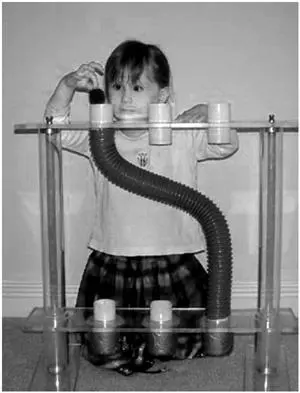
- Название:Supersense
- Автор:
- Издательство:Constable Robinson
- Жанр:
- Год:2009
- ISBN:нет данных
- Рейтинг книги:3 / 5. Голосов: 1
-
Избранное:Добавить в избранное
- Отзывы:
-
Ваша оценка:
Supersense: краткое содержание, описание и аннотация
Предлагаем к чтению аннотацию, описание, краткое содержание или предисловие (зависит от того, что написал сам автор книги «Supersense»). Если вы не нашли необходимую информацию о книге — напишите в комментариях, мы постараемся отыскать её.
Supersense — читать онлайн бесплатно полную книгу (весь текст) целиком
Ниже представлен текст книги, разбитый по страницам. Система сохранения места последней прочитанной страницы, позволяет с удобством читать онлайн бесплатно книгу «Supersense», без необходимости каждый раз заново искать на чём Вы остановились. Поставьте закладку, и сможете в любой момент перейти на страницу, на которой закончили чтение.
Интервал:
Закладка:
8.
V. Reddy, ‘Playing with Others’ Expectations: Teasing and Mucking About in the First Year’, in Natural Theories of Mind , edited by A. Whiten (Oxford University Press, 1991).
9.
F. J. Zimmerman, D. A. Christakis, and A. N. Meltzoff, ‘Associations Between Media Viewing and Language Development in Children Under Age Two Years’, Journal of Pediatrics (online press release, 7 August, 2007). The Walt Disney Company has demanded that the University of Washington, where the study was conducted, retract the press release. The University of Washington has stood behind the press release. http:// www.washington.edu/ alumni/uwnews/ links/200709/videos.html
10.
The ‘Mozart effect’ is the claim popularized by Don Campbell in his 1997 book The Mozart Effect: Tapping the Power of Music to Heal the Body, Strengthen the Mind, and Unlock the Creative Spirit that listening to classical music increases your IQ. Such was the power of this disputed claim that Zell Miller, the governor of Georgia, announced that his proposed state budget would include $105,000 a year to provide every child born in Georgia with a tape or CD of classical music. To make his point, Miller played legislators some of Beethoven’s ‘Ode to Joy’ on a tape recorder and asked, ‘Now, don’t you feel smarter already?’
11.
The Wimmer Ferguson Infant Stim-Mobile is the black-and-white-patterned toy that has found its way into many a home, including ours. The principle behind it is valid. In the first months of life, babies are attracted to high-contrast features in the visual world, but those features don’t have to be black and white. Any area of brightness and darkness attracts their attention, such as overhead lighting, the dark curtains against a sunlit window, or your hairline if you are a brunette. When I worked on visual development, many brunette mothers used to ask me why their newborns never seemed to look them straight in the eye.
12.
J. T. Bruer, The Myth of the First Three Years: A New Understanding of Early Brain Development and Lifelong Learning (Free Press, 1999).
13.
‘Study Reveals: Babies Are Stupid’, The Onion (1999), available at: http:// www.onion.demon.co.uk/ theonion/other/babies/ stupidbabies.htm. Check out some very cute babies being made fun of.
14.
‘Babies Are Smarter Than You Think’, Life (July 1993).
15.
Minsky quoted in Sherry Turkle, Life on the Screen: Identity in the Age of the Internet (Simon & Schuster, 1997), p. 137: ‘The mind is a meat machine.’
16.
The story can be found all over the Internet, but I believe the most sensible consideration of the topic can be found in J. Hutchins, ‘The Whiskey Was Invisible: Or, Persistent Myths of MT’, MT News International 11 (1995), 17–18.
17.
J. Locke, An Essay Concerning Human Understanding (1690; reprint, E. P. Dutton, 1947).
18.
R. Descartes, Meditations on First Philosophy , translated by J. Veitch (1647; reprint, Prometheus Books, 1901); I. Kant, Critique of Pure Reason , translated by N. K. Smith (1781; reprint, St Martin’s Press, 1965).
19.
E. S. Spelke, ‘Principles of Object Perception’, Cognitive Science 14 (1990): 29–56.
20.
J. B. Watson, Behaviourism (University of Chicago Press, 1930), p. 104.
21.
B. F. Skinner, ‘Superstition in the Pigeon’, Journal of Experimental Psychology 38 (1948): 168–72.
22.
The baby crib was likened to the ‘Skinner Boxes’ that Skinner had developed for the experimental studies of the effects of rewards on animal behaviour; L. Slater, Opening Skinner’s Box: Great Psychological Experiments of the Twentieth Century (Bill Daniels Co., 2004).
23.
In the Ladies’ Home Journal article (October 1945), Skinner described the benefits of raising a child in a thermostatically controlled environment so that the baby only needed to wear a diaper. He noted that behaviour and health seemed to thrive in the Air-Crib. An independent questionnaire evaluation by John M. Gray sent to 73 couples who raised 130 babies in the Air-Crib confirmed Skinner’s remarkable claims. All but three of these couples described the device as ‘wonderful’. Following the slur in Opening Skinner’s Box , Deborah Skinner wrote a scathing response to the book, ‘I Was Not a Lab Rat’, the Guardian , 12 March, 2004.
24.
H. Gardner, The Mind’s New Science: A History of the Cognitive Revolution (Basic Books, 1985).
25.
This scenario is a philosophical issue described as ‘the brain in a vat’ by Hilary Putnam in chapter 1 of Reason, Truth, and History (Cambridge University Press, 1982), pp. 1–21.
26.
C. von Hofsten, ‘Development of Visually Guided Reaching: The Approach Phase’, Journal of Human Movement Studies 5 (1979): 160–78.
27.
J. Piaget, The Construction of Reality in the Child (Basic Books, 1954).
28.
There have been literally hundreds of infant studies based on the principle of the magic trick, but the most famous is probably one of the first involving a solid block that appears to pass through another solid object. R. Baillargeon, E. S. Spelke, and S. Wasserman, ‘Object Permanence in Five-Month-Old Infants’, Cognition 20 (1985), 191–208.
29.
K. Wynn, ‘Addition and Subtraction by Human Infants’, Nature 358 (1992): 749–50.
30.
E. S. Spelke, ‘Core Knowledge’, American Psychologist 55 (2000): 1233–43.
31.
D. Poulon-Dubois, ‘Infants’ Distinctions Between Animate and Inanimate Objects: The Origins of Naive Psychology’, in Early Social Cognition: Understanding Others in the First Months of Life , edited by P. Rochat (Erlbaum, 1999).
32.
A. L. Woodward, ‘Infants Selectively Encode the Goal Object of an Actor’s Reach’, Cognition 69 (1998): 1–34; see also V. Kuhlmeier, K. Wynn, and P. Bloom, ‘Attribution of Dispositional States by Twelve-Month-Old Infants’, Psychological Science 14 (2003): 402–8.
33.
A. Karmiloff-Smith, Beyond Modularity: A Developmental Perspective on Cognitive Science (MIT Press, 1992).
34.
G. L. Murphy and D. L. Medin, ‘The Role of Theories in Conceptual Coherence’, Psychological Review 3 (1985): 289–316.
35.
A. Karmiloff-Smith, B. In helder, ‘If You Want to Get Ahead, Get a Theory’, Cognition 23 (1975): 95–147.
36.
B. M. Hood, ‘Gravity Rules for Two- to Four-Year-Olds?’ Cognitive Development 10 (1995): 577–98.
37.
M. Tomonaga, T. Imura, Y. Mizuno, and M. Tanaka, ‘Gravity Bias in Young and Adult Chimpanzees ( Pan troglodytes ): Tests with a Modified Opaque-Tubes Task’, Developmental Science 10 (2007): 411–21; see also B. Osthaus, A. M. Slater, and S. E. G. Lea, ‘Can Dogs Defy Gravity? A Comparison with the Human Infant and Nonhuman Primate’, Developmental Science 6 (2003): 489–97.
38.
I. K. Kim and E. S. Spelke, ‘Perception and Understanding of Effects of Gravity and Inertia on Object Motion’, Developmental Science 2 (1999): 339–62.
39.
M. K. Kaiser, D. R. Proffitt, and M. McCloskey, ‘The Development of Beliefs About Falling Objects’, Perception and Psychophysics 38 (1985): 533–9.
40.
M. McCloskey, A. Washburn, and L. Felch, ‘Intuitive Physics: The Straight-Down Belief and Its Origin’, Journal of Experimental Psychology: Learning, Memory, and Cognition 9 (1983): 636–49.
41.
J. Piaget, The Child’s Conception of the World (Routledge & Kegan Paul, 1929).
Читать дальшеИнтервал:
Закладка:
Похожие книги на «Supersense»
Представляем Вашему вниманию похожие книги на «Supersense» списком для выбора. Мы отобрали схожую по названию и смыслу литературу в надежде предоставить читателям больше вариантов отыскать новые, интересные, ещё непрочитанные произведения.











Обсуждение, отзывы о книге «Supersense» и просто собственные мнения читателей. Оставьте ваши комментарии, напишите, что Вы думаете о произведении, его смысле или главных героях. Укажите что конкретно понравилось, а что нет, и почему Вы так считаете.