Hood, Bruce - Supersense
Здесь есть возможность читать онлайн «Hood, Bruce - Supersense» весь текст электронной книги совершенно бесплатно (целиком полную версию без сокращений). В некоторых случаях можно слушать аудио, скачать через торрент в формате fb2 и присутствует краткое содержание. Год выпуска: 2009, Издательство: Constable Robinson, Жанр: Старинная литература, на английском языке. Описание произведения, (предисловие) а так же отзывы посетителей доступны на портале библиотеки ЛибКат.
- Название:Supersense
- Автор:
- Издательство:Constable Robinson
- Жанр:
- Год:2009
- ISBN:нет данных
- Рейтинг книги:3 / 5. Голосов: 1
-
Избранное:Добавить в избранное
- Отзывы:
-
Ваша оценка:
Supersense: краткое содержание, описание и аннотация
Предлагаем к чтению аннотацию, описание, краткое содержание или предисловие (зависит от того, что написал сам автор книги «Supersense»). Если вы не нашли необходимую информацию о книге — напишите в комментариях, мы постараемся отыскать её.
Supersense — читать онлайн бесплатно полную книгу (весь текст) целиком
Ниже представлен текст книги, разбитый по страницам. Система сохранения места последней прочитанной страницы, позволяет с удобством читать онлайн бесплатно книгу «Supersense», без необходимости каждый раз заново искать на чём Вы остановились. Поставьте закладку, и сможете в любой момент перейти на страницу, на которой закончили чтение.
Интервал:
Закладка:
Young children understand life in terms of a vital energy necessary for keeping the body going. 33In one investigation, children were asked different biological questions, such as, ‘Why do we breathe?’ To help them answer, the researchers offered the children three types of explanation: those based on mental goals (because we want to feel good), mechanical explanations (because the lungs take in oxygen and change it into useless carbon dioxide), or vitalistic explanations (because our chest takes vital power from the air). By six years of age, most children endorsed the vitalistic reasons, whereas older children and adults selected the mechanistic accounts. Education may have taught them about oxygen and carbon monoxide, but the explanation based on vital energy was the default position of younger children. Some children talked about blood carrying energy to the hands in order to make them move. Education provides us with new frameworks of explanation, but as we saw with naive theories of gravity and other intuitive models of the world, it’s not clear that earlier ways of thinking are abandoned. An enduring vital force seems a plausible explanation for life.
The concept of enduring life energy is not entirely flaky. A living body does generate energy in that it converts energy from one source into another. This is what metabolism is. Energy is never lost. This is the first law of thermodynamics, discovered over the last three hundred years. Energy cannot be lost but rather changes state. While very few of us are knowledgeable about the laws of thermodynamics, for many the transition from life to death is simply the movement of an energy source from one state to another. Many adults who are ignorant of the biological facts regarding metabolism and energy can nevertheless still conceive of some force that resides in a living thing but moves on at the point of death. We are intuitive vitalists.
But children do not start off as vitalists. The questions confuse them because they have not yet begun to think about their own bodies as separate from their minds. This may explain why they have a problem understanding death, as we saw in the last chapter. When five-year-old children were sorted into those who thought in terms of vital life forces and those who did not, the vitalist children were the ones who understood that death is irreversible, inevitable, and universal and applies only to living things. 34Younger, novitalist children were just confused. So an emerging naive vitalism helps children to appreciate the nature of death as final and something that happens to everyone. Intutive theories don’t have to be scientifically accurate to be useful.
THE GREAT CHAIN OF BEING
The essential life force is not only an intuitive concept found in every child. It is also a belief that has survived thousands of years in different models of the human body, both religious and medical. The ancient Greeks described the essential life force in their humoral theory of how the body works. They believed that a healthy body depends on maintaining the balance of the four vital juices of blood, phlegm, yellow bile, and black bile. However, as these bodily fluids are ultimately perishable, a fifth element, or ‘quintessence’, is necessary to animate the body with spirit. 35Today a similar idea is still the core component of traditional Eastern medicine and philosophy, whose treatments and rituals involve manipulating and channelling energy. The Greeks also recognized a holistic concept of life – the doctrine that unseen energies and forces connect everything in the universe. These connections are permanent, so that action on one thing in the universe has consequences further down the chain. The more closely things are connected, the stronger the consequence of action.
Such an idea underpinned the later dominant Western medieval theory of the universe known as God’s ‘Great Chain of Being’. This was the belief that all things, including animals, vegetables, and minerals, are related. 36All things originated from the same source, are organized into a hierarchy of association, and are held together by divine correspondences – invisible forces that connect the various elements. These forces could be sympathetic in that they shared common correspondences that could be combined. Or the forces could be antipathetic where the elements opposed each other and could be used to cancel each other out.
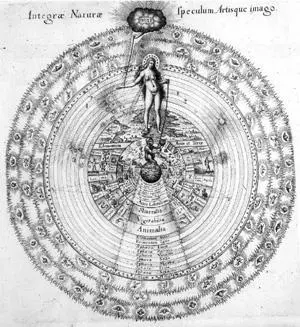
FIG. 14: Robert Fludd’s ‘Great Chain of Being’. PHOTOGRAPH BILL HEIDRICH © UC BERKELEY, CALIFORNIA
For example, in an illustration of God’s natural plan published in 1617, Robert Fludd’s diagram shows how man was sympathetically linked to the sun, which was linked to the grape vine, which was linked to the lion, which was linked to gold. Hence, men were noblemen. Gold was considered a noble metal, as was the name of the gold coin of this period. The vine was noble, and the mould that forms on overripe fruit and produces a characteristic rich flavour was known as the ‘noble rot’. The lion was a noble beast. Likewise, woman was sympathetically linked to the moon. Her menstrual cycle was clearly related to lunar activity, which was linked to wheat, which was linked to the eagle, which was linked to silver, and so on. Man was opposite to woman, and the sun was opposite to the moon. Everywhere in nature you could find evidence for sympathies and antipathies by looking for signatures of God’s hidden order. The evidence was overwhelming. You just had to look around you and see all the connections. This was trivially easy for a human mind designed to detect patterns and infer connections in the natural world.
Everywhere nature’s patterns were interpreted as reflecting a deeper causal model based on God’s hidden correspondences. Sometimes God left clues in that animals, vegetables, or minerals that shared sympathetic correspondences looked similar. This reasoning became known as the ‘Doctrine of Signatures’ and was the basis for much alchemy and folk medicine. 37For example, because walnuts looked like the brain, they were used for headaches. The weeping willow tree was thought to be a cure for melancholy because of the clear signature of the drooping weariness of its branches. The foxglove plant ( digitalis ), with its spotted fingers, was originally thought to be a remedy for respiratory conditions because it was reminiscent of diseased lungs. Turmeric, the root commonly used to colour Indian food yellow, was used to treat jaundice, a condition that produces a yellow skin pallor. Mandrake roots, which resembled shrivelled humans, were considered to be particularly potent and, owing to their alkaloid toxins, could be used to induce altered states of consciousness for all manner of purposes. Nipplewort ( lapsana communis ), a tall weed with small yellow heads, was once esteemed for treating sore nipples. Pilewort ( lesser celandine ), with its knobbly tubers, speaks for itself.
Even today many societies value magical foods that are believed to contain essential healing or enhancing properties by virtue of their resemblance to body parts. Figs and pomegranates have properties that resemble female genitalia. The Coco de Mer coconut resembles a woman’s genitals and is highly prized for fertility. 38
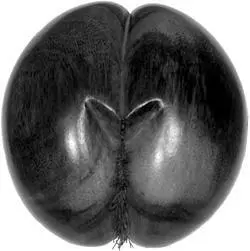
FIG. 15: A Coco de Mer nut. What does it look like to you? AUTHOR’S COLLECTION.
Phallic-shaped foods like bananas and asparagus are also deemed to be potent by virtue of their resemblance to the penis. It’s not too surprising then that actual penises feature regularly as foods that can enhance male performance. The Guolizhuang in Beijing is China’s first restaurant that specializes in animal penises. Businessmen can pay up to £3,000 to eat tiger penis in the belief that it will improve their virility and life energy. 39
Читать дальшеИнтервал:
Закладка:
Похожие книги на «Supersense»
Представляем Вашему вниманию похожие книги на «Supersense» списком для выбора. Мы отобрали схожую по названию и смыслу литературу в надежде предоставить читателям больше вариантов отыскать новые, интересные, ещё непрочитанные произведения.





Обсуждение, отзывы о книге «Supersense» и просто собственные мнения читателей. Оставьте ваши комментарии, напишите, что Вы думаете о произведении, его смысле или главных героях. Укажите что конкретно понравилось, а что нет, и почему Вы так считаете.