SS
Здесь есть возможность читать онлайн «SS» весь текст электронной книги совершенно бесплатно (целиком полную версию без сокращений). В некоторых случаях можно слушать аудио, скачать через торрент в формате fb2 и присутствует краткое содержание. Жанр: Справочники, на английском языке. Описание произведения, (предисловие) а так же отзывы посетителей доступны на портале библиотеки ЛибКат.
- Название:SS
- Автор:
- Жанр:
- Год:неизвестен
- ISBN:нет данных
- Рейтинг книги:5 / 5. Голосов: 1
-
Избранное:Добавить в избранное
- Отзывы:
-
Ваша оценка:
SS: краткое содержание, описание и аннотация
Предлагаем к чтению аннотацию, описание, краткое содержание или предисловие (зависит от того, что написал сам автор книги «SS»). Если вы не нашли необходимую информацию о книге — напишите в комментариях, мы постараемся отыскать её.
SS — читать онлайн бесплатно полную книгу (весь текст) целиком
Ниже представлен текст книги, разбитый по страницам. Система сохранения места последней прочитанной страницы, позволяет с удобством читать онлайн бесплатно книгу «SS», без необходимости каждый раз заново искать на чём Вы остановились. Поставьте закладку, и сможете в любой момент перейти на страницу, на которой закончили чтение.
Интервал:
Закладка:
B1.8 Infrastructure
Infrastructure assets have the peculiar property of existing in the form of layers defined in relation to the assets they support, especially People and Applications. They include information technology assets such as software applications, computers, storage system s, network devices, telecommunication equipment, cables, wireless links, access control devices and monitoring systems. This category of assets also includes traditional facilities such as buildings, electricity, HVAC and water supply without which it would be impossible for People, Application s and other Infrastructure assets to operate . Infrastructure assets by themselves may be composed mostly of Applications and other Infrastructure assets. Asset s viewed as Applications at one level can be utilized as infrastructure at another. This is an important principle that allows service-orientation of assets.
B1.9 Financial capital
Financial assets are required to support the ownership or use of all types of assets. They also measure the economic value and performance of all types of assets. Financial assets include cash, cash equivalents and other assets such as marketable securities, and receivables that are convertible into cash with degrees of certainty and ease. Adequacy of financial assets is an important concern for all organizations including government agencies and non-profit organizations. The promise and potential of other assets is not realized in full without financial assets.
B2 Product managers
B2.1 Roles and responsibilities
Product Manager is a key role within Service portfolio management (Figure B.1). The role is responsible for managing services as a product over their entire lifecycle from concept to retirement through design , transition and operation . They are instrumental in the development of Service Strategy and its execution through the Service Lifecycle within a high-performing portfolio of services. Product Managers bring coordination and focus to the organization around the Service Catalogue , of which they maintain ownership. They work closely with Business Relationship Manager s (BRMs) who bring coordination and focus to the Customer Portfolio .
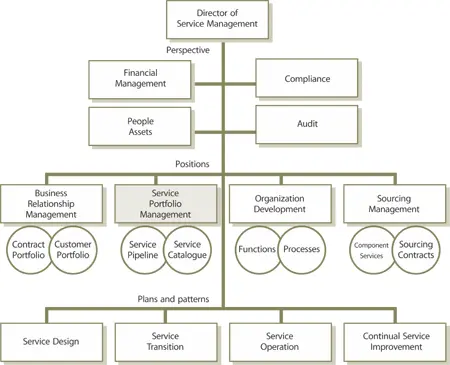
Figure B.1 Product Managers have a key role under Service Portfolio Management
Product Managers are recognized as the subject matter experts on Lines of Service (LOS) and the Service catalogue (Figure B.2). They understand Service Model s and their internal structure and dynamics to be able to drive changes and improvements effectively. They have a consolidated view of costs and risk s across LOS, just as BRMs maintain a similar view across customers and contract s.
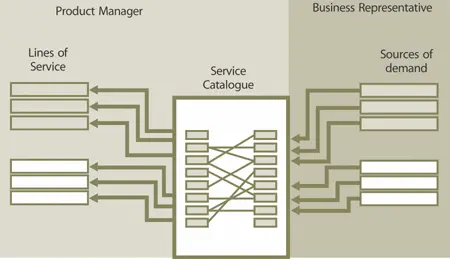
Figure B.2 Product Managers and Lines of Service (LOS)
Product Managers evaluate new market opportunities, operating models, technologies and the emerging needs of customers. They follow variety-based positions and seek new sources of demand for items in the Service Catalogue . They negotiate internal agreement s with BRMs, who represent the underserved and unserved needs of customers. When solutions are not found in the Catalogue or Pipeline, Product Managers and BRMs work together on making a business case for new service development (NSD). They involve the Sourcing Management function when there is a need to integrate third-party services and other service components for a new or existing service. They hold a position within the Sourcing Organization . This requires Product Managers to be adept in integration project s and in holding internal and external supplier s accountable via formal agreements.
Product Managers provide leadership on the development of business cases, LOS strategy , new service deployment and Service Lifecycle management schedules. They perform financial analysis in collaboration with Service Design , Service Operation and Financial Management . This requires them to be good in negotiation, managing conflict and achieving consensus in order to achieve the organization’s strategic positions and financial objective s.
They bring the marketing mindset necessary for an outcome -based definition of services and effectiveness in value creation. They are able to manage conflict and constraints. They balance change and innovation in the Service Pipeline with stability, dependability and financial performance of the Service Catalogue. Product Managers are able to communicate LOS strategies effectively to senior leadership, develop partnerships with other groups within the organization and outside supplier s in order to satisfy customer needs. They must be able to plan new service development programme s in response to new market opportunities, assess the impact of new technologies, and guide the creation of innovative solutions. They market the development and implementation of services that incorporate new technologies or system development. This requires extensive cross-organization communications.
B2.2 Critical knowledge, skills and experience
Product Managers should have working knowledge of the market space s with regards to industry applications, business trends, technologies, competitive scenarios, regulations, supplier s and vendors. They also should have demonstrated sustained performance in previous assignments, sound business judgment, negotiating skills and people skills. They should have excellent communications skills and the ability to accept challenges and manage the positive and negative aspects of risks, and develop solutions on time and within cost objectives.
Product management draws from multiple disciplines, bodies of knowledge and communities of practice :
Business strategy , competitive analysis, and portfolio management
Design, software development and system s engineering
Financial analysis, lifecycle Cost Management and pricing
Project management and risk management
Sourcing and supplier management
Education would generally include an advanced degree in Accounting , Finance, Marketing, Operations, Engineering, Information Systems or Computer Science, or equivalent experience.
Further information
References
1 Seely Brown, John and John, Hagel III 2005. Innovation Blowback: Disruptive Management Practices from Asia. The McKinsey Quarterly , No. 1.
2 Coase, Ronald 1937. The Nature of the Firm. Economica , Vol. 4, No. 16, November 1937, 386–405.
3 Bryson, J.R., Daniels, P.W. and Warf, B. 2004. Service Worlds: People, Organisations, Technologies. Routledge.
4 McNeillis, Paul 2005. ITNOW 2005 47(6): 14–15; British Computer Society. doi:10.1093/itnow/bwi114
5 Easton, G. and Jarrell, S. 1998. The effects of total quality management on corporate performance: An empirical investigation. Journal of Business , 71(2), 253–307.
6 Keating, Elizabeth et al. 1999. Overcoming the Improvement Paradox. European Management Journal , Vol. 17, No. 2, 120–134.
Читать дальшеИнтервал:
Закладка:
Обсуждение, отзывы о книге «SS» и просто собственные мнения читателей. Оставьте ваши комментарии, напишите, что Вы думаете о произведении, его смысле или главных героях. Укажите что конкретно понравилось, а что нет, и почему Вы так считаете.