SS
Здесь есть возможность читать онлайн «SS» весь текст электронной книги совершенно бесплатно (целиком полную версию без сокращений). В некоторых случаях можно слушать аудио, скачать через торрент в формате fb2 и присутствует краткое содержание. Жанр: Справочники, на английском языке. Описание произведения, (предисловие) а так же отзывы посетителей доступны на портале библиотеки ЛибКат.

- Название:SS
- Автор:
- Жанр:
- Год:неизвестен
- ISBN:нет данных
- Рейтинг книги:5 / 5. Голосов: 1
-
Избранное:Добавить в избранное
- Отзывы:
-
Ваша оценка:
SS: краткое содержание, описание и аннотация
Предлагаем к чтению аннотацию, описание, краткое содержание или предисловие (зависит от того, что написал сам автор книги «SS»). Если вы не нашли необходимую информацию о книге — напишите в комментариях, мы постараемся отыскать её.
SS — читать онлайн бесплатно полную книгу (весь текст) целиком
Ниже представлен текст книги, разбитый по страницам. Система сохранения места последней прочитанной страницы, позволяет с удобством читать онлайн бесплатно книгу «SS», без необходимости каждый раз заново искать на чём Вы остановились. Поставьте закладку, и сможете в любой момент перейти на страницу, на которой закончили чтение.
Интервал:
Закладка:
Figure 2.15 Service management processes are applied across the Service Lifecycle
The combination of multiple perspectives allows greater flexibility and control across environment s and situations. The lifecycle approach mimics the reality of most organizations where effective management requires the use of multiple control perspective s. Those responsible for the design , development and improvement of processes for service management can adopt a process-based control perspective. Those responsible for managing agreement s, contract s, and services may be better served by a lifecycle-based control perspective with distinct phases. Both these control perspectives benefit from system s thinking. Each control perspective can reveal patterns that may not be apparent from the other.
Case example 1 (solution): The lack of a Service Lifecycle
The decision to adopt the pricing strategy did not appear to be coordinated with service design , service transition or service operation s, indicating a lack of holistic or systems thinking in crafting the service pricing strategy. Though strategically sound, the pricing strategy did not consider the many interrelated parts of the entire system.
Among the unintended consequences is a service strategy that appeared in the front pages of world newspapers as a colossal blunder in service management
3 Service strategy principles
‘People do not want quarter-inch drills. They want quarter-inch holes.’
Professor Emeritus Theodore Levitt, Harvard Business School
Case example 2: Mobile communication services
A well-known provider of mobile communication services has the advertising slogan, ‘Can you hear me now?’ Another provider has the slogan, ‘Fair and Flexible’.
What dimensions of value does each slogan promote?
(Answer at the end of Section 3.1)
3.1 Value creation
3.1.1 Mind the gap
Calculating the economic value of a service can sometimes be straightforward in financial terms. In other instances, however, it is harder to quantify the value although it may still be possible to qualify it. Value is defined not only strictly in terms of the customer’s business outcomes: it is also highly dependent on customer’s perceptions (Figure 3.1). Perceptions are influenced by attributes of a service that are indications of value, present or prior experiences with similar attributes, and relative endowment of competitors and other peers. Perceptions are also influenced by the customer’s self-image or actual position in the market, such as those of being an innovator, market leader, and risk -taker. The value of a service takes on many forms, and customers have preferences influenced by their perceptions. Definition and differentiation of value is in the customer’s mind.
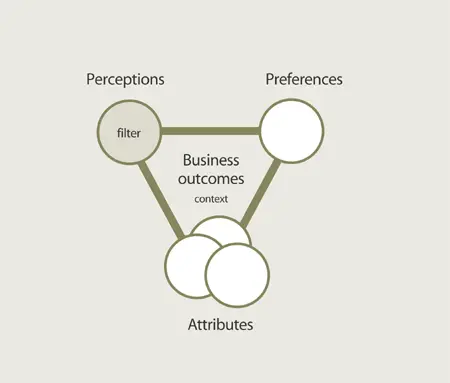
Figure 3.1 Attributes, perceptions and preferences
The more intangible the value, the more important the definitions and differentiation become. Customer s are reluctant to buy when there is ambiguity in the cause-and-effect relationship between the utilization of a service and the realization of benefits. It is incumbent on providers to demonstrate value, influence perceptions, and respond to preferences.
Perceptions of value are influenced by expectations. Customer s have reference values on which they base their perceptions of added value from a service . The reference value may be vaguely defined or based on hard facts. An example of reference value is the baseline that customers maintain on the cost of in-house function s or services. What matters is that it is important for the service provider to understand and get a sense of what this reference value is. This may be obtained through extensive dialogue with the customer , prior experience with the same or a similar customer, or through research and analysis available in the market. The economic value of the service is the sum of this reference value and the net difference in value the customer associates with the offered service (Figure 3.2). Positive difference comes from the utility and warranty of the service. Negative difference comes from losses suffered by the customer from utilizing the service due to poor quality or hidden costs. As stated earlier, value is defined strictly in the context of business outcomes.
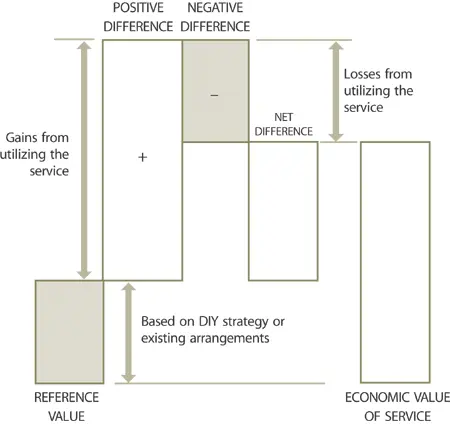
Figure 3.2 Economic value of a service14
Focus on business outcomes over everything else is a critical advance in outlook for many service providers. It represents a shift of emphasis from efficient utilization of resource s to the effective realization of outcomes. Efficiency in operations is driven by the need for effectiveness in helping customers realize outcomes. Customer s do not buy services; they buy the fulfilment of particular needs. This distinction explains the frequent disconnection between IT organizations and the businesses they serve. What the customer values is frequently different from what the IT organization believes it provides. Mind the gap.
3.1.2 Marketing mindset
What are the outcomes that matter? How are they identified and ranked in terms of customer perceptions and preferences? Effectiveness in answering such questions requires a marketing mindset, which is quite different from engineering and operations mindsets. Rather than focusing inward on the production of services, there is a need to look from the outside in, from the customer’s perspective. A marketing mindset begins with simple questions:
What is our business?
Who is our customer?
What does the customer value?
Who depends on our services?
How do they use our services?
Why are they valuable to them?
Value can be added at different levels. What matters is the net difference (Figure 3.2). For example, service providers differentiate themselves from equipment vendors purely through added value even while using the equipment from those same vendors as asset s. Differentiation can arise from the provision of communication services instead of routers and switchboards. Further differentiation may be gained from the provision of collaboration services instead of simply operating email and voice mail services. The focus shifts from attributes to the fulfilment of outcomes. With a marketing mindset it is possible to understand the component s of value from the customer’s perspective. As described in Section 2.2.2, value consists of two components: utility or fitness for purpose and warranty or fitness for use.
Fitness for purpose comes from the attributes of the service that have a positive effect on the performance of activities, objects, and tasks associated with desired outcomes. Removal or relaxation of constraints on performance is also perceived as a positive effect.
Fitness for use comes from the positive effect being available when needed, in sufficient capacity or magnitude, and dependably in terms of continuity and security.
It is useful to separate the logic of utility from the logic of warranty for the purpose of design, development , and improvement (Figure 2.2). Using the marketing mindset in service management provides deep insight into the challenges and opportunities related to the customer’s business. Such insight is necessary for success in strategy . It is therefore critical, first and foremost, to understand the positive effect that customers perceive a service can have on their business outcomes. For customers, the positive effect is the utility of a service. The assurance of the positive effect is the warranty.
Читать дальшеИнтервал:
Закладка:
Обсуждение, отзывы о книге «SS» и просто собственные мнения читателей. Оставьте ваши комментарии, напишите, что Вы думаете о произведении, его смысле или главных героях. Укажите что конкретно понравилось, а что нет, и почему Вы так считаете.