William Gass - Middle C
Здесь есть возможность читать онлайн «William Gass - Middle C» весь текст электронной книги совершенно бесплатно (целиком полную версию без сокращений). В некоторых случаях можно слушать аудио, скачать через торрент в формате fb2 и присутствует краткое содержание. Год выпуска: 2013, Издательство: Knopf, Жанр: Современная проза, на английском языке. Описание произведения, (предисловие) а так же отзывы посетителей доступны на портале библиотеки ЛибКат.
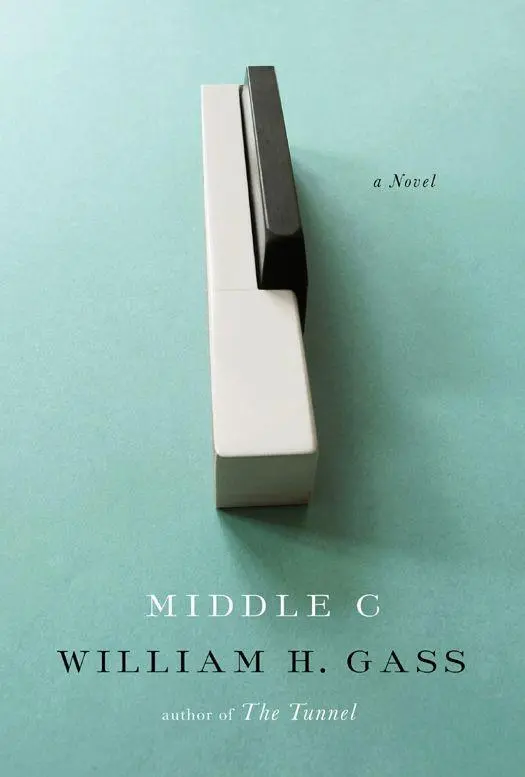
- Название:Middle C
- Автор:
- Издательство:Knopf
- Жанр:
- Год:2013
- ISBN:нет данных
- Рейтинг книги:3 / 5. Голосов: 1
-
Избранное:Добавить в избранное
- Отзывы:
-
Ваша оценка:
Middle C: краткое содержание, описание и аннотация
Предлагаем к чтению аннотацию, описание, краткое содержание или предисловие (зависит от того, что написал сам автор книги «Middle C»). Если вы не нашли необходимую информацию о книге — напишите в комментариях, мы постараемся отыскать её.
It begins in Graz, Austria, 1938. Joseph Skizzen's father, pretending to be Jewish, leaves his country for England with his wife and two children to avoid any connection with the Nazis, who he foresees will soon take over his homeland. In London with his family for the duration of the war, he disappears under mysterious circumstances. The family is relocated to a small town in Ohio, where Joseph Skizzen grows up, becomes a decent amateur piano player, in part to cope with the abandonment of his father, and creates as well a fantasy self — a professor with a fantasy goal: to establish the Inhumanity Museum. . as Skizzen alternately feels wrongly accused (of what?) and is transported by his music. Skizzen is able to accept guilt for crimes against humanity and is protected by a secret self that remains sinless.
Middle C
Middle C — читать онлайн бесплатно полную книгу (весь текст) целиком
Ниже представлен текст книги, разбитый по страницам. Система сохранения места последней прочитанной страницы, позволяет с удобством читать онлайн бесплатно книгу «Middle C», без необходимости каждый раз заново искать на чём Вы остановились. Поставьте закладку, и сможете в любой момент перейти на страницу, на которой закончили чтение.
Интервал:
Закладка:
The students’ faces were expectantly directed but uniformly empty. Joseph would discover that throughout the semester the surfaces of these faces would shift mechanically: they would show curiosity yet remain blank, look puzzled though blank, annoyed but blank, and bored and blank. They had probably enrolled because the course was rumored to be easy. Well, it would not be a breeze where he blew. They would like nothing more than an ear-long year of Ralph Vaughan Williams. Well, Schoenberg, Berg, and Webern would not be easy. Milhaud would not be easy (he had died just in time to become relevant), though they might have coasted through Debussy and Ravel if Debussy and Ravel had remained contemporary; there were, of course, Holst the programmatic, Delius the soporific, and Elgar the Edward to delight their tastes — Elgar was the Kipling of English music, he’d heard — however, the course could not include Aram Khachaturian, who was hanging on to life, nor Aaron Copland, the American mountaineer and jingoist. Oh yes, Messiaen — the Composer’s Claudel, as he was understood to have been, although Milhaud had given sail to a bark called Christopher Columbus —this radical composer of conservative thoughts would not be easy either. His name had too many vowels.
How might Herr Fraudulent Prof survive his second class? These were not merely strange names he was threatening his poor pupils with; they represented his areas of ignorance, too: a vast bleak plain empty of all experience. He could not spell a signature, not to say sing a note, from one of their compositions. He could not crowd them all into the last weeks of the semester and then hope not to get there. Though he had experienced that strategy.
Two students dropped during the first week. Another after the first quiz. Latitudes of this kind were recent. Whittlebauer College had been traumatized during the Vietnam protests of the sixties despite the fact that not a voice had been raised or a placard waved on its campus during society’s confusing hostilities. Its students were the children of Presbyterians, and although the doctrines of the UP were a definite improvement over the frightened sectarianism of Augsburg Community College, the school administration always acted to serve its church and keep its charges in line. After all, the servants of the Word were elected by the laity — in this case those who paid the bills — so its organization was more democratic than most. Nevertheless, a decayed Calvinism lay just under the school’s fluster like a concealed corpse beneath the floor.
Joseph realized that religion went for a liberal education like an assassin for the jugular. If it weren’t for righteous families, with their revered authoritarian ways, and schools like Whittlebauer that kept kids penned within the faith until they graduated, the sect would sicken if not die. However, on account of a declining enrollment, an increasing dropout rate, and the horrid headlines in the newspapers concerning the pot-smoking, free-loving hippies, those violent Students for Democratic Action, Gangs of Gay Bikers, or marauding Black Panthers, uncivil as the banks they robbed and fires they set, as well as the erosions of the war on everybody’s patience, the college relaxed its requirement of regular attendance at church, allowed a student council to be elected, actually to convene, and even permitted it to rule in carefully circumscribed and unimportant circumstances. Three African Americans were captured in an admission’s raid, while an Asian, without solicitation, enrolled. Diversity had been achieved. There were more dances than there had been, though the campus remained dry, and academic standards were so relaxed as to seem asleep. So students could drop a course at any time during the first three weeks. By the end of taste-and-decide time, Joseph had retained ten, one of them a boy … two others maybe were almost men.
How to proceed? His course had no prerequisite. Rock and rollers would naturally want to know what was happening in their world, but neither their minds nor their world were musical, a fact they would not understand, and one that would rile them. It would be like trying to instruct his sister. And, just as it was for his sister, their reality would be filled by a local future — nothing else: the next game, the next party, the next dance, the next dress, the next date, the next hot song, the next new movies, even the next exam. Finally … happy graduation day … money well spent, folks. Then there would be the wedding to think of, the couple’s income to worry about, consequently the next raise, therefore the first house, a kid, soon kids, until their lives would no longer recognize anything novel and have run out of expectations like a keg that foams air; their present tense would slowly turn toward the very past they had once so carefully packed like a hope chest with their youthful future: the old games and their dead great players, the once-upon-a-time BYO parties, dances they had danced, gowns they had worn, the golden oldies, grade school friends, high school chums, and college buddies, first loves, wild drives, frat drunks, make-outs that were now adulteries.
Where to begin? how could he cut into a continuum and honestly say, “From this point on all that was cotton is now silk”? While he had been, as his CV supportively said, a librarian, initially reading at random and with intemperate glee, Joseph had begun to pursue subjects beyond the beauties they publically offered. He was dissatisfied with any account of things that assumed some fresh art or new sound had been spontaneously born and didn’t know or need to acknowledge its parents. He had come to feel, with an ease he almost recognized, that events and their inhabitants had a source from which they’d sprung; and he needed to know how they had become the way they presently were; where their actual causes lay; why turns had been taken and choices made; the true parents of things set at odds, split and gone; so he was now at a loss because he had no beginning he could offer to his students. Even illness had its onset. Yet the modern movement in all the arts, as far as he could see, was partly defined by its hatred of history, by the intemperate rejection of a nineteenth century that had deified history’s explanatory power, its moody course, its laws, its chosen heroes. What did you do when received opinion went so categorically against your own? Back down like the weenie you were? Or remain faithful to your ignorance, curled like a cat in its chair? Or one day, like the mysterious stranger in Western movies, get gone.
In Joseph’s own mind, music, like Orpheus, looked back, then looked back again, just as every composer wrote with ancestral harmonies in his head; so the contemporary period that was his subject could only be comprehended if the changes brought about by the invention of musical notation were clearly recognized, even though that revolution was centuries ago; and only if the consequences of Music’s First Freedom — won in its dim beginnings — were understood: namely when the dominance of voice and dance was replaced by the rule of the instrument in both composition and performance; for that was when pure music came with pain and exhilaration into being. After all, he would explain, contemporary electronic music was stagnant because it hadn’t discovered how to represent on nicely ruled paper what it was doing. He had read that symbolic logic had been in the same fix, whatever symbolic logic was.
Joseph could accept the overthrow of the voice without a qualm because it was a benevolent coup. He would make his students understand that a music freed from song, like a son who has sailed away a seaman and returned at the head of a fleet, will give back to that most human of all instruments such songs as had hitherto been inaudible: there would be mournful lieder beyond number, bloody operas galore, even majestic masses from devout atheists. Oh, Miss Ankle Jingle, who sits in the first row and widens her thighs to disconcert her teacher, the long line of Les Nuit d’Été will run ardently up your spine; ah, Mr. Moonfaced Boy with the smile you’ve had painted on your head to disconcert your teacher, Heitor Villa-Lobos’s sublime hum will cause your ears to flower; hey there, Mr. Notebook whose cover opens and closes with the measured rhythm of a feeding butterfly so as to disconcert the teacher, the melancholy beauty of Das Lied von der Erde will make your eyes water with relief, and Vier letzte Lieder , a summa without a sum, close them on a heavy sigh.
Читать дальшеИнтервал:
Закладка:
Похожие книги на «Middle C»
Представляем Вашему вниманию похожие книги на «Middle C» списком для выбора. Мы отобрали схожую по названию и смыслу литературу в надежде предоставить читателям больше вариантов отыскать новые, интересные, ещё непрочитанные произведения.








Обсуждение, отзывы о книге «Middle C» и просто собственные мнения читателей. Оставьте ваши комментарии, напишите, что Вы думаете о произведении, его смысле или главных героях. Укажите что конкретно понравилось, а что нет, и почему Вы так считаете.