Alexander Theroux - Darconville’s Cat
Здесь есть возможность читать онлайн «Alexander Theroux - Darconville’s Cat» весь текст электронной книги совершенно бесплатно (целиком полную версию без сокращений). В некоторых случаях можно слушать аудио, скачать через торрент в формате fb2 и присутствует краткое содержание. Год выпуска: 1996, Издательство: Holt Paperbacks, Жанр: Современная проза, на английском языке. Описание произведения, (предисловие) а так же отзывы посетителей доступны на портале библиотеки ЛибКат.
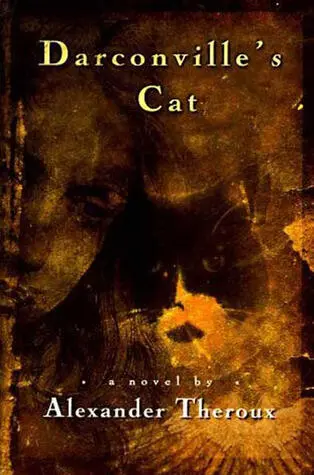
- Название:Darconville’s Cat
- Автор:
- Издательство:Holt Paperbacks
- Жанр:
- Год:1996
- ISBN:нет данных
- Рейтинг книги:3 / 5. Голосов: 2
-
Избранное:Добавить в избранное
- Отзывы:
-
Ваша оценка:
Darconville’s Cat: краткое содержание, описание и аннотация
Предлагаем к чтению аннотацию, описание, краткое содержание или предисловие (зависит от того, что написал сам автор книги «Darconville’s Cat»). Если вы не нашли необходимую информацию о книге — напишите в комментариях, мы постараемся отыскать её.
Darconville's Cat Its chapters embody a multiplicity of narrative forms, including a diary, a formal oration, an abecedarium, a sermon, a litany, a blank-verse play, poems, essays, parodies, and fables. It is an explosion of vocabulary, rich with comic invention and dark with infernal imagination.
Alexander Theroux restores words to life, invents others, liberates a language too long polluted by mutters and mumbles, anti-logic, and the inexact lunacies of the modern world where the possibility of communication itself is in question. An elegantly executed jailbreak from the ordinary,
is excessive; funny; uncompromising; a powerful epic, coming out of a tradition, yet contemporary, of both the sacred and the profane.
Darconville’s Cat — читать онлайн бесплатно полную книгу (весь текст) целиком
Ниже представлен текст книги, разбитый по страницам. Система сохранения места последней прочитанной страницы, позволяет с удобством читать онлайн бесплатно книгу «Darconville’s Cat», без необходимости каждый раз заново искать на чём Вы остановились. Поставьте закладку, и сможете в любой момент перейти на страницу, на которой закончили чтение.
Интервал:
Закладка:
Finally, the Supreme Court of Italy ( Corte di Cassazione ), determining to resolve the controversy and dispose of the case in judgment once and for all, suddenly disregarded the form of the transaction in favor of its substance and confirmed the decision rendered pro tern by the Court of Appeal of Veneto, and the matter became res adjuticata , a conclusion reached in respect of centuries of litigation. The documents evidencing the decision were duly recorded, barring any other claimants in the light of this last decision, exact copies thereof bearing the proper seal were forwarded, and Darconville became the owner of a Venetian palazzo.
LXIII Figures in the Carpet
But while my lids remained thus shut, I ran over in my mind my reason for so shutting them.
— EDGAR ALLAN POE, The Oval PortraitDARCONVILLE took out his black coat. A spell of bad weather, cold hard rains, set in about the middle of September. There was a torn and anxious quality to the sky. Days noticeably foreshortened: the season when warmth lay low upon the land, smothering it, was gone. The coolness in the air gave more than a hint that the last rose of summer, tired of blowing alone, had put on its hat and gone home. Cambridge now seemed small, dark, and strepitous.
It seemed a bleak, haunted Congregational world these days, and Darconville came to descry in the black-hooded clouds overhead the lofty pulpits of the Mathers, in the drizzle their gloomy and irritable prophecies. Fall classes had now begun at the university.
The first week there had been interviews to give: a long procession of ponderously uncertain students making application for his courses. Darconville’s office was on the second floor of a secluded, rickety house on Kirkland St., and there he sat listening to their concerns, the usual olla-podrida of undergraduate worries and boasts, hoping no one noticed how hard he found it to concentrate. No, not hoping. Hoping allowed the possibility of hindrance, resistance, opposition — prophecies he refused to allow as the principal cause of events foretold, for we hope, so pray, only to lose our comfort in the marshaled expectation that creates a guilt, in which, feeling ashamed, we fall afoul of hope and populate a hell. Darconville could no longer, in fact, be numbered among those men whom obstacles attract. All experience now seemed vanquished by one that had already taken place — and he withdrew to her , now a refuge in all things; he waited; he sat still in the sweet paralysis of the past. The temptation to change or fully abide by new adjustments, of whatever sort, seemed only a closely reasoned paraphrase of rashness, and he didn’t dare do what, in the doing, might be undone. He refused to acknowledge sorrow and at the same time tried to blunt his eagerness, lest eagerness sharpen the condition of that hope he now superstitiously held to be antithetical to faith: don’t we hope for what we also fear we mightn’t have? And that , of course, was unimaginable.
No, Darconville was only rational — and grateful. Without Isabel, however, his happiest moments became his saddest because he could not share them with her, and yet, while he kept it all to himself, he still saw fit — as he had for some time now — to record his every feeling for her in a notebook, adding, as well now, what he could remember of themselves, as far back as he could remember. It seemed a way of keeping in touch. At the end of each day at Kirkland St., he waited until the corridors were deserted and then walked home alone, usually by way of the Yard, sometimes so late that the wickets had been swung shut for the night, with the lights in the old halls long extinguished and only the striking of a lonely clock somewhere far away a reminder that beyond the black and impenetrable shadows was someone very close to him. And then he would whisper to her every single secret in his heart.
Prof. McGentsroom, an old scholar at Harvard, proved to be indispensable in those early weeks, becoming for Darconville not so much the person who’d hired him but rather instead a good friend who eased the transition, explained the rubrics of the university, and suggested — always kindly and usually in language that referred itself to the middle of the last century — how to go about things. At their first meeting, he’d presented to his young friend a volume of his own poetry, expressing only gracious regrets, as he inscribed the book to both of them, to hear that Isabel wouldn’t be coming up until December. They still, of course, intended to marry? Darconville smiled. “The faith of man,” said the kindly scholar, taking Darconville’s arm, “is itself the greatest miracle of all the miracles that faith engenders.” It was true, and, for strengthening him in his resolve, truer than ever. Only endure, thought Darconville, endure, rich Penelope.
A Harvard classic, McGentsroom — almost old enough to carbon-date — looked like a real pottle-fiend (at times, in fact, he did rather moisten his clay, as the phrase goes, somewhat copiously): he was thready, wore salt-and-pepper suits, and was always stuffing filthy old shag — the genuine Bull Durham — into his pipe. His ties were stained. There was awn sticking out of his ears and nose. He looked as though he couldn’t find the holes in a bowling ball, but in point of fact he was a great polyglot and was currently being considered for another Pulitzer Prize, not so much for his masterful biography, rendering others obsolete, of Weef VI, as for his brilliant translation of a recently discovered tenth-century Russian manuscript called Chornaya Gert-zoginia . He couldn’t remember the carfare to Boston from Cambridge but could quote chapter and verse from the works of Defensorius, Synodite of Ligugé, and Baudonivia, the Nun of Poitiers. Darconville often took Prof. McGentsroom to lunch. He always got sauce on his nose.
Despite the fact that he was getting on — the previous year he had yawned and dislocated his hip — Prof. McGentsroom was widely held to be a wonder in the classroom. In he bumped, replete with umbrella and beret, looking as if he’d shaved with a scarificator, and without so much as a note began to lecture. He taught courses in comparative literature, but Homer was his love, and several generations were often given to regale each other with stories of how he always chuffed on fumicable feet across the front of the classroom, the standard opening since 1915 to his famous classics course in which he demonstrated that Homer sang in the rhythm of a choo-choo train! Classics: a course which teaches you how to live without the job it prevents you from getting. But to such complaints McGentsroom was oblivious. Lecturing, he was liable to nod off or perhaps reach into his pocket and take out something like a telephone-pole insulator, stare at it, then put it back. As he talked, he pulled on his pipe, slurped it, chewed the stem in deliberation. Of course he was a bit bunty, but the students loved him, especially those who, answering a question correctly, earned his ritualistic praise: he would step out from behind the lectern, extend his hands cardinalationally, and clap them down upon the fellow’s shoulders, saying, “Oh, it is grand to be young.” It was reported that he got angry only once — this was years and years ago — when he simply walked out of the classroom, shouted “Suffering Columbus, no !” and then returned, smiling and composed. Female students worshipped him and on the last day of each semester always brought him a balloon. McGentsroom was one of those people rare today who adored his wife, whom he invariably called “Little Mother.” You always saw him leave Widener Library at 9:10, when he walked home — often the wrong way — for a small glass of scrumpy, the late news on his overheating old Philco cathedral, and then to bed.
Читать дальшеИнтервал:
Закладка:
Похожие книги на «Darconville’s Cat»
Представляем Вашему вниманию похожие книги на «Darconville’s Cat» списком для выбора. Мы отобрали схожую по названию и смыслу литературу в надежде предоставить читателям больше вариантов отыскать новые, интересные, ещё непрочитанные произведения.









Обсуждение, отзывы о книге «Darconville’s Cat» и просто собственные мнения читателей. Оставьте ваши комментарии, напишите, что Вы думаете о произведении, его смысле или главных героях. Укажите что конкретно понравилось, а что нет, и почему Вы так считаете.