Alexander Theroux - Darconville’s Cat
Здесь есть возможность читать онлайн «Alexander Theroux - Darconville’s Cat» весь текст электронной книги совершенно бесплатно (целиком полную версию без сокращений). В некоторых случаях можно слушать аудио, скачать через торрент в формате fb2 и присутствует краткое содержание. Год выпуска: 1996, Издательство: Holt Paperbacks, Жанр: Современная проза, на английском языке. Описание произведения, (предисловие) а так же отзывы посетителей доступны на портале библиотеки ЛибКат.
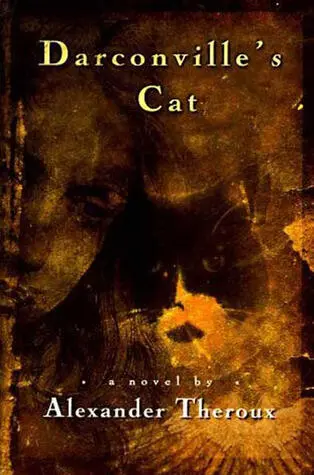
- Название:Darconville’s Cat
- Автор:
- Издательство:Holt Paperbacks
- Жанр:
- Год:1996
- ISBN:нет данных
- Рейтинг книги:3 / 5. Голосов: 2
-
Избранное:Добавить в избранное
- Отзывы:
-
Ваша оценка:
Darconville’s Cat: краткое содержание, описание и аннотация
Предлагаем к чтению аннотацию, описание, краткое содержание или предисловие (зависит от того, что написал сам автор книги «Darconville’s Cat»). Если вы не нашли необходимую информацию о книге — напишите в комментариях, мы постараемся отыскать её.
Darconville's Cat Its chapters embody a multiplicity of narrative forms, including a diary, a formal oration, an abecedarium, a sermon, a litany, a blank-verse play, poems, essays, parodies, and fables. It is an explosion of vocabulary, rich with comic invention and dark with infernal imagination.
Alexander Theroux restores words to life, invents others, liberates a language too long polluted by mutters and mumbles, anti-logic, and the inexact lunacies of the modern world where the possibility of communication itself is in question. An elegantly executed jailbreak from the ordinary,
is excessive; funny; uncompromising; a powerful epic, coming out of a tradition, yet contemporary, of both the sacred and the profane.
Darconville’s Cat — читать онлайн бесплатно полную книгу (весь текст) целиком
Ниже представлен текст книги, разбитый по страницам. Система сохранения места последней прочитанной страницы, позволяет с удобством читать онлайн бесплатно книгу «Darconville’s Cat», без необходимости каждый раз заново искать на чём Вы остановились. Поставьте закладку, и сможете в любой момент перейти на страницу, на которой закончили чтение.
Интервал:
Закладка:
Darconville that same day (almost as if to counteract that assumption) went down to Main St. and bought Isabel a pretty ring.
The whole plan, then, was struck a terrible blow sometime around the middle of July. Darconville uttered a round, mouth-filling oath at the post-office and left trailing in the air behind him a language which burnt it coppery all the way to the bench under the magnolia tree where he sat down to re-read, again in disbelief, the special delivery letter from London he’d just received.
The residency requirement couldn’t be waived. The qualification for an English marriage registration meant either (a) a seven-day residence in Westminster before notification of marriage, plus a further clear twenty-one days before a marriage certificate could be issued — a total of thirty days including the day of arrival and the day of collecting the certificate, or (b) a fifteen-day residence plus one full day before a marriage license could be issued — a total of eighteen days, including, again, days of arrival and collecting the license. For the certificate, both parlies had to put in the residency, for the license only one — but the other party had to be in England on the day notification was to be given to the Registrar.
As if that weren’t enough, when later Darconville called Isabel to explain she wasn’t home. He tried again, several times, and finally reached Mrs. Shiftlett who, outpacing herself in mutters and non-sentences, explained to Darconville how, that morning negotiating a curve on the road to Charlottesville, Isabel had skipped out of control — she always drove too fast — and rolled her car into a verge. She had been taken to the hospital. Yes, she thought the car was wrecked; no, she thought Isabel wasn’t hurt. Thought ? Darconville made five telephone calls to the University of Virginia hospital, only to find she had been released. Thought ? That night he telephoned Fawx’s Mt. Isabel answered and lightheartedly assured him she had been unharmed; he sagged, but fearful, worried, overwrought — in the knitting of himself so fast, himself he had undone — he cried out fitfully against all the tergiversations of love he could think of, which of course were only the tergiversations that stood in the way of love. But the telephone went dead. Isabel had hung up. He called back: no answer. An hour later there was no answer. There was no answer the following morning.
There was no public transportation north from Quinsyburg. The buslines in the Piedmont area, through either subterfuge or evasion, skirted completely around the poor but direct road that ran up to Charlottesville. For a simple trip north, then, this meant — in twice the time — the double, double toil and trouble of an hour busride east to Richmond and then back again west, another hour to Charlottesville. But Darconville was desperate. He jumped the Richmond bus which, stopping for passengers at every snab and dole-house along the way, gave him his connection in that city, the return run shuddering along at about ten miles per hour into Charlottesville where, luckily, he hitchhiked a ride and followed the late afternoon sun into the fluecolored hills of Fawx’s Mt. He appeared, dusty, at the front door. Isabel hurried him inside, not shutting the door, however, before taking several of those by now familiar half-turns, apprehensively looking toward places where the object she seemed to seek had turned into a ghost, disappeared in a puff of smeech, or flew into a tree. Darconville never knew which.
A television set was blaring in the small dark living-room, where the Shiftletts, submersed into the sofa, sat snoring upright and holding cans of beer in their respective laps. Darconville quickly looked at Isabel: she hadn’t been hurt — and her car out front, dented somewhat, was still operable. In her bedroom, they sat on her red-and-cream bed where he tried to apologize for his thoughtlessness the day before by reading her what he felt was the cause of it — the bad news from London.
Isabel, curiously undistracted, listened calmly enough, but Darconville turned to the arithmetic of it all: the Quinsy summer courses ended on August 22 and yet the faculty were required to be at Harvard on September 10. The residency requirement — the shortest one — was eighteen days in London. The return flight back to the States canceled the ninth, which meant, if he could find someone to administer his final exams, they could leave on August 21. It was the only alternative. The tunnel of possibilities had narrowed to that. Darconville kissed her. It would be wonderful! It would be madness! What did she think? Isabel, twicking her thumbs, froze. She couldn’t , she said: she hadn’t finished making her dress! He laughed. And what, she asked, about all the other matters? Why, packing, invitations, and, and — she raised her eyes suddenly — she had decided she wanted to be baptized. Into the Catholic Church? Yes, that was what she wanted! Deliberating, Darconville wiped his forehead. He took her arm. He paused.
Then he asked her if they really shouldn’t be married in Fawx’s Mt. after all.
“No,” said Isabel, disconcertedly wringing her hands. She looked out searchingly through her window, across the turnip patch, and past the old fences which the falling of dusk made nearly indistinguishable, creating an illusion of unbroken access even to that farthest house hunched under the aeviternal mountains whose ridges, Darconville saw for the first time, were inaptly called blue. They were in fact quite grey.
“It would be easier.”
“It seems so.”
“It is so,” said Darconville.
“Yes,” said Isabel, “it does seem so, doesn’t it.”
The following week in Quinsyburg Isabel stood holding a candle in the chancel of St. Teresa’s Church, and, with Darconville as witness, was washed, oiled, and salted at the baptismal font. He felt very proud of her. He hadn’t either encouraged or discouraged her but was happy, nevertheless, she stuck to her plans with deliberate speed and firm resolution; the process, to hasten it, took a bit of doing — Darconville had instructed her — and, while the emphases of time weighed no less heavy on them, he still managed to counterconvert the obstructions, delays, and postponements on other fronts to final satisfaction. It was only after the ceremony that he gave her the surprise that became her baptismal present. Kissing her, he mentioned the invitations could now be engraved. She looked at him, eyes questioning. (What blushing notes did he in the margin see? What sighs stolen out?) Then he told her: the wedding day was set for two o’clock on September 8—almost the exact date on which, four years before, they had first laid eyes on each other.
It wasn’t easy for either of them. The strain told. In late July, in fact, Isabel wrote that she was too rushed with it all — the reasons, not given, she said were various — and thought they should call it off. Not to worry, thought Darconville.
August obliterated. The first few weeks sped by with temperatures soaring and Darconville rushing around in a feverish va-et-vient struggle with last-minute things: he had to register officially at Caxton Hall, reserve rooms at the Eaton Court Hotel in Belgravia, and, having changed plans, reserve his airline ticket from Boston a day earlier, the flight he’d now be taking alone. It was hairline procedure to observe, chaos to watch. It would pass, thought Darconville. Bread was made from panic, wasn’t it? Sometimes the speed of it all almost exhilarated him. The gallop is a pace in which the sequence of steps, supposing the off fore to lead, is near hind, off hind, near fore, off fore, with a period of suspension — and there Darconville rested, content, pondering the joys that were to come in a race at the finish. And then one day that happened. And it was all over. It was done.
Читать дальшеИнтервал:
Закладка:
Похожие книги на «Darconville’s Cat»
Представляем Вашему вниманию похожие книги на «Darconville’s Cat» списком для выбора. Мы отобрали схожую по названию и смыслу литературу в надежде предоставить читателям больше вариантов отыскать новые, интересные, ещё непрочитанные произведения.











Обсуждение, отзывы о книге «Darconville’s Cat» и просто собственные мнения читателей. Оставьте ваши комментарии, напишите, что Вы думаете о произведении, его смысле или главных героях. Укажите что конкретно понравилось, а что нет, и почему Вы так считаете.