Alexander Theroux - Darconville’s Cat
Здесь есть возможность читать онлайн «Alexander Theroux - Darconville’s Cat» весь текст электронной книги совершенно бесплатно (целиком полную версию без сокращений). В некоторых случаях можно слушать аудио, скачать через торрент в формате fb2 и присутствует краткое содержание. Год выпуска: 1996, Издательство: Holt Paperbacks, Жанр: Современная проза, на английском языке. Описание произведения, (предисловие) а так же отзывы посетителей доступны на портале библиотеки ЛибКат.
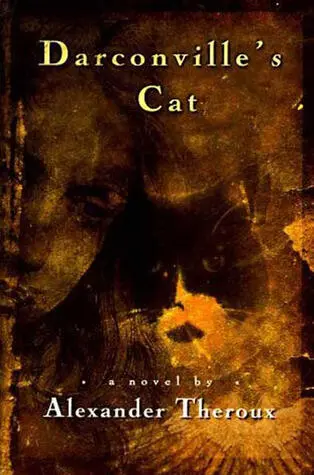
- Название:Darconville’s Cat
- Автор:
- Издательство:Holt Paperbacks
- Жанр:
- Год:1996
- ISBN:нет данных
- Рейтинг книги:3 / 5. Голосов: 2
-
Избранное:Добавить в избранное
- Отзывы:
-
Ваша оценка:
Darconville’s Cat: краткое содержание, описание и аннотация
Предлагаем к чтению аннотацию, описание, краткое содержание или предисловие (зависит от того, что написал сам автор книги «Darconville’s Cat»). Если вы не нашли необходимую информацию о книге — напишите в комментариях, мы постараемся отыскать её.
Darconville's Cat Its chapters embody a multiplicity of narrative forms, including a diary, a formal oration, an abecedarium, a sermon, a litany, a blank-verse play, poems, essays, parodies, and fables. It is an explosion of vocabulary, rich with comic invention and dark with infernal imagination.
Alexander Theroux restores words to life, invents others, liberates a language too long polluted by mutters and mumbles, anti-logic, and the inexact lunacies of the modern world where the possibility of communication itself is in question. An elegantly executed jailbreak from the ordinary,
is excessive; funny; uncompromising; a powerful epic, coming out of a tradition, yet contemporary, of both the sacred and the profane.
Darconville’s Cat — читать онлайн бесплатно полную книгу (весь текст) целиком
Ниже представлен текст книги, разбитый по страницам. Система сохранения места последней прочитанной страницы, позволяет с удобством читать онлайн бесплатно книгу «Darconville’s Cat», без необходимости каждый раз заново искать на чём Вы остановились. Поставьте закладку, и сможете в любой момент перейти на страницу, на которой закончили чтение.
Интервал:
Закладка:
QUINSYBURG was pretty much the same old place after two more years, but so very much in love were Darconville and Isabel that, despite the confines of the town — and possibly because of it — they lost cognizance of both temporal and spatial radii and remained fixed in their chosen quadrant, the spirit level brought to bear on which measured but the verticals of dreams, the horizontals of passion. There were tribulations, of course, but they were overcome, and when in difficulty the two of them seemed, as if for it, to grow closer, heedless of setback or sorrow and inured to any trouble blowing their way, as on the rugged surface of the earth the daily revolution of the air encounters so many obstacles that it is not felt. They’d turned with the rolling years into a second cycle, like numbers in a periodic fraction, and called it resurrection. Tomorrow keeps its promise merely by coming today, and for them there were days time out of number, to be counted no more, but lived.
It was still a part of the South that constantly grew away from the rest of the country — or, if you will, was left behind by it — yet if its deadbright sun still raised up trees, solisequious if somewhat stunted, and shrubs, blighted but bearable, they had seen it all before and so the better could cope with it now. Mrs. DeCrow still crew. Dr. Glibbery galumphed, and pixilated Miss Pouce still pleaded from her library for patronage. There was the full complement: Floyce flouncing, Wratschewe writing, Shrecklichkeit scheming. Miss Sweetshrub had not married. Miss Ballhatchet had put on weight and put off depilatories. Miss Shepe and Miss Ghote weren’t speaking to each other anymore. And dear old Dodypol still greeted everyone as he always had. Greatracks remained imperator . Gone were the Culpas, however, along with the Weerds, sometime since having decided to leave together and sail to Byzantium where presumably, under that very head, they’d proceed to write a poem with that very title. Ol’ Hinge-and-Bracket hadn’t changed — when Knipperdoling hyped, Pindle still became chondriac. Miss Trappe still tended her garden, troweling past her bushes of wind-tortured thorns. And Miss Dessicquint still gave striking proof to the fact that, previous to the time at which departed souls must be assigned final location, there was a middle state after death when the spirit was still allowed to wander the earth with a mouthful of admonitions for everyone in sight. Excipuliform, Thimm, Porchmouth, Fewstone, even the peculiar little Qwert Yui Op: these, thought Darconville, became the faces that for so long now had lived and died next to his own, in chaos, in celebration, in triumph, in tragedy — the old academical fun-show of incompetents and ventripotents, crop-haired goons and beghards with boring stories, mono-phthongs-in-bowties who got up committees, the bunty women, wearers of camei, and obtuse dowds with headmistress untouchability still flourishing their mimic and pseudoethopoetical gestures, and all those parched and juiceless prats with supercalendered skin and voices like tonks who went panking up and down the corridors like quail-hawks making sure the students were behaving.
The students, ah yes! — the soft, lazy, unchangeable, gracilescent, sweet-scented nixies-from-Dixie with their half-vowels, Dolly Vardens, and cheeks like cupid’s buttocks, no, the students, the students could not be discounted. Darconville met them daily, teaching his classes, adapting as best he could, and kindly, to their indigenous inatten-tiveness and far-too-casual interest in matters alien because academic. He did his job, his brain running now less to analysis than to good will, and he tried his best, as if living in a museum, to walk softly and not trench upon with applied logic or severe scrutation whatever came into view; the galleries seemed straight-but in fact they ran in secret mysterious circles, curving furtively out, around, and then always back through all pantochromatic creation to that one work of art he valued most.
Clio Cliusque sorores : Isabel Rawsthorne — eighteen no more, neither nineteen, but now close to her majority — gladsomely fell in with her classmates, seniors now, and with vigor applied herself to the pursuit of her degree. She’d majored in biology and, without any real native gifts for its rigors, seemed forever perusing her chemistry textbook which she carried about the way a Pakhtoon holds his Koran. Of grades, beauty often assumes more perquisites than it should, very like the attitude Southerners generally show toward the black waiter. (“Shines? We always considered them part of a damned julep!” Dr. Glibbery once boasted to Darconville.)
Isabel did well enough. Miss Gibletts, not Tyrannus, gave her an A in classics. Her oceanography course she loved, as she did a few throw-away électives in printmaking. But the possibility of a few good credits in piano went west, disappointing Miss Swint, who mistakenly thought she could make something of Isabel’s handspread. And microbiology gave her fits, and a dirty pass. Math she flagged once, and then again, a related scandal ensuing that very afternoon when Darconville cornered her teacher — Miss Malducoit, unmarried, neither oblivious of Isabel’s diamond, had dared to suggest some of us were doing all right in life, weren’t we? — and, in Isabel’s defense, not only decried the injustice but came within a hair of forgetting the Fifth Commandment and throppling her on the spot. Oh, Darconville was biased, but then wasn’t she his responsibility? And how could her own folks intervene in such matters, living as they did way up there in the pines and peesashes? Reason enough, thought he — if less than justly — to have given her the highest grades possible in all her English courses, which she naturally enrolled in with an eye to the professor, the source of whose unspoken remorse lay less in his situational ethics (a perioptometry heretofore uncharacteristic of him) than in the fact that she’d promised repeatedly to write for him, sometime, anytime, the term-papers she subsequently never did. But he knew she loved him as he her, you see, and, what do they say? — a February snowfall is as good as manure. A failed promise is nothing to a lover if to him or her it is not the thing-to-be-ascertained. A loved one’s every shape is an attitude of prayer.
Darconville’s book, Rumpopulorum , was eventually published— and well received and discussed more or less everywhere but in Quinsyburg, where to no one’s surprise, least of all its author’s, it was met with a most aristarchean silence. Every Homer has his Zoilists. He couldn’t have cared less.
Speed contracts time. In the rarefied heights of love Isabel and Darconville experienced over the short and quickening years of plenitude impossible, but for the time-dilation factor only travel in space sanctions, to explain. They both felt they would live forever and ever — in manner, in mind, in mood — and striding in Seven League Boots strode, before they looked, past time itself. Is the infinitive strictly to be called a mood? No, perhaps not, but so it seemed with them. Darconville didn’t question it. During those years he often wondered, in fact, whether thought ever really helped a man in any of the critical ways of life; there seemed as little need to discern patterns as there seemed use for them, for life seemed its own justification, and he came to see the warp and woof contriving patterns made difficult, often impossible designs not only outside one’s choosing but also beyond one’s understanding, intricate elaborations in which, although unknown to one, one was being inextricably and fatefully bound but of which, even if known, one hadn’t the power to reckon the significance. It was true, to seem to stand above the accidents of existence was simply to enjoy in an uprush of fancy the illusion that if you didn’t accept them they didn’t exist. Hoping only that what would happen to him would happen on their behalf, he merely decided to allow what would, for, well he knew, what would, will — and when it wished. And so Darconville relinquished complications of thought that he might better act and, acting, love, and as loving told him that thought was a laziness that prevented action, he accepted what was said, said what he felt, and gratefully found himself soon equal to the fate encouraging him — it didn’t matter where — to complete participation.
Читать дальшеИнтервал:
Закладка:
Похожие книги на «Darconville’s Cat»
Представляем Вашему вниманию похожие книги на «Darconville’s Cat» списком для выбора. Мы отобрали схожую по названию и смыслу литературу в надежде предоставить читателям больше вариантов отыскать новые, интересные, ещё непрочитанные произведения.








Обсуждение, отзывы о книге «Darconville’s Cat» и просто собственные мнения читателей. Оставьте ваши комментарии, напишите, что Вы думаете о произведении, его смысле или главных героях. Укажите что конкретно понравилось, а что нет, и почему Вы так считаете.