Alexander Theroux - Darconville’s Cat
Здесь есть возможность читать онлайн «Alexander Theroux - Darconville’s Cat» весь текст электронной книги совершенно бесплатно (целиком полную версию без сокращений). В некоторых случаях можно слушать аудио, скачать через торрент в формате fb2 и присутствует краткое содержание. Год выпуска: 1996, Издательство: Holt Paperbacks, Жанр: Современная проза, на английском языке. Описание произведения, (предисловие) а так же отзывы посетителей доступны на портале библиотеки ЛибКат.
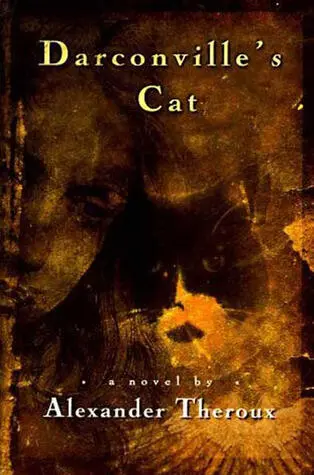
- Название:Darconville’s Cat
- Автор:
- Издательство:Holt Paperbacks
- Жанр:
- Год:1996
- ISBN:нет данных
- Рейтинг книги:3 / 5. Голосов: 2
-
Избранное:Добавить в избранное
- Отзывы:
-
Ваша оценка:
Darconville’s Cat: краткое содержание, описание и аннотация
Предлагаем к чтению аннотацию, описание, краткое содержание или предисловие (зависит от того, что написал сам автор книги «Darconville’s Cat»). Если вы не нашли необходимую информацию о книге — напишите в комментариях, мы постараемся отыскать её.
Darconville's Cat Its chapters embody a multiplicity of narrative forms, including a diary, a formal oration, an abecedarium, a sermon, a litany, a blank-verse play, poems, essays, parodies, and fables. It is an explosion of vocabulary, rich with comic invention and dark with infernal imagination.
Alexander Theroux restores words to life, invents others, liberates a language too long polluted by mutters and mumbles, anti-logic, and the inexact lunacies of the modern world where the possibility of communication itself is in question. An elegantly executed jailbreak from the ordinary,
is excessive; funny; uncompromising; a powerful epic, coming out of a tradition, yet contemporary, of both the sacred and the profane.
Darconville’s Cat — читать онлайн бесплатно полную книгу (весь текст) целиком
Ниже представлен текст книги, разбитый по страницам. Система сохранения места последней прочитанной страницы, позволяет с удобством читать онлайн бесплатно книгу «Darconville’s Cat», без необходимости каждый раз заново искать на чём Вы остановились. Поставьте закладку, и сможете в любой момент перейти на страницу, на которой закончили чтение.
Интервал:
Закладка:
There was, he supposed, a secret logic to it all, as there was to so much in his particular life thus far, but he suspected that the man who has faith in logic is always cuckolded by reality, and so his brow was drawn with this worry: that he wasn’t worried — an apprehension neither diminished nor temporized during those long hours of silence that eventually passed and, after the faintest knock, brought Isabel Rawsthorne into his rooms with all her bravery on, and tackle trim, sails filled, and streamers waving. Instinctively, Darconville kissed her cheek (surprising even himself!), the only displacement activity he could manage for the hitch in his throat that kept him from speaking. He set out some candles. Silently, he went to pour some wine and, after standing in the kitchen with eyes closed for a moment, returned. Taking her glass, Isabel thanked him.
They both stood silent in obscure embarrassment, facing each other. No mood was ever more subdued in relation to what was felt, yet etched with those graceful and tiny observances that somehow connote aspiration and make every ferial act festal.
Darconville who couldn’t speak tried.
“I’ve often wondered — whether you can see my light from Fitts.”
“And I’ve often wondered,” she whispered, “which of the lights I’ve seen from my window in Fitts were yours.”
There was silence.
“We neither of us know.”
“Neither of us,” she echoed, looking up. Any look with so much in it never met his eyes before.
It was a face— ecce, quam bonum! quam pulchritudinem ! — sweeter than Nature’s itself, her soft eyes full of light. She was wearing a slight summery buff-pink dress, low cut in front, with a design of cherrysprigs and long sleeves flounced out at the shoulders, a fashion that did not adorn so much as it was adorned. A pink lutestring ribbon matched one wrapped in a bandeau around a weft at the back of her flowing hair. She was like a beautiful apparition of heather, white, pink, and rose.
There was a radiance in the unspoiled face which glowed, as Darconville looked at her through the clouds of golden hair, above the swip of the flickering candle. It was a flesh, sculpturally considered, whiter than new-sawn ivory. Her eyes, fawn’s — clear and agatescent at the edges — were the gentle brown of woodsmoke (if a trifle too close) showing a light as if the heart within were sun to them, with the trace of a smile there, a sparkle, her lips in a second renewed, a sweet aristocratic curve which drew a faint line by the cheek at a perfect angle of incidence, creating on one side an ever-so-slight dimple. She had a positively perfect mouth, with yet a curious concordia discors to that face.
It was a scar — a slight pale dartle, once stitched, like an elongated teardrop coming down the left cheekbone, a small disfigurement as if a tiny, tiny dagger sat there, as if, perhaps, the Devil, his breath black as hellebore, had shadowed her birth-bed, stepped through the valance and, astonished for envy, leaned down and paid her the exaction of a poisoned kiss. But what awful conjectures it gave rise to! Had she been knived? Had someone thrown something at her? Had she been imped by a wicked family? And yet, Darconville recalled, hadn’t Helen herself had a scar which her lover, Paris, called Cos Amoris , the whetstone of love?
“Are you — a writer?”
“Yes,” said Darconville, turning from his thoughts.
She only smiled, her girlishly soft hands lying motionless in her lap. She seemed so different from other girls he’d known, her unmeretricious eyes, her face full of messages one had to read in a single flash. Intrigued, he felt he would never know her fully but that, somehow, she would always enjoy the compromise of exception — an exception that proved the rule of what beauty was and is and yet but once seemed a dream for us only for want of being seen. Standing up, she looked around Darconville’s room with curiosity, pausing at certain objects she touched with fleeting taps — the skull, the fat pen, the watch on the nail — exclaiming over them with a kind of knowing sympathy for his strange, perhaps cracked romantic life. She bent over his manuscript.
“I was going to say,” said Darconville quickly, a feeling of sudden embarrassment and undeniable discomfort emanating from what she in nature embodied compared to what he in art attempted, “that since I first saw you in class I’ve found myself—”
Ecstatic? Miserable ? It would have sounded ridiculous, whatever he said. He poured some more wine with innocent confusion.
“—I don’t know,” he stammered, “I guess I found myself wondering if you were anymore at h-home here than I.”
He wanted to tell her that he couldn’t sleep or write, that there was, in spite of that, a lovely inevitableness to the suddenly unmeasurable and reasonless order of his life now, a supernatural sort of coexistence with angels who left him with no choice, somehow, only alternatives and often confusing him to such a degree that he couldn’t tell the evil from the good, demons from daevas, satans from seraphim as they crisscrossed through an imagination given over before now only to fiction. And so he wondered who are you, Shekinah? Who are you, Emanation? Who are you, Anima, who framed such another ideal?
“Here? You mean, in Quinsyburg?”
“Yes.”
“It’s lonesome at school. But,” she said, pulling her thumb, “not— here.” She looked up, her color high. “In this room.”
As Isabel paused at the mantelpiece, Darconville noticed more clearly what before he’d but briefly noticed: a peasant-like thickness in her legs, a flesh of babyfat (touched here and there by pink arborescent veins) which overloaded the lower body somewhat and forced her into a kind of affrighted retention of movement, a defensive posture in which, so poised, she seemed always ready to back away, all to contect what, by accepting, might have made her even more beautiful because less self-conscious. Argive Helen with fat thighs? It didn’t matter: he prayed she could see for herself he knew it didn’t matter at all. Trees grew more out of the air than out of the ground, didn’t they?
There were long silences, the kind where everything seems to be being said but nothing at all is uttered. She was faithful in her attention, but there wasn’t a sound. Such a strange tenderness reached him, but no one said a word.
“I haven’t thanked you, Isabel,” said Darconville suddenly, “for your gift.”
“My gift?”
“That.”
“Ooooh, yes,” Isabel laughed softly and gently picked up from the mantel the pomander ball. He could see it pleased her to have done an action by stealth only to have it found out by accident. Darconville also noticed that she always picked up things delicately with the exclusive precision of only thumb and index-finger, a seraphically nimble sleight-of-hand with all the other fingers (ringless, he saw) spread out fan-wise and tapering to the flattest of fingertips.
“It has the scent of a fairy-forest,” said Isabel, breathing in the orange and cloves and regarding Darconville, sideways, with a covertly wistful smile. And then, foreshadowing a “changeling” fantasy he’d soon see was often hers, she quietly told him of a dream she’d with abiding continuity had from childhood: she was a solitary princess, wandering barefoot, lost in a desolate land whose perspective slid down into lonely valleys and empty meadows where people were cruel and no one understood her or who she was until one day she came to her fairy-forest, an enchanted world of flowers, castles, animals—
A knock at the door interrupted her. It was Miss Trappe, tiny under a huge straw hat, holding an armful of — but it triple-somersaulted with a whine out of her hands, rucked up a rug, and went skidding beneath it only to the point of its blinking eyes and pink nose, parts all recognizably Spellvexit’s. That, then, became the happy occasion for Darconville of introducing Isabel Rawsthorne to Miss Trappe who, excusing herself, mentioned she only wanted to be sure the cat got in (she swore he mewed “Why, good evening, madam!” from the front porch), but before she left — exclaiming upon Isabel’s beauty— she invited her, anytime, to come visit a lonely old woman. And then she was off. Darconville told Isabel how much she would like Miss Trappe, as he himself did, and encouraged her to accept that invitation. “And this”—Darconville’s lap was suddenly filled with an agitated creature, flumping its paws and eyeing Isabel suspiciously—”is Spellvexit, who walks by himself and all places are not alike to him. He talks.”
Читать дальшеИнтервал:
Закладка:
Похожие книги на «Darconville’s Cat»
Представляем Вашему вниманию похожие книги на «Darconville’s Cat» списком для выбора. Мы отобрали схожую по названию и смыслу литературу в надежде предоставить читателям больше вариантов отыскать новые, интересные, ещё непрочитанные произведения.







Обсуждение, отзывы о книге «Darconville’s Cat» и просто собственные мнения читателей. Оставьте ваши комментарии, напишите, что Вы думаете о произведении, его смысле или главных героях. Укажите что конкретно понравилось, а что нет, и почему Вы так считаете.