Alexander Theroux - Darconville’s Cat
Здесь есть возможность читать онлайн «Alexander Theroux - Darconville’s Cat» весь текст электронной книги совершенно бесплатно (целиком полную версию без сокращений). В некоторых случаях можно слушать аудио, скачать через торрент в формате fb2 и присутствует краткое содержание. Год выпуска: 1996, Издательство: Holt Paperbacks, Жанр: Современная проза, на английском языке. Описание произведения, (предисловие) а так же отзывы посетителей доступны на портале библиотеки ЛибКат.
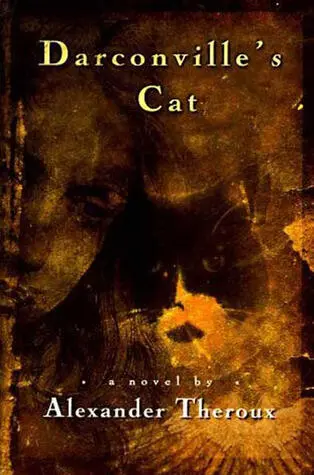
- Название:Darconville’s Cat
- Автор:
- Издательство:Holt Paperbacks
- Жанр:
- Год:1996
- ISBN:нет данных
- Рейтинг книги:3 / 5. Голосов: 2
-
Избранное:Добавить в избранное
- Отзывы:
-
Ваша оценка:
Darconville’s Cat: краткое содержание, описание и аннотация
Предлагаем к чтению аннотацию, описание, краткое содержание или предисловие (зависит от того, что написал сам автор книги «Darconville’s Cat»). Если вы не нашли необходимую информацию о книге — напишите в комментариях, мы постараемся отыскать её.
Darconville's Cat Its chapters embody a multiplicity of narrative forms, including a diary, a formal oration, an abecedarium, a sermon, a litany, a blank-verse play, poems, essays, parodies, and fables. It is an explosion of vocabulary, rich with comic invention and dark with infernal imagination.
Alexander Theroux restores words to life, invents others, liberates a language too long polluted by mutters and mumbles, anti-logic, and the inexact lunacies of the modern world where the possibility of communication itself is in question. An elegantly executed jailbreak from the ordinary,
is excessive; funny; uncompromising; a powerful epic, coming out of a tradition, yet contemporary, of both the sacred and the profane.
Darconville’s Cat — читать онлайн бесплатно полную книгу (весь текст) целиком
Ниже представлен текст книги, разбитый по страницам. Система сохранения места последней прочитанной страницы, позволяет с удобством читать онлайн бесплатно книгу «Darconville’s Cat», без необходимости каждый раз заново искать на чём Вы остановились. Поставьте закладку, и сможете в любой момент перейти на страницу, на которой закончили чтение.
Интервал:
Закладка:
Argumentatio
“I come to the subject of marriage, then, resolved, lest I offend you, to avoid the rhetoric of exaggeration, which is, nevertheless, not only inseparable from great oratory but which punctuates information with the kind of infuriating finality I fear, in this matter, you still show yourself so deeply in need of being doctored. I shall speak to the wound, however. If you find the subject wearisome, I suggest you seek in yourself the weariness, and if my bouncing candor you can’t stand bethink yourself then of the frankness you once asked of someone in a dress! I have spoken words, now, dehortatory, expostulatory, and supplicatory, but of marriage, confess, need I heap up here, accumulate, misrepresent on the side of greater size, or caricature? O laugh it out, you laughsters! O laugh it up belaughably to the last laughed-out bit of laughter and then laugh again!
“Holy deadlock? Why, the observation of married couples is a postgraduate course in pessimism itself! Never mind that hard by the temple of Hymen, in the florid words of Hippel, lies the graveyard of love — if you must insist, of course, that love exists — the very act of the male stooping to marry the female makes the mere concept of marriage morganatic! And yet can a man actually devote himself to such a trifle? He can. He will. He does. How, you ask? Why, it’s easy. The moral misconduct necessary for intimacy, you see, subsequently fosters in the male a desperation for justice in relation to his enemy twin — he seeks to check his precipitancy — and so in a reckless excess of duty-grafted-to-guilt, for next to happiness confirmed misery does well, he connupts for a lifetime someone who, ironically enough, is absolved by that very act of excess from the need or obligation to love in return! Marriage? It is a dualism beyond comprehension, the plot of the story of the Fall, the primitive riddle, a ghastly public confession, the binding of the unlimited in the bonds of space, of the eternal by time, of the spirit by matter. The State calls it legal, for revenue. The Church sees it indissoluble, for dynasty — and yet when the deep and ghastly disjunctures of nature native to it inevitably occur, both serve to detain by compulsion such of those who from that oppressive and unpredestined misery would suddenly flee! Marriage? It is nothing more than a slavery to brief pleasure leading to the lengthy slavery of one another. The debate is not closed, only the question. The legend that matrimony is a lottery, in fact, has almost ruined the lottery business! The world’s reformers, have they not all been married men? And death on the wedding night, is it not one of literature’s immortal themes? The Iliad , that bible of war, did it not begin with a wedding? Had Theseus any need of Ariadne’s thread to find his way into the labyrinth? Didn’t St. Peter himself — Matthew 8:14—drop his wife flat in the pursuit of what she clearly prevented him otherwise from seeking? And what that we own, further, have we ever valued as much as what once we didn’t have? Aren’t possessions generally diminished by possession, where even the most fetching person is no longer assured of our slightest concern after we’ve known her for a simple few months? Marriage? It is a contract, not a commitment, nothing but an act of propitiation by men for first having thought ill of women. Women don’t marry men, they adopt them — to carry baggage, to hail cabs, to fetch! And to what end does this proprietary institution serve other than to effect the introduction of order into chaotic sexual relations and to establish every assurance in behalf of those sweet little apostles of pairing you so love for the formal acquisition of alimonious funds and a ticket to Rio for a lifetime of comic viduity? Marriage? What is it, finally, but a tyrannous routine of unanswerable female quibbling, enervating habit, and plaguey amorism, no more a warranty of happiness than prison and no more natural to us than a cage is to a cuckoo-bird — a modus vivendi that is as incompatible as free-love with the highest interpretations of the moral law, making the remarks of St. Ambrose, fourth-century bishop of Milan, perfectly in order when he asserted that married people ought to blush at the state in which they were living as it prostituted the members of Christ! No, Darconville, remove, remove that marriage hearse! And thus remove that ancient curse!
“Can you imagine what domestic life with a woman must be and still gamble away your life for a mere toss at such a perishable being? It is the single sex for whom marriage for love is so rare that a vow of obedience, arguable antonym of love, is still exacted in the nuptial contract, and what they bring to the hearth must be limited, I’m afraid, to what are their only natural gifts, three in number: deceit-fulness, spinning, and the capacity to weep at will. Now, a family’s happiness, it’s been said, is always in proportion to the cultivation of its female members, but as they’re congenitally unable to be satisfied— save only by movable property or the proximity of some male neighbor, mustachioed like a Circassian, to compare you to — the hygienic penalty that must be paid, for woman’s denial of her real nature becomes inescapable, is the hysterical self-dissatisfaction inherent in striving to be what, to get, they who weren’t once convinced you they were! The saint then — poof! — becomes a scold. The portcullis drops! The more a woman’s made an occupation of torturing her husband, you see, the less right she thinks she has to lose him, her hold over him increasing to the measure of her coldness . Wanting always comes to an end with having. They nag. They gripe. They breed infidelity. It is impossible, for instance, to speak of one woman with another without her betraying the one who’s absent; the Chinese symbol for war is two women under the same roof. They aren’t even friends — there is no word in the Latin language that signifies a female friend: arnica means mistress. No, what they are, Darconville, are born lackeys — the word ‘employee,’ remember, is always spelled with two e’s — serving only to censor. They have no relation to man and no sense of man, but only to maleness. The periods of matriarchy have always been periods of polyandry! And although the Koran says that heaven is at the feet of a mother most men still mutter Karram Allah before even mentioning such a worthless subject as women in conversation. And yet how quickly they seek to assume sovereignty, fearing that their husbands will be successful while at the same time insisting they achieve wondrous things and accepting the fruitless but heroic efforts of the poor fools to give them their souls while failing, for want of comprehension, to strive for that same virtue in themselves. And the polluting sadness of it all, as you look to escape, can be neither diminished nor abridged, for no matter where you go or how far you withdraw, there she is — bored, nagging, censorious — peering like a divedapper through a wave! Domesticity? Happy domesticity? It’s a Victorian pipe-dream! Why, even then when those spindle-and-broom deities performed no more banal an act than merely putting a foot to the treadle the very motion kindled appetites in them they were too stupid to realize they already had! But then what has ever curtailed the sexual frenzy of a woman?
“Don’t say children! As no woman is the perfect type of mother— something she shares with the penguin, catfish, shark, and stickleback, among others — how could that be? In fact, the female essentially seeks in the existence of children nothing more than a satisfaction to dominate.
Girls have mothers
Upon their necks to bite ‘em,
So girls grab boys
And so ad infinitum .
Читать дальшеИнтервал:
Закладка:
Похожие книги на «Darconville’s Cat»
Представляем Вашему вниманию похожие книги на «Darconville’s Cat» списком для выбора. Мы отобрали схожую по названию и смыслу литературу в надежде предоставить читателям больше вариантов отыскать новые, интересные, ещё непрочитанные произведения.


Обсуждение, отзывы о книге «Darconville’s Cat» и просто собственные мнения читателей. Оставьте ваши комментарии, напишите, что Вы думаете о произведении, его смысле или главных героях. Укажите что конкретно понравилось, а что нет, и почему Вы так считаете.