John Gardner - Stillness & Shadows
Здесь есть возможность читать онлайн «John Gardner - Stillness & Shadows» весь текст электронной книги совершенно бесплатно (целиком полную версию без сокращений). В некоторых случаях можно слушать аудио, скачать через торрент в формате fb2 и присутствует краткое содержание. Год выпуска: 2010, Издательство: Open Road Media, Жанр: Современная проза, на английском языке. Описание произведения, (предисловие) а так же отзывы посетителей доступны на портале библиотеки ЛибКат.
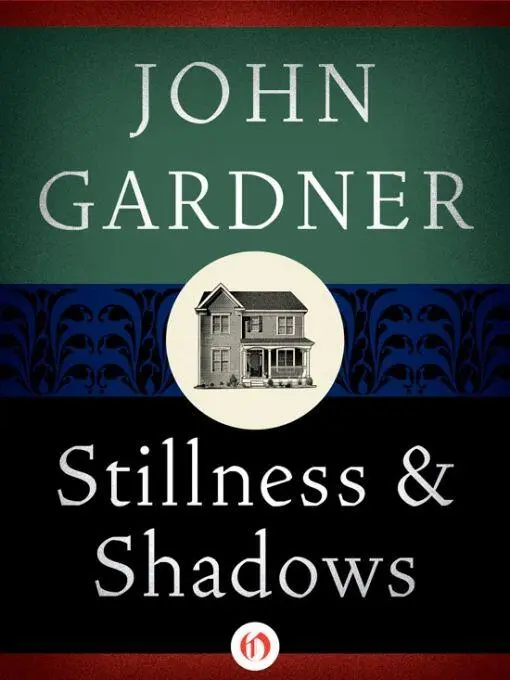
- Название:Stillness & Shadows
- Автор:
- Издательство:Open Road Media
- Жанр:
- Год:2010
- ISBN:нет данных
- Рейтинг книги:5 / 5. Голосов: 1
-
Избранное:Добавить в избранное
- Отзывы:
-
Ваша оценка:
Stillness & Shadows: краткое содержание, описание и аннотация
Предлагаем к чтению аннотацию, описание, краткое содержание или предисловие (зависит от того, что написал сам автор книги «Stillness & Shadows»). Если вы не нашли необходимую информацию о книге — напишите в комментариях, мы постараемся отыскать её.
Inspired by therapy sessions Gardner experienced with his first wife, Stillness is an insightful portrait of one couple’s struggle for fulfillment in a tumultuous world.
Private detective Gerald Craine is pursuing an unknown murderer. At the same time, he himself is the target of an unknown person’s pursuit. Stumbling through an alcohol-soaked haze, Craine desperately seeks meaning and understanding in a world fraught with fragmented narratives.
Shadows: John Gardner’s friend Nicholas Delbanco has supplemented this unfinished novel with seven sections from Gardner’s original manuscript that provide critical insight into Gardner’s approach to developing the novel and its characters, giving a rare glimpse inside the creative process of one of the twentieth century’s most inventive writers.
This ebook features a new illustrated biography of John Gardner, including original letters, rare photos, and never-before-seen documents from the Gardner family and the University of Rochester Archives.
Stillness & Shadows — читать онлайн бесплатно полную книгу (весь текст) целиком
Ниже представлен текст книги, разбитый по страницам. Система сохранения места последней прочитанной страницы, позволяет с удобством читать онлайн бесплатно книгу «Stillness & Shadows», без необходимости каждый раз заново искать на чём Вы остановились. Поставьте закладку, и сможете в любой момент перейти на страницу, на которой закончили чтение.
Интервал:
Закладка:
Craine had paused, a block from his office, Hannah Johnson standing ample and sweaty at his side. He’d turned around abruptly, but there was no one, or, rather, only those people he might have expected to see— shoppers, high-school students, people leaving work. He kept his panic hidden, eyes darting left and right, finding nothing. Almost without his knowing it, his eyes continued searching, waiting to pounce on some movement in a doorway, some shadow where there ought not to be one. Yellow leaves and old newspapers blew across the street, caught in the gutters, lifted over, and hurried on, like businessmen running with their heads bent. The air had the heavy tornado-weather smell that would be normal back in August, a month ago. He glanced at the sky — wide blue, slashed by jet streams and smudged, down lower, by yellow-white clouds from the smokestack at the edge of the university campus. They were running on crushed and oxygen-blasted sulfur coal; an experiment. “Whole country buried chin-deep in shit,” he muttered, less to Hannah than to the whole sinful nation. His bleary eyes aimed at the smoking horizon, out beyond the last of the city’s low buildings, southward. In the sky, high above the smoke, two hawks hung floating like kites. Craine’s head shook slightly, as if with palsy. He stood with his elbows clamped tightly to the sides of his chest, the left one supporting the Sanskrit book, his right fist, just above his overcoat pocket, closed around the top of the sack that held his whiskey. Through the smoke, he could make out traces of the gouged yellow hills, once thick with oaks and pines and, on the lower slopes, orchards. To the north, once corn land — beyond the range of his vision — lay five-mile-long strip mines, cobalt-blue, blood-red, and rust-colored pools where nothing was astir but invisible insects and the tongues of lizards.
Hannah Johnson bent forward and touched his forearm. “Don’t think about it, Craine,” she said sadly. “You’ll give yourself a heart attack.” To a passing stranger it would have seemed that she was giving him a quarter. Hannah was well kept, matronly, dressed too warmly for the autumn day. She wore a light, purple coat.
She turned her head, following the direction of his angry stare, and pursed her lips unhappily. “I remember when up there was the prettiest scenery in the world,” she said. The corner of her mouth tucked in — a trace of a long-suffering smile. She had the voice of a singer. She stood with her weight on her left leg, her right leg thrown jauntily forward. Her shoes were red. She said, “There was an old Baptist church out on Boskydell Road where my family used to go every Sunday in George Elroy’s pickup, all us children in the back.” She laughed and lightly slapped the air with her hand, remembering. “George Elroy would always sweep it out and put applecrates in for us to sit on, and down the road we’d go in our Sunday good dresses, all hooting and hollerin and wavin at the people … oh yes! The church was in the hollow — pretty white church just up among the trees from the railroad tracks where the granary set, before the fire. You wasn’t here when they still had the granary.” She glanced at him, her expression grieved, checking. “No, you was still in Chicago then, that’s right. It was a regular little village, Boskydell. Big old granary and apple barn, filling station, houses …That ole fire pretty much took all of it. The church is still there, though; mostly white folks now. That’s the way it is, y’know.” She tipped him a little smile and a shy look, as if slapping her knee. “You just get the neighborhood cleaned up nice and doggone it, in comes the white folks!” Craine grimaced back, not real anger, just whiskey, as Hannah no doubt knew. “Don’t think about it, Craine,” she said again, suddenly heavyhearted, and patted his forearm. “Everything gonna be all right. We got the Lord’s own promise.”
“We’ll see,” Craine muttered, looking angrily to the left. Hannah’s talk of God was no better for his temper than whiskey. The whole world’s dying of leukemia, he could have told her. We got twelve thousand tons of TNT for every living person on earth, if you call that living, and more every day, by the trainload, as fast as we can make it. But he said nothing, merely crunched his teeth together. His childish rage was more disgusting to Craine than all the rest.
He shook his arm free, not quite roughly, muttered his farewell and, turning with hardly a nod, walked on. She stood where he’d left her, queenly, surrounded by autumn gold, shaking her silvered head, looking after him. In his mind he watched her, though he walked in the opposite direction. She lived northeast, the Negro section, in a small, crowded house with tin-patched linoleum floors, purple carpeting, red and purple flowers in the windows — geraniums and purple statice. Craine lived downtown. She couldn’t help him, heaven knew. No one, as she must know, could help him. Not that Craine wanted or needed help (Craine set his jaw, sliding his eyes from left to right), staggering through his days, his drunkenness almost unnoticeable except to the canniest eye, he told himself — though perhaps he’d gone a little far there, today; crossed the line there with McClaren and the talking cat.
Craine hurried on toward his hotel room. If someone were to tell him the fates had set him down to be shot dead tomorrow (so Craine mused with the part of his mind not reading), he’d never bat an eye. He had no relatives, no friends, no possessions he cared about; he had no future, no past — a creature moving comfortably outside Time, as he’d tried to explain to McClaren.
His mind toyed briefly (his eyes moving over the page, left to right and downward, steadily) with the thought of Hannah Johnson’s sharp memories. He’d seen it many times, how she dipped into her past as if the whole thing were running like a movie in her head, Greer Garson and Alan Ladd — her husband T.J., just home from the war, grinning like a fool in his uniform; the birth of her children, their baptism days; the big house they lived in on Sycamore, up among the whites, before T.J. got in trouble. She spent half her time harking back or casting forward. A curious way to live, it seemed to Craine. He glanced over his shoulder; someone slipped into a doorway. Craine remembered, abruptly, something from his navy years — he’d served on a submarine in World War II. A few frozen images: his commanding officer with wrinkles around his eyes and his hand on his chin; a sunrise on the Pacific like a cheap picture postcard. And he remembered, less dimly, though dimly enough, some three, maybe four of the books he’d read then; it was there that he’d picked up his reading habit. The 42nd Parallel ; a biography of Lincoln; a book on the formation of the universe — the slow collapse of dust clouds into solid, hot masses: creation as the closing of a fist. Try as he might, he could bring back nothing of the cabin, not even the bunk he read on or the color of the blankets. He could remember warm light, soft and yellow, as in a house, but he couldn’t remember the source. Casting back farther, back into his childhood, he could call back, except for an image of Aunt Harriet at the piano — nothing whatsoever. Now he was imagining — or rather dreaming, nodding over the book — that he was in dispute with someone about memory. He sat at a huge iron desk, trembling and defensive. “Why should I?” he snapped, cantankerous, full of business. He was both himself and the other man, it seemed. “Nothing?” he asked mildly — or the observer asked; the identification was not so clear now. “Nothing at all,” Craine answered with a touch of defiance, whimpering in his dream. The observer, bearded and bespectacled, was on guard; he knew himself at the edge of some old unpleasantness. “Nothing!” Craine said firmly, angrily, in the darkness.
Читать дальшеИнтервал:
Закладка:
Похожие книги на «Stillness & Shadows»
Представляем Вашему вниманию похожие книги на «Stillness & Shadows» списком для выбора. Мы отобрали схожую по названию и смыслу литературу в надежде предоставить читателям больше вариантов отыскать новые, интересные, ещё непрочитанные произведения.


Обсуждение, отзывы о книге «Stillness & Shadows» и просто собственные мнения читателей. Оставьте ваши комментарии, напишите, что Вы думаете о произведении, его смысле или главных героях. Укажите что конкретно понравилось, а что нет, и почему Вы так считаете.