John Gardner - Stillness & Shadows
Здесь есть возможность читать онлайн «John Gardner - Stillness & Shadows» весь текст электронной книги совершенно бесплатно (целиком полную версию без сокращений). В некоторых случаях можно слушать аудио, скачать через торрент в формате fb2 и присутствует краткое содержание. Год выпуска: 2010, Издательство: Open Road Media, Жанр: Современная проза, на английском языке. Описание произведения, (предисловие) а так же отзывы посетителей доступны на портале библиотеки ЛибКат.
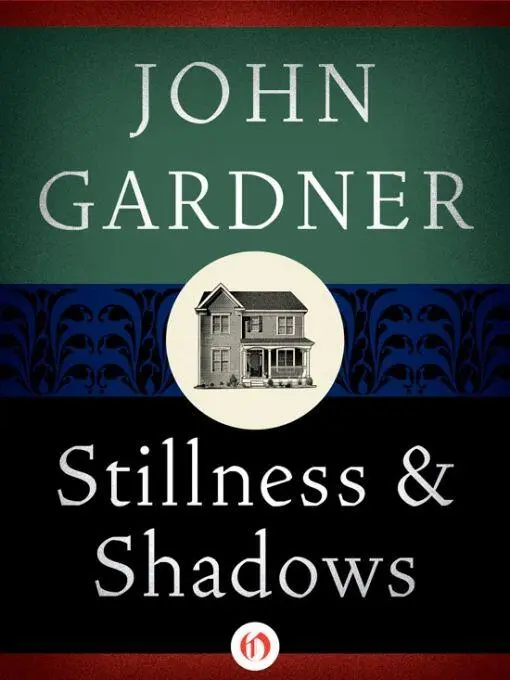
- Название:Stillness & Shadows
- Автор:
- Издательство:Open Road Media
- Жанр:
- Год:2010
- ISBN:нет данных
- Рейтинг книги:5 / 5. Голосов: 1
-
Избранное:Добавить в избранное
- Отзывы:
-
Ваша оценка:
Stillness & Shadows: краткое содержание, описание и аннотация
Предлагаем к чтению аннотацию, описание, краткое содержание или предисловие (зависит от того, что написал сам автор книги «Stillness & Shadows»). Если вы не нашли необходимую информацию о книге — напишите в комментариях, мы постараемся отыскать её.
Inspired by therapy sessions Gardner experienced with his first wife, Stillness is an insightful portrait of one couple’s struggle for fulfillment in a tumultuous world.
Private detective Gerald Craine is pursuing an unknown murderer. At the same time, he himself is the target of an unknown person’s pursuit. Stumbling through an alcohol-soaked haze, Craine desperately seeks meaning and understanding in a world fraught with fragmented narratives.
Shadows: John Gardner’s friend Nicholas Delbanco has supplemented this unfinished novel with seven sections from Gardner’s original manuscript that provide critical insight into Gardner’s approach to developing the novel and its characters, giving a rare glimpse inside the creative process of one of the twentieth century’s most inventive writers.
This ebook features a new illustrated biography of John Gardner, including original letters, rare photos, and never-before-seen documents from the Gardner family and the University of Rochester Archives.
Stillness & Shadows — читать онлайн бесплатно полную книгу (весь текст) целиком
Ниже представлен текст книги, разбитый по страницам. Система сохранения места последней прочитанной страницы, позволяет с удобством читать онлайн бесплатно книгу «Stillness & Shadows», без необходимости каждый раз заново искать на чём Вы остановились. Поставьте закладку, и сможете в любой момент перейти на страницу, на которой закончили чтение.
Интервал:
Закладка:
He pulled off his thick-lensed glasses to wipe his eyes, but the tears came pouring more profusely than ever, and a whimpering, uncontrollable, began to push up from his throat. All his defenses had abandoned him at once, even that comic, ironic detachment that had until now gotten him past the worst life could dump. He saw himself as the people now craning their necks must be seeing him, a hawk-nosed old derelict with deep-sunken, red, weeping eyes; an old limp suit grown three sizes too large; long, crooked fingers, stained fingernails. He could conjure up neither amusement or disgust, only sorrow at the waste, one more poor unlovable orphan wailing its heart out to no one in particular, for no good reason.
“Listen, let me get us a drink,” Meakins said. He reached up and pushed the stewardess button. “It’s emotional exhaustion, that’s all,” he said. “It’s a natural reaction.” He loosened his tie. “You’ve been holding it all in, that’s all. It’s natural.”
Now the stewardess was coming. When she reached their row she pushed the button that turned the little light off, then leaned over to look at Craine, then, in haste, at Meakins. She was blinking rapidly, probably wearing new contacts.
“My friend here would like a martini,” Meakins said, “—double; straight up, two olives. I’ll take the same.”
“Brothers and sisters, let us drown our woes in gin,” Craine said, and tried to laugh. At once he was sobbing again. There was a movie he’d seen once, German propaganda — he’d seen it in connection with a case up in Chicago. Thousands of childlike men and women in rows — braids, trim crew cuts — doing click, spin, click calisthenics. … something about “Christ the Athlete” …movie lighting that made the field where they exercised seem the pastures of heaven, terrible new Eden, mind of God with prefrontal lobotomy …
The stewardess looked at him, stopped blinking for an instant, then nodded to Meakins and backed away, turning and stretching out one arm, trailing it like a dancer, as she went.
The mood had eventually passed, of course. That was one thing you could say, things eventually passed. Perhaps it had been a significant period of his life, all things considered. For all his stubbornness, not even Craine could claim he was the same man he’d been before his brush with death. His beliefs had been secure, his patterns and emotions as solid as frozen ruts in a country lane. He’d known who he was, where he stood, what mattered in the world — almost nothing: good Scotch, healthy defecations (they were mutually exclusive, of course), a minimum of inconvenience, especially the inconvenience of dealing with people who had opinions, knew slogans, found significance in things. None of that had changed except — what? The way his heart leaped, blind to good sense, when he read the words What Does God Require of Me? It was as if the high fortress walls he’d built with the best of materials, the finest of plans, had for no earthly reason begun to open up seams so wide they let in rain and daylight, both radioactive. Sometimes, for no reason — but more and more frequently, these past three, four days — flashes of the closed-off past came back to him: an image of his aunt in her classroom, talking with her head tilted. She wore a blue dress — high collared — and small, light blue earrings. In his mind he heard the music that went with her: classical. She always played classical. In the long maple music bench she sat on when she played — it was glossy and smelled of lemon, he remembered — she had faded yellow books of Chopin, Schubert, Bach, Czerny, and one red book that said The John Thompson Method . He must have stared at it often as a child of six or seven, maybe older. He could see it plain as day. Craine squeezed his eyes shut tight, then opened them.
All languages, the Vedic priests believed .…
When he looked over from his book, he saw, as he’d known he would, a mouse under the bed, crouching motionless, as if aware that Craine was watching him. Craine thought of the cat at the restaurant and looked down at his book. Outside, he was aware without looking, it was now completely dark. His hands were trembling. A police siren wailed in the distance and passed perhaps a block or two away, speeding toward the edge of town, still greater darkness. He remembered the Scotch on the carpet beside his foot and reached down for it, but with the tips of his fingers on the rim he for some reason hesitated, listening again. His neighbor was playing music on the record-player, something classical: orchestral; German. He raised the glass and drank, then, setting down the glass again, drawing the book up to his eyes where he could read it, felt for his matches. With a part of his mind he was aware of a second mouse moving in stops and starts toward the first.
The reason he knew it was a young woman following him, he realized all at once, was that he’d seen her. Her face was soft and obscurely Oriental, possibly Semitic, like the faces on the walls of Egyptian tombs. In the momentary vision she was beautiful: dark hair, dark frightened eyes, large and slanted — curiously shaped, in any case, like the eyes on old statues from Cyprus. It was only for an instant that their eyes had met; he could not now remember where or even when: a day or two ago, perhaps. Quickly, he’d looked away, but not before he’d glimpsed something disquieting, even shocking, in the look she gave him: some ravenous appeal or legitimate demand, some claim she had on him, mystic and outrageous, nothing common nature could explain. There were words, in fact: Mr. Craine, you’re supposed to save my life — and look at you! Her lips had not moved. His heart had floundered, but then instantly his senses had come back to him and he’d known it was nothing, his drunken imagination playing tricks again. She was young, maybe twenty. They’d never met in their lives. Pretty girl , he’d thought, pursing his lips and frowning, turning his head slowly and casually to look again. She was gone. (Craine’s eyes moved left and right, left and right. His lips puckered tightly, sucking at the pipe. Smoke clouds billowed above him.) His hands trembled badly. He drank again. If his neighbor was listening to music, it occurred to him — now Craine was squinting, looking up over the book, crafty — then he couldn’t be writing poetry; too distracting. On the other hand, of course, if he was grading papers, or if some young woman was rolling around on the rug with him …
There was something important he’d been thinking about, or had meant to think about. He cast back, groping, but he’d lost it.
It was increasingly hard to keep his mind on the book. He’d slept, off and on, when he’d first come home, but he was drowsy again; no doubt the whiskey. Also the print grew increasingly blurry. Why he forced himself to read he could hardly have said, but he did, or rather tried to — drunkard’s discipline, yes — lipreading, insisting that his mind pay attention. His mind slipped around him, closing his eyes without his noticing, offering him a different, more surprising book. He read with increasing interest, increasing astonishment, until the whiskey glass slipped in his hand, waking him. He righted the glass, then on second thought set it on the floor beside his shoe, unaware that, of course, he was tricking himself again, making it easier to fall asleep. He pressed his rear end back farther in the chair, put his burnt-out pipe in his shirt pocket, and bent forward over the book, lipreading again, following the print with one finger. He read with fierce attention, but again he fooled himself, for though his eyes moved dutifully, focusing on the print, he was running over images in his mind.
Linguistic proliferation, the Vedic priests believed …
Читать дальшеИнтервал:
Закладка:
Похожие книги на «Stillness & Shadows»
Представляем Вашему вниманию похожие книги на «Stillness & Shadows» списком для выбора. Мы отобрали схожую по названию и смыслу литературу в надежде предоставить читателям больше вариантов отыскать новые, интересные, ещё непрочитанные произведения.


Обсуждение, отзывы о книге «Stillness & Shadows» и просто собственные мнения читателей. Оставьте ваши комментарии, напишите, что Вы думаете о произведении, его смысле или главных героях. Укажите что конкретно понравилось, а что нет, и почему Вы так считаете.