John Gardner - Stillness & Shadows
Здесь есть возможность читать онлайн «John Gardner - Stillness & Shadows» весь текст электронной книги совершенно бесплатно (целиком полную версию без сокращений). В некоторых случаях можно слушать аудио, скачать через торрент в формате fb2 и присутствует краткое содержание. Год выпуска: 2010, Издательство: Open Road Media, Жанр: Современная проза, на английском языке. Описание произведения, (предисловие) а так же отзывы посетителей доступны на портале библиотеки ЛибКат.
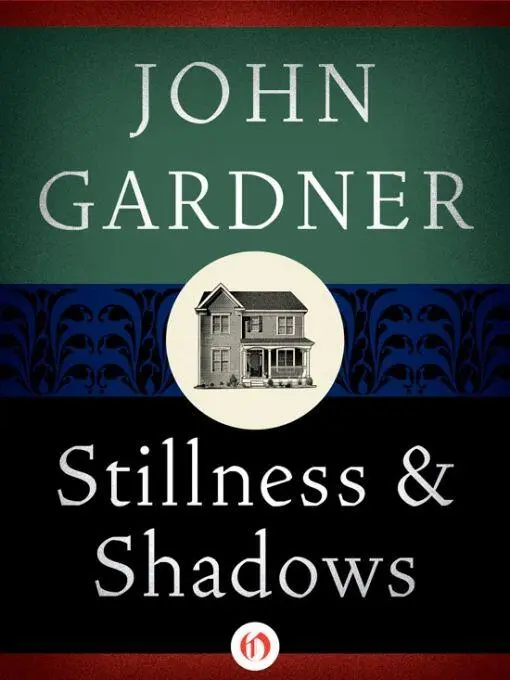
- Название:Stillness & Shadows
- Автор:
- Издательство:Open Road Media
- Жанр:
- Год:2010
- ISBN:нет данных
- Рейтинг книги:5 / 5. Голосов: 1
-
Избранное:Добавить в избранное
- Отзывы:
-
Ваша оценка:
Stillness & Shadows: краткое содержание, описание и аннотация
Предлагаем к чтению аннотацию, описание, краткое содержание или предисловие (зависит от того, что написал сам автор книги «Stillness & Shadows»). Если вы не нашли необходимую информацию о книге — напишите в комментариях, мы постараемся отыскать её.
Inspired by therapy sessions Gardner experienced with his first wife, Stillness is an insightful portrait of one couple’s struggle for fulfillment in a tumultuous world.
Private detective Gerald Craine is pursuing an unknown murderer. At the same time, he himself is the target of an unknown person’s pursuit. Stumbling through an alcohol-soaked haze, Craine desperately seeks meaning and understanding in a world fraught with fragmented narratives.
Shadows: John Gardner’s friend Nicholas Delbanco has supplemented this unfinished novel with seven sections from Gardner’s original manuscript that provide critical insight into Gardner’s approach to developing the novel and its characters, giving a rare glimpse inside the creative process of one of the twentieth century’s most inventive writers.
This ebook features a new illustrated biography of John Gardner, including original letters, rare photos, and never-before-seen documents from the Gardner family and the University of Rochester Archives.
Stillness & Shadows — читать онлайн бесплатно полную книгу (весь текст) целиком
Ниже представлен текст книги, разбитый по страницам. Система сохранения места последней прочитанной страницы, позволяет с удобством читать онлайн бесплатно книгу «Stillness & Shadows», без необходимости каждый раз заново искать на чём Вы остановились. Поставьте закладку, и сможете в любой момент перейти на страницу, на которой закончили чтение.
Интервал:
Закладка:
“He just wants to get into your pants,” Martin said.
She kept trying and began to have a little success. She began to go for days at a time without drugs. She could drive again, at least sometimes: she knew when she could make it without dizziness or fainting.
She said to the hypnotist, leaning forward in her chair, that what he’d done for her life was astonishing. He asked her, timidly, if she’d be interested, perhaps, in having an affair. She thanked him but declined. “I’ve been thinking,” she said, “what I’d really like is a dog.” She’d seen one advertised in the Bennington Banner .
“A dog?”
“I haven’t had a dog since I was four,” she said. “When he was run over, my mother was heartbroken, and all I ever had after that was cats — and a pig, one time, and a pony that bit;”
“Dogs bite,” he said, trying to be helpful.
She said, “My husband and children have dogs, but not me, not my own.” She looked out at the buildings, the dirty snow. “What I was thinking I’d like is an Old English sheepdog. A boy dog.” She grinned.
She said the same thing to Martin, and after she’d mentioned it four or five times he surprised her with an Old English sheepdog, male, which she named Bennington. She’d made a mistake, she realized; an Old English sheepdog wasn’t what she meant, she’d had in mind some other breed, a whole lot smaller. But Bennington (Bennington the Dog, as they called him, to keep things clear — and for some reason they spoke to him only in French) was a joy and fell madly in love with her, though he was almost impossible to housebreak.
She was happier than ever. “Look, it’s snowing!” she would cry out, every time it snowed. Evan would look up from his paperback of card tricks, or the photographs he’d developed and was now trimming with scissors, or from his French horn etudes, and would grin at her. “Neat!” She went skiing and skating; she bought tap-dance shoes and started practicing in the back room with Bennington the Dog, who barked at her like crazy. Mary would roll up her eyes and moan, exactly like Martin, “Culture, culture, culture.”
“This,” Joan said, “is a buck-and-wing.”
The house shook, the dog barked insanely.
“But is it Art?” Mary said.
When she was caught up with the schedule she had for her novel, she composed horn duets for Evan and Martin, harp pieces for Mary, string ensembles for them all — including Paul, when he came to visit. They all went, every Sunday night, to the rehearsal of the Sage City Symphony. Martin growled about his students, the dogshit, the cost of food (he’d always been cheap; now that they were rich he was downright stingy). He complained about the endless paperwork Bennington College required of him; wrote half the night (“Genius, unmitigated genius,” she would say, looking over his shoulder, and would kiss him on the bald spot), and often lay in bed late with her mornings, holding her in his arms. She drove through the mountains in the big blue Mercedes, with Bennington the Dog on the leather seat beside her, buying curtains, carpets, furniture. Every other day she was asked if she was interested in having an affair. She wore, everywhere, except when she visited Dr. Behan in Detroit, where display could be dangerous, her rings: a big diamond, two emeralds, a ruby in an antique setting from Carrier’s. (Deep down, Martin too was an absolute snob.) Also one of her enormous fur coats (not endangered species except for, possibly, she wasn’t sure, her second-hand lynx; anyway, Martin apparently didn’t notice: he was still on whales). “Who’s that woman?” strangers asked. She decided to see if she could improve on the effect. She went on a diet, made a habit of the Canadian Air Force exercises. Martin refused to diet. He liked himself fat, thought it made him look more mature, more significant. Some interviewer asked her if success had “spoiled Martin Orrick.” “Oh, horribly!” she said. “Unbelievably!” Martin of course denied it. “It’s not success,” he said, “it’s simple recognition, as when one remarks, ‘Ah ha, there goes a camel.’ ” She suggested that if he were to go on a diet he would look even more mature and significant, like a trim little London banker. He wasn’t fooled. “Loveliness is not my bag,” he said.
Her self-confidence increased. Even Martin was impressed, was almost, in fact, regularly cheerful. “Maybe all women should be issued adhesions,” he said. She laughed. She had learned to hide from him almost completely the fact that she was in pain, except, of course, when it was so bad she had to turn to the drugs again, and could no longer manage full control. Pain or no pain, she laughed a lot, these days, and made other people laugh. Once when they stopped to buy fish at the fish truck that came over the mountains every Thursday from Maine, bringing lobsters, clams, crabs, and bluefish, a big burly man in a lumberjacket dared to step in front of her in line. She was wearing a black leather coat and beret and leather boots and looked, more than usual, like a high-priced Girl Commando. She at once stepped around him and in front of him, reached up and poked him in the chest, and said, “Watch yerself, buster, or I’ll push yer face in.” His eyes widened, his mouth opened, and then he bent over and laughed, slapping his knee, and couldn’t stop. The fish man laughed too, and she had to stand there, leaning on her elbow, waiting to be served.
Her doctor said, in his dingy little office in Shaftsbury, “You realize, Joan, this hypnotism’s all very well, but that stuff’s in there working. You’re going to have to face up, before long, to another operation.”
“I know,” she said, “and another and another.”
“Well—” he said.
She smiled, listening to the ticking of his clock. “Not just yet. But soon. I promise.”
He shook his head, chewing on his pipe. “What’s your secret?” he said.
“I’m in love,” she said.
“Does your husband know?”
She leaned toward him confidentially. “My husband is a fool.”
Dr. Faris was nonplussed and looked at her forehead. “It doesn’t seem to bother you much,” he said.
“Well, you see, he’s rich.”
Driving home down the mountain afterward, she thought about it. They were rich — not that, in point of fact, they had all that much money. But his sad, hopeless stories made people who heard them or read them come alive, made them gentle, made them notice their compassion for one another. His readings had the effect of a really good funeral: they made people come together and defy that age-old horror of things, the restless churning of sudden births and deaths, a universe of clumsily bumping bits of force, a cry out of the grass — and they were better than funerals, because the horrors he wrote of were all made up, mere airy might’ve been. (She knew what horror was, knew in, excuse the expression, her guts. “Watch yerself, buster,” she said to Death, riding, sadly watching her, in the wide blue real-leather seat behind her back.)
As she walked into the house, Martin was shouting as if in Euripidean rage, defying the gods, cursing the gray earth that so patiently bore him, “God damn Bennington!” Either the college had sent him more forms or he’d stepped in some dogshit.
“Hi, Martin, I’m home!” she called.
“Hi, Mom,” Evan said, grinning, looking up from the carpet where he was reading a great, fat paperback, Martin’s last best-seller. A sign of their progress was that Martin’s mad rages no longer frightened Evan at all. Mary waved hello from the couch, where she was writing, not bothering to look up.
Martin hadn’t heard her call of greeting, still howling his anger like a Midwestern tornado. She poked her head in at the study door. “Bennington the College, dear, or Bennington the Dog?”
Читать дальшеИнтервал:
Закладка:
Похожие книги на «Stillness & Shadows»
Представляем Вашему вниманию похожие книги на «Stillness & Shadows» списком для выбора. Мы отобрали схожую по названию и смыслу литературу в надежде предоставить читателям больше вариантов отыскать новые, интересные, ещё непрочитанные произведения.



Обсуждение, отзывы о книге «Stillness & Shadows» и просто собственные мнения читателей. Оставьте ваши комментарии, напишите, что Вы думаете о произведении, его смысле или главных героях. Укажите что конкретно понравилось, а что нет, и почему Вы так считаете.