Miljenko Jergovic - The Walnut Mansion
Здесь есть возможность читать онлайн «Miljenko Jergovic - The Walnut Mansion» весь текст электронной книги совершенно бесплатно (целиком полную версию без сокращений). В некоторых случаях можно слушать аудио, скачать через торрент в формате fb2 и присутствует краткое содержание. Год выпуска: 2015, Издательство: Yale University Press, Жанр: Современная проза, на английском языке. Описание произведения, (предисловие) а так же отзывы посетителей доступны на портале библиотеки ЛибКат.
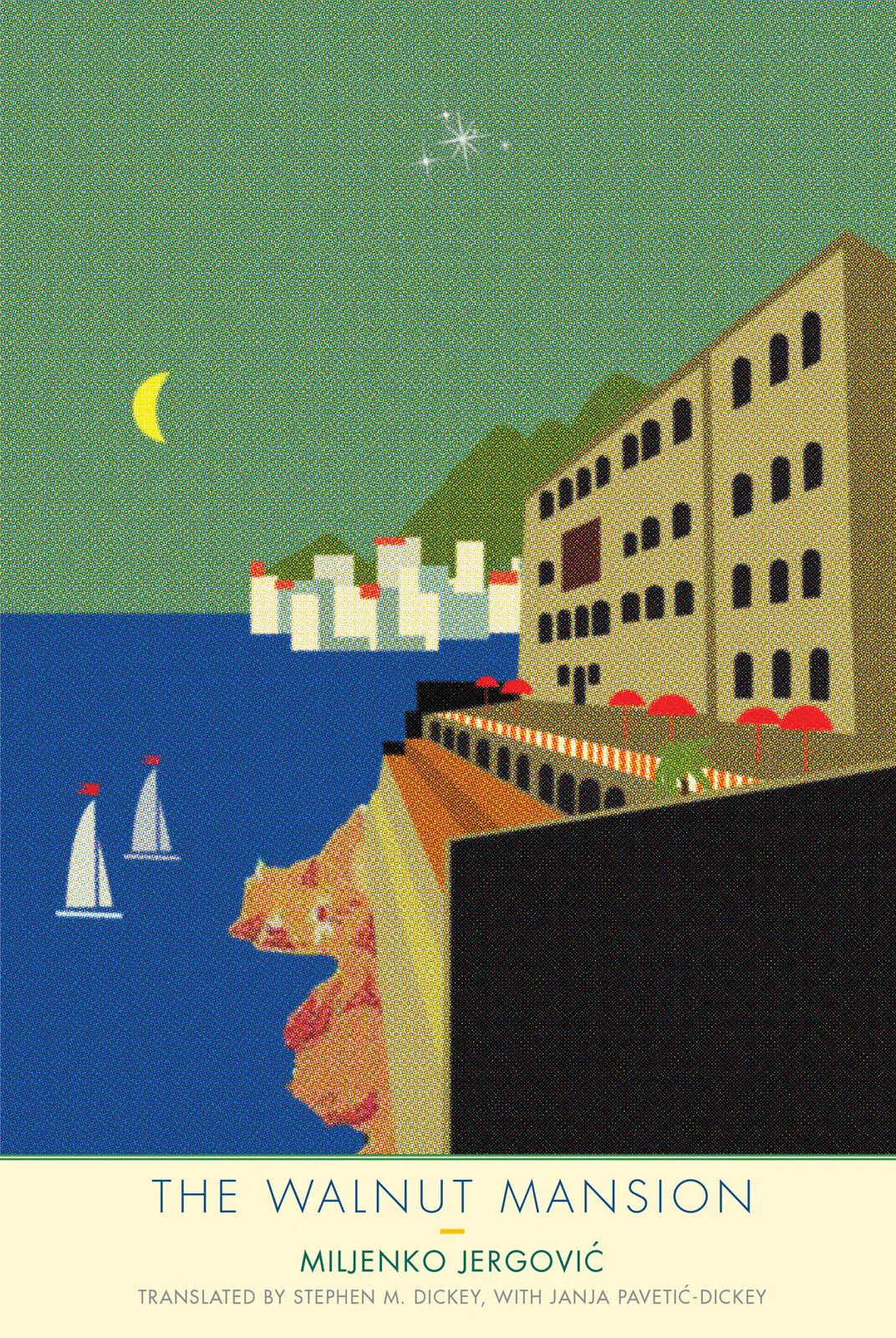
- Название:The Walnut Mansion
- Автор:
- Издательство:Yale University Press
- Жанр:
- Год:2015
- ISBN:нет данных
- Рейтинг книги:3 / 5. Голосов: 1
-
Избранное:Добавить в избранное
- Отзывы:
-
Ваша оценка:
The Walnut Mansion: краткое содержание, описание и аннотация
Предлагаем к чтению аннотацию, описание, краткое содержание или предисловие (зависит от того, что написал сам автор книги «The Walnut Mansion»). Если вы не нашли необходимую информацию о книге — напишите в комментариях, мы постараемся отыскать её.
What is it to live a life whose circumstances are driven by history? Jergovic investigates the experiences of a compelling heroine, Regina Delavale, and her many family members and neighbors. Telling Regina’s story in reverse chronology, the author proceeds from her final days in 2002 to her birth in 1905, encountering along the way such traumas as atrocities committed by Nazi Ustashe Croats and the death of Tito. Lyrically written and unhesitatingly told,
may be read as an allegory of the tragedy of Yugoslavia’s tormented twentieth century.
The Walnut Mansion — читать онлайн бесплатно полную книгу (весь текст) целиком
Ниже представлен текст книги, разбитый по страницам. Система сохранения места последней прочитанной страницы, позволяет с удобством читать онлайн бесплатно книгу «The Walnut Mansion», без необходимости каждый раз заново искать на чём Вы остановились. Поставьте закладку, и сможете в любой момент перейти на страницу, на которой закончили чтение.
Интервал:
Закладка:
This country was thus born from memories, and that was the reason why Stipo Valjan happened to be driving his empty bus toward Teslić.
All bloodied, he staggered up to the driver of the Golf, who was sitting pinned amid crushed metal, parts of which had passed through his belly and his left thigh. Yet it didn’t seem that he was injured but that as if by some miracle the metal had sprouted from him in those places, just as isolated pines grow out of cliffs above the Neretva canyon, amid bare rock, without any soil at all. The driver of the Golf smiled at the guy with the bloodied head as if he were someone he knew but hadn’t seen for a long time, then opened his mouth to ask if it were true that the President was dead, but his lips didn’t move. There was no sound in his throat; his lower jaw seemed to be riveted to his head. Vid was truly surprised by all this, and that was the last thing that happened before he breathed his last.
Half an hour later the police and an ambulance arrived. Stipo Valjan would spend three days in the Zenica hospital and would be summoned to the State Security Service in Sarajevo to give a statement because all accidents in which party or state automobiles were involved had to be investigated by the service. After he spent the whole of May on sick leave, he was already driving his old route again on the first of June. His head would ache when the weather changed, but that, along with Vid Kraljev’s meek smile, was the only aftereffect of the accident.
That smile came to him in dreams and calmed him for years, and the unfortunate driver couldn’t figure out what kind of spirits were visiting him and what heartless man lived within him for that terrible event to be remembered only positively and through the tender smile of a man.
It took three workers of the Zenica railway service all night using blowtorches to remove what remained of the famed Yugoslav photographer, probably the greatest after Skrigin, Dabac, and Afrić, and his promising assistant, whose few but exceptional works, as it said in the obituaries, had created one of the more memorable branches of Yugoslav modernism and experimental photography. The police had roused the workers from their sleep and brought them there still sluggish and hung over to do a job for which otherwise one would have had to wait until a special team from Sarajevo arrived the next morning. There would have been an interrepublican scandal had people from the Belgrade Academy of the Arts arrived before the body of Petar Pardžik, their emeritus professor and long-serving dean, had been extricated from the wreckage, and so the three railway workers had to do what they’d never had to do before, under the supervision of the same mustached policeman. They sighed and complained without saying a word, and through the night three acetylene torches glowed and threw sparks. Their blue light seemed to be the same as that cast by the televisions, which for the first time in the history of Bosnian roads cast their glow right until morning.
At one in the morning the phone rang in Regina Delavale’s kitchen. She heard it through the walls in her sleep and waited for it to stop. It would stop for a few seconds and then started ringing again. The on-duty inspector in the Maglaj police station probably dialed the number he’d been sent from Sarajevo and let it ring for the full twelve rings each time before an elderly female voice spoke on the other end.
“Maglaj police station on the line. Is this the number of Dijana Kraljev?”
Regina froze with fear; it even occurred to her to say that they had called the wrong number because the militia had no reason to call Dijana.
“It is,” she said nevertheless.
“Are you her?” the voice asked, leaving no possibility for her to refrain from answering or lie.
“I’m her mother,” she admitted.
“I’m obliged to inform you that your son-in-law Vid Kraljev was involved in a traffic accident on the Tešanj-Zenica road and that he died from his injuries at the scene.”
Regina held the receiver and said nothing. If she didn’t say anything, maybe what she was hearing hadn’t happened.
“Are you on the line? Did you hear me?” the voice asked without changing its tone.
“I’m on the line,” Regina answered.
“Then please accept my condolences,” the voice said and hung up.
Regina sat down on a kitchen chair and put her elbows, which someone had just filled with lead, on the table. She didn’t know what to do now. She’d been alive for seventy-five years and had never faced anything like this. Maybe she should have a cry and then go like that to Dijana — but how should she wake her? By shouting in front of her bedroom door or by going in quietly and calling her, shaking her shoulder? She didn’t know how she would do it, and though any other woman in her place would have simply despaired and made a racket from pure sorrow or unease at having something like this happen to her, she sat there, staring at three kitchen rags hanging on hooks and repeating, “Ah, poor Vid, poor child. .”
It couldn’t be said that she really meant it when she spoke those words, but they seemed to her to be the most suitable for the situation she found herself in. In fact she would have preferred to lie back down in bed and think about what she’d heard only in the morning, but she couldn’t do something like that.
She sat down on the foot of Dijana’s bed, and before she touched her, her daughter woke up.
“Vid’s dead,” was all she said.
“Not Vid, Mother, but Comrade Tito,” Dijana said softly without moving.
“Vid. He died in Bosnia. It’s Vid, Dijana, him. They just informed us.”
Dijana sat up straight with the movements of a mechanical doll; she looked at her mother and couldn’t understand what she was saying: “Who informed us. .?”
“The Bosnian police.”
“How do they know that?” she asked, watching Regina dully, thinking that she was making something up. Her bad side was doing this; she didn’t like Vid, just as she didn’t like any of Dijana’s other young men and not a single man who approached their house.
“There was an accident and Vid is dead now. That’s what’s happened, my child,” Regina said in a serious tone, with language that she otherwise didn’t speak, and it sounded like the words of a television anchor.
“Oh, Mother!” Dijana said, reaching out with her arms and grabbing the old woman firmly. She didn’t let go of her for a long time and didn’t think anything, except that she’d forgotten or lost something, but she couldn’t remember what it was at all. Like her keys when she was looking for change in her purse.
Vid was buried on the sixth of May, in the old cemetery above the city, amid gray stones with the names of long dead families. His grave, seen from afar, was a single oasis of flowers and greenery amid the gray, waterless stone wasteland.
Dijana stood between Vid’s older brothers. There were six of them, all dressed in the same black suits and ties; they looked like teary-eyed Neapolitan weapons smugglers, and only the dandruff on their collars contradicted this impression, turning them into what they were. She was the only one who wasn’t weeping; she clutched a bouquet of roses and felt a prickling between her legs, as when Vid hadn’t shaved for two days and went down on her in the middle of the night, ignoring Dijana’s giggling, which came from an inner feeling of unease that awoke whenever he did things that surpassed her love. What she’d done a few days before and would excite her as soon as she thought of it, she felt to be the first act in a story that had to end in a graveyard. The poor guy; he’d have been so surprised, she thought, to see her or feel her shaved mons under his fingers, certainly more so than if she’d said that she were pregnant, and who knows what would have happened further and how Vid’s head would have reconciled motherhood and those other things that one imagines more than talks about.
Читать дальшеИнтервал:
Закладка:
Похожие книги на «The Walnut Mansion»
Представляем Вашему вниманию похожие книги на «The Walnut Mansion» списком для выбора. Мы отобрали схожую по названию и смыслу литературу в надежде предоставить читателям больше вариантов отыскать новые, интересные, ещё непрочитанные произведения.






Обсуждение, отзывы о книге «The Walnut Mansion» и просто собственные мнения читателей. Оставьте ваши комментарии, напишите, что Вы думаете о произведении, его смысле или главных героях. Укажите что конкретно понравилось, а что нет, и почему Вы так считаете.