Xiao Bai - French Concession
Здесь есть возможность читать онлайн «Xiao Bai - French Concession» весь текст электронной книги совершенно бесплатно (целиком полную версию без сокращений). В некоторых случаях можно слушать аудио, скачать через торрент в формате fb2 и присутствует краткое содержание. Год выпуска: 2015, Издательство: HarperCollins, Жанр: Современная проза, на английском языке. Описание произведения, (предисловие) а так же отзывы посетителей доступны на портале библиотеки ЛибКат.
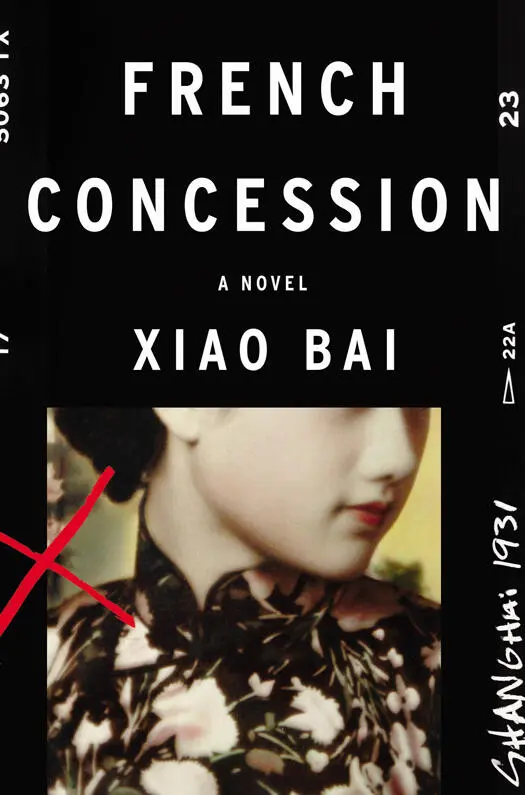
- Название:French Concession
- Автор:
- Издательство:HarperCollins
- Жанр:
- Год:2015
- ISBN:нет данных
- Рейтинг книги:3 / 5. Голосов: 1
-
Избранное:Добавить в избранное
- Отзывы:
-
Ваша оценка:
French Concession: краткое содержание, описание и аннотация
Предлагаем к чтению аннотацию, описание, краткое содержание или предисловие (зависит от того, что написал сам автор книги «French Concession»). Если вы не нашли необходимую информацию о книге — напишите в комментариях, мы постараемся отыскать её.
A boat from Hong Kong arrives in Shanghai harbor, carrying an important official in the Nationalist Party and his striking wife, Leng. Amid the raucous sound of firecrackers, gunshots ring out; an assassin has shot the official and then himself. Leng disappears in the ensuing chaos.
Hseuh, a Franco-Chinese photographer aboard the same boat, became captivated by Leng’s beauty and unconcealed misery. Now, she is missing. But Hsueh is plagued by a mystery closer to home: he suspects his White Russian lover, Therese, is unfaithful. Why else would she disappear so often on their recent vacation? When he’s arrested for mysterious reasons in the French Concession and forced to become a police collaborator, he realizes that in the seamy, devious world of Shanghai, no one is who they appear to be.
Coerced into spying for the authorities, Hseuh discovers that Therese is secretly an arms dealer, supplying Shanghai’s gangs with weapons. His investigation of Therese eventually leads him back to Leng, a loyal revolutionary with ties to a menacing new gang, led by a charismatic Communist whose acts of violence and terrorism threaten the entire country.
His aptitude for espionage draws Hseuh into a dark underworld of mobsters, smugglers, anarchists, and assassins. Torn between Therese and Leng, he vows to protect them both. As the web of intrigue tightens around him, Hsueh plays a dangerous game, hoping to stay alive.
French Concession — читать онлайн бесплатно полную книгу (весь текст) целиком
Ниже представлен текст книги, разбитый по страницам. Система сохранения места последней прочитанной страницы, позволяет с удобством читать онлайн бесплатно книгу «French Concession», без необходимости каждый раз заново искать на чём Вы остановились. Поставьте закладку, и сможете в любой момент перейти на страницу, на которой закончили чтение.
Интервал:
Закладка:
Ku and his band of urban terrorists would be the spark, he thought. Ku’s attack would bring Paris and those dim European politicians to their senses, warning them of the dangers of Communist violence. Sarly could easily have had Ku’s whole gang arrested, and he was only letting them continue to operate because he wanted them to commit a real crime. He had few qualms about his plan — it was a small price to pay for a Free City. Sometimes it seemed crazy to him, but then the times themselves were crazy. The volcano was about to erupt.
Someone screamed on the lawn. The woman playing tennis had been trying to hit a volley when the ball had knocked the racket right out of her hand. She seemed to have torn her deltoid, and she was sitting on the ground and massaging her shoulder while her racket lay several feet away. Her legs were sweating, and bits of grass were stuck onto her knee. Sarly recognized her. She was the American author who was said to be living with a Chinese poet, a monkey, and a parrot.
Only then did Lieutenant Sarly notice the man on the other side of the court, who was walking toward the net. It was Mr. Blair of the British Foreign Service. “I hear he’s going to be posted back to London soon,” said an American businessman Sarly didn’t know well.
Commander Martin looked embarrassed. He stole a glance at Baron Pidol, who preserved a dignified silence. Mr. Blair had voluntarily withdrawn from this inner circle when he realized that his tryst with Baroness Pidol had aroused public disapproval. Affairs were tolerated, and most of the men in the Concession would turn a blind eye to one. But having an affair that made the papers might be interpreted as a challenge to the authority of old Shanghailanders. Then the woman killed herself, and Blair had lost the sympathy of the foreign women as well.
“No one but this author will talk to him now,” the younger M. Madier said. “She’s like a Chinese moth. She gets hot every time she sees a fire, and she flutters with excitement in the face of danger.”
“All she wants is to put him in one of her stories,” the American businessman explained. He clearly knew her work well. “Maybe he’ll end up in The New Yorker , which could be his new claim to fame.”
Baron Pidol tried to steer them all back to the matter at hand. “Just sending more troops to Shanghai from Haiphong won’t do the trick. The Ministry of Foreign Affairs in Paris must send an official memorandum to Nanking as soon as it possibly can.”
“The best thing would be for Western governments to jointly send a diplomatic note to Nanking.” Colonel Bichat sounded impatient, as if he thought his Shanghai Volunteer Corps had a chance of becoming an independent Ministry of Defense.
CHAPTER 44
JULY 12, YEAR 20 OF THE REPUBLIC.
1:35 P.M.

Lin was wondering why the man who claimed to be from the Investigative Unit for Party Affairs had not been in to interrogate him for three days in a row. He wondered whether this signaled a victory on his part. Had the enemy decided on a change of tactics because he was refusing to cooperate?
They were certainly treating him better. He was allowed to wear clothes and no longer tied up, but they still kept him locked up in that dark storeroom. A man who said his name was Cheng often came to talk to him. He always brought a whole bunch of newspapers like Shun Pao or Ta Kung Pao , and pointed specific articles out to Lin. Lin didn’t believe their irritating claims about the whole chain of events. They thought they could dupe him.
But why was he even listening to the enemy’s lies? He knew they always found ways to slander revolutionaries. Nonetheless, he couldn’t help leafing through the articles, which was exactly what they were counting on. Even if it was true that Ts’ao’s death had swung the price of public debt, then it only proved their cell had chosen their target well, that they had really delivered a shock to the capitalist system. He didn’t believe the shooting on Rue Eugène Bard had anything to do with Ku. Ku would never get involved with a prostitute. And he certainly didn’t believe that Ku had accepted a reward for Ts’ao’s assassination. If speculators had profited from Ts’ao’s death, well then that was a coincidence. They could enjoy their money while they were allowed to keep it, because it wouldn’t be long.
It was hot during the day, especially in that stuffy little room. The dust and cobwebs kept making him sneeze. This is the end for me, he thought. Even if he refused to confess, the casino bombing alone would be reason enough for the courts of the French Concession to sentence him to death. Things wouldn’t be any different if they handed him over to Nanking as a Communist. But he was not afraid of death. His only fear was that the enemy would paint him as a terrorist. They could blacken his name by forging documents and testimonies that portrayed their cell as a bunch of criminals. He could already see signs of it, which worried him. He had to come up with a way to foil their schemes.
He was eventually summoned from the storeroom on a sunny day. The furniture had been reshuffled since his first interrogation. The spotlights were gone, and the table had been replaced with a square table placed next to the chair he had sat on. The electric fan was still there, in the corner next to the window, and it had been switched on.
The man called Cheng had someone bring Lin a cup of tea. Tea leaves swirled in the glass. The other operatives had left the room. As he sat down, Lin held his cup up so that he was looking at Cheng through the glass filled with amber-colored tea. He might be powerless, but he wouldn’t stop trying to irritate his enemy.
The door was locked and bolted. The windows were closed and the curtains drawn.
“Comrade Lin, let’s talk some theory,” said Cheng with a smile.
“We aren’t comrades, not since you betrayed the Revolution in the spring of Year 16 of the Republic. You’ve been pandering to imperialists and capitalists, and we’ll fight you to the death.” Lin tried to keep his voice steady.
“Believe me, one of these days we’ll be comrades.” Cheng’s voice sounded fuzzy, like the steam rising from his teacup. “When you finally know the truth.”
He coughed lightly, as if his cough was a punctuation mark signaling a new tone of voice. “When I was young, I was leftist like you. But I knew much more about the Communists than you do.”
“Knowing isn’t believing. You didn’t know anything anyway.”
“Believing won’t make you a revolutionary. You’ve got to be sharp. You’ve been misled, but you’re young, and we want you back on the right path.”
Lin snorted through his teeth. He didn’t need to talk theory with a Nanking operative who had a few half-baked theories about the Party. And he did not want to be infected by their poisonous ideas.
“Have you been reading the newspapers I gave you?”
Lin decided not to answer. The poison could affect him subconsciously.
“We know all about your boss, Mr. Ku. We know much more than you know or can even imagine. We know his entire life story. He was born at Mud Crossing in Pu-tung. As a young man, he worked at the China Import and Export Lumber Company and joined one of the gangs active on the pier. I know you don’t believe he was involved with the prostitute shot in her apartment on Rue Eugène Bard, but there’s proof.”
He drew two photographs from his shirt pocket and put them on the table. He pushed them toward Lin’s teacup with his fingertips. Both photos were blurred, but one seemed to be of a document written with a brush pen on red-lined square paper, while the other was a printed form filled out with a fountain pen.
Читать дальшеИнтервал:
Закладка:
Похожие книги на «French Concession»
Представляем Вашему вниманию похожие книги на «French Concession» списком для выбора. Мы отобрали схожую по названию и смыслу литературу в надежде предоставить читателям больше вариантов отыскать новые, интересные, ещё непрочитанные произведения.











Обсуждение, отзывы о книге «French Concession» и просто собственные мнения читателей. Оставьте ваши комментарии, напишите, что Вы думаете о произведении, его смысле или главных героях. Укажите что конкретно понравилось, а что нет, и почему Вы так считаете.