Xiao Bai - French Concession
Здесь есть возможность читать онлайн «Xiao Bai - French Concession» весь текст электронной книги совершенно бесплатно (целиком полную версию без сокращений). В некоторых случаях можно слушать аудио, скачать через торрент в формате fb2 и присутствует краткое содержание. Год выпуска: 2015, Издательство: HarperCollins, Жанр: Современная проза, на английском языке. Описание произведения, (предисловие) а так же отзывы посетителей доступны на портале библиотеки ЛибКат.
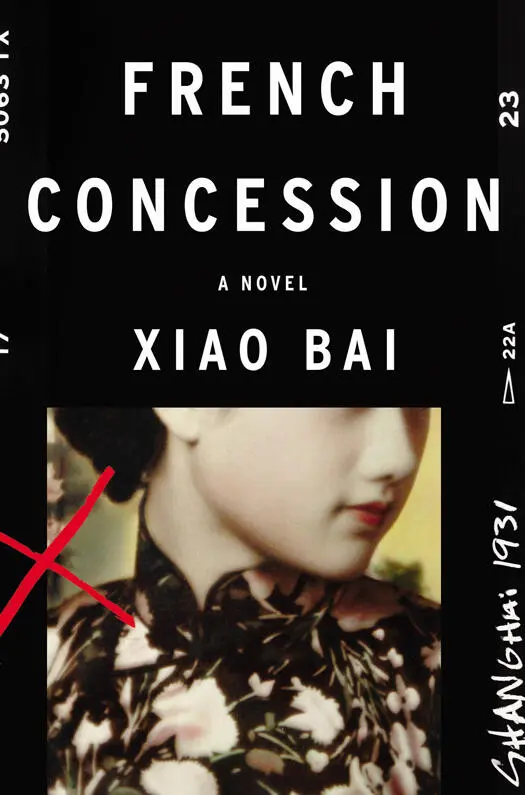
- Название:French Concession
- Автор:
- Издательство:HarperCollins
- Жанр:
- Год:2015
- ISBN:нет данных
- Рейтинг книги:3 / 5. Голосов: 1
-
Избранное:Добавить в избранное
- Отзывы:
-
Ваша оценка:
French Concession: краткое содержание, описание и аннотация
Предлагаем к чтению аннотацию, описание, краткое содержание или предисловие (зависит от того, что написал сам автор книги «French Concession»). Если вы не нашли необходимую информацию о книге — напишите в комментариях, мы постараемся отыскать её.
A boat from Hong Kong arrives in Shanghai harbor, carrying an important official in the Nationalist Party and his striking wife, Leng. Amid the raucous sound of firecrackers, gunshots ring out; an assassin has shot the official and then himself. Leng disappears in the ensuing chaos.
Hseuh, a Franco-Chinese photographer aboard the same boat, became captivated by Leng’s beauty and unconcealed misery. Now, she is missing. But Hsueh is plagued by a mystery closer to home: he suspects his White Russian lover, Therese, is unfaithful. Why else would she disappear so often on their recent vacation? When he’s arrested for mysterious reasons in the French Concession and forced to become a police collaborator, he realizes that in the seamy, devious world of Shanghai, no one is who they appear to be.
Coerced into spying for the authorities, Hseuh discovers that Therese is secretly an arms dealer, supplying Shanghai’s gangs with weapons. His investigation of Therese eventually leads him back to Leng, a loyal revolutionary with ties to a menacing new gang, led by a charismatic Communist whose acts of violence and terrorism threaten the entire country.
His aptitude for espionage draws Hseuh into a dark underworld of mobsters, smugglers, anarchists, and assassins. Torn between Therese and Leng, he vows to protect them both. As the web of intrigue tightens around him, Hsueh plays a dangerous game, hoping to stay alive.
French Concession — читать онлайн бесплатно полную книгу (весь текст) целиком
Ниже представлен текст книги, разбитый по страницам. Система сохранения места последней прочитанной страницы, позволяет с удобством читать онлайн бесплатно книгу «French Concession», без необходимости каждый раз заново искать на чём Вы остановились. Поставьте закладку, и сможете в любой момент перейти на страницу, на которой закончили чтение.
Интервал:
Закладка:
He had already instructed Hsueh to have that White Russian woman deliver the goods. Money was no object. He needed to come up with something new, turn a one-man grenade launcher designed for defensive use against armored vehicles into a powerful weapon of urban guerilla warfare. Next he had to figure out how to train his people to use the new launcher. The best thing to do would be to hire boats and sail out to Wu-sung-k’ou. A few of the Pu-tung unit knew how to sail a boat, and others were familiar with the treacherous waterways of the Yangtze. He would also have to hire a car with an eight-cylinder engine that could outrace the police cars.
CHAPTER 43
JULY 12, YEAR 20 OF THE REPUBLIC.
1:35 P.M.

It was already July. The air near the ground appeared to ripple in the heat. There were people playing tennis on the lawn outside on the terrace, straining to swing their rackets in the scorching sun. Lieutenant Sarly had the driver stop directly in front of the door. The pillars in the corridor looked grainier than usual, as though the last drops of sweat had been wrung from them, leaving a knobby bark.
The glass doors were like lines of latitude separating two climate zones. Indoors it was quiet and cool. The Chinese servants wore long-sleeved livery. Sarly went through the golden vestibule, where dozens of naked women cast bashful sidelong glances at him, the mons pubis swelling above their smooth white thighs. He reflected that French people only kept sculptures in order to perpetuate other people’s stereotypes of the French.
His hands brushed against the carved brass railings as he went up the stairs. The crimson rose patterns of the porcelain flooring were smooth as glass, and the doors to all the halls were open. A servant sprawled on the floor, rubbing it vigorously, his knees knocking against the pomelo wood flooring mounted on springs. Another servant stood on a ladder, carefully scrubbing the golden mosaic walls as if the tiles were gemstones. If he had the time, he would have breathed on each tile before scrubbing it, so that impurities in the bucket of water he was carrying would not damage it. The day after next was Bastille Day, or the Fête Nationale, and the French Club would be hosting a large ball.
The corridor echoed with the sound of bowling balls rumbling down their lanes. The men had congregated on the balcony of the bar. A bunch of tuberoses nodded sleepily in a vase, and cigar smoke dissolved in the breeze. He sat on a chair beneath the Ionic columns.
“I heard the two companies arriving from Haiphong get in tomorrow?” That was the younger M. Madier of Madier Frères. The elder M. Madier, his brother, had founded a company in Paris to import the raw silk that his brother sourced in inland China and shipped to Lyon. The two brothers had been running their business for nearly fifteen years. They were among Shanghai’s most prominent businessmen.
“That’s right, they’ll be just in time for the review of troops on Bastille Day!” Colonel Bichat roared. The heat appeared to have no effect on him.
It was too early for dinner. The English, Americans, French, and Japanese were all well represented in the select inner circle that had invited Sarly to this weekend banquet, but as a result of the Great War, Germans were never invited. Baron Pidol was new to the group and now very much sought after. He had made a few risky bets that had paid off extremely well, and his eye for deals had quickly earned him the respect of the China veterans.
Lieutenant Sarly knew that all these men cared about was money. When they said they wanted to protect the concessions, what they meant was that they wanted to protect their own privilege. They despised newcomers and thought of themselves as the only true heirs of nineteenth-century imperialist explorers, who would survive in tiny foreign concessions that remained lone bastions of capitalism even if the capitalist world order was swept away. To preserve their territory, they were even willing to countenance a Japanese attack, especially if Nanking insisted on stationing the Nineteenth Route Army in Shanghai. Lieutenant Sarly considered that a suicidal idea.
Although they had little in common, he was now on their side. These men had their eyes on the next deal, whereas he had the long game in mind.
The scheme they were going to discuss had been dreamed up by a bunch of American real estate speculators. The Americans were just as vulgar and ingenious as everyone made them out to be. When they landed in Shanghai bearing vast sums of money, the best land had already been bought up, and its owners were sitting tight. They had even formed a cartel, making it impossible for a newcomer to find so much as a corner to plant a stake in the ground. When one of them went bankrupt, or died, another would hold priority rights to purchase the land at a price worked out in advance in the cigar room.
So the Americans had no choice but to buy up land on the outskirts of Shanghai. The biggest bets had been made by the Raven Group, a company registered in the International Settlement, which was buying up tracts of barren land along the Yangtze, as though Shanghai would become a second Alaska. But after they had bought and paid for it all, the Americans found that things were more complicated than they had realized. Shanghai was governed by rules of its own. Powerful interests controlled the Board of Works and the Municipal Office, which in turn controlled urban planning in the two concessions. That meant the Americans’ land would remain barren for the next hundred years. To add insult to injury, Nanking’s Greater Shanghai Plan would encourage development in the northeast of the city.
In desperation, the Americans hatched an interventionist scheme to turn Shanghai into a Free City like Danzig after the Great War, and started hawking their idea to the foreign governments with interests in Shanghai. Danzig had originally been Napoleon’s brainchild, a semi-independent state that would be a haven for capitalist gambling, like a medieval city-state. Carving out a free Shanghai independent of the Kuomintang government would allow capital to stream into the city from all over the world and boost the value of even the most barren land. A proposal was drawn up for the League of Nations in Geneva, and the papers began to crackle with the news.
Even veteran Shanghailanders found this a most interesting suggestion. The shrewder among them started inviting the once-despised Americans to discuss the idea over dinner. They soon formed a little lobby consisting of bank executives, politicians, journalists, legal consultants, and professional lobbyists who haunted the capitals of powerful nations. The most preposterous version of the idea was for the boundaries of the Free City to include a fifty-kilometer strip of land on both banks of the Yangtze, stretching from Shanghai to Wuhan, providing a neutral buffer that would protect China from being split by battling warlords, or so they argued. Shanghai would prosper, the Yangtze River Delta would export its wares to the world, and Shanghailanders would get rich all over again.
But Sarly looked at this scheme and saw the germ of an unlikely opportunity for Shanghai to save the world from communism, just as the Comintern was planning to attack it as the weakest link in the capitalist chain. These people had overlooked the strongest reason in favor of their proposal: as a Free City, Shanghai would attract international attention and protection, making it harder for the Communists to gain a foothold, and safeguarding French and European interests in the concessions.
Читать дальшеИнтервал:
Закладка:
Похожие книги на «French Concession»
Представляем Вашему вниманию похожие книги на «French Concession» списком для выбора. Мы отобрали схожую по названию и смыслу литературу в надежде предоставить читателям больше вариантов отыскать новые, интересные, ещё непрочитанные произведения.








Обсуждение, отзывы о книге «French Concession» и просто собственные мнения читателей. Оставьте ваши комментарии, напишите, что Вы думаете о произведении, его смысле или главных героях. Укажите что конкретно понравилось, а что нет, и почему Вы так считаете.