Xiao Bai - French Concession
Здесь есть возможность читать онлайн «Xiao Bai - French Concession» весь текст электронной книги совершенно бесплатно (целиком полную версию без сокращений). В некоторых случаях можно слушать аудио, скачать через торрент в формате fb2 и присутствует краткое содержание. Год выпуска: 2015, Издательство: HarperCollins, Жанр: Современная проза, на английском языке. Описание произведения, (предисловие) а так же отзывы посетителей доступны на портале библиотеки ЛибКат.
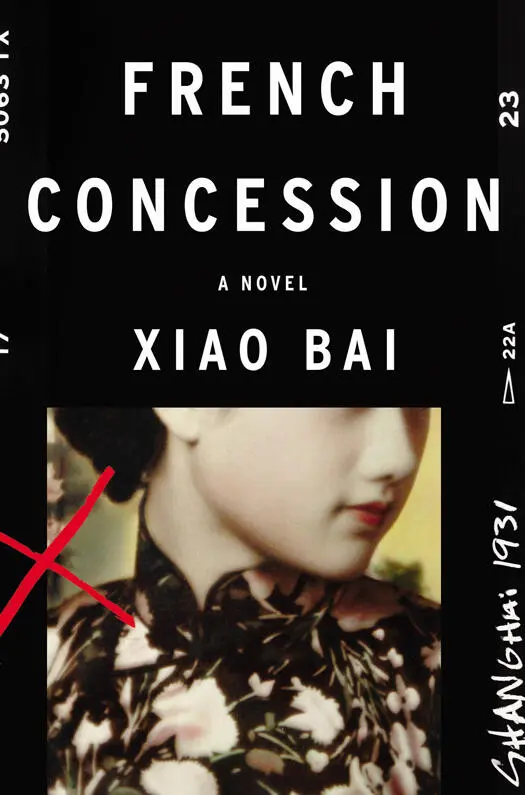
- Название:French Concession
- Автор:
- Издательство:HarperCollins
- Жанр:
- Год:2015
- ISBN:нет данных
- Рейтинг книги:3 / 5. Голосов: 1
-
Избранное:Добавить в избранное
- Отзывы:
-
Ваша оценка:
French Concession: краткое содержание, описание и аннотация
Предлагаем к чтению аннотацию, описание, краткое содержание или предисловие (зависит от того, что написал сам автор книги «French Concession»). Если вы не нашли необходимую информацию о книге — напишите в комментариях, мы постараемся отыскать её.
A boat from Hong Kong arrives in Shanghai harbor, carrying an important official in the Nationalist Party and his striking wife, Leng. Amid the raucous sound of firecrackers, gunshots ring out; an assassin has shot the official and then himself. Leng disappears in the ensuing chaos.
Hseuh, a Franco-Chinese photographer aboard the same boat, became captivated by Leng’s beauty and unconcealed misery. Now, she is missing. But Hsueh is plagued by a mystery closer to home: he suspects his White Russian lover, Therese, is unfaithful. Why else would she disappear so often on their recent vacation? When he’s arrested for mysterious reasons in the French Concession and forced to become a police collaborator, he realizes that in the seamy, devious world of Shanghai, no one is who they appear to be.
Coerced into spying for the authorities, Hseuh discovers that Therese is secretly an arms dealer, supplying Shanghai’s gangs with weapons. His investigation of Therese eventually leads him back to Leng, a loyal revolutionary with ties to a menacing new gang, led by a charismatic Communist whose acts of violence and terrorism threaten the entire country.
His aptitude for espionage draws Hseuh into a dark underworld of mobsters, smugglers, anarchists, and assassins. Torn between Therese and Leng, he vows to protect them both. As the web of intrigue tightens around him, Hsueh plays a dangerous game, hoping to stay alive.
French Concession — читать онлайн бесплатно полную книгу (весь текст) целиком
Ниже представлен текст книги, разбитый по страницам. Система сохранения места последней прочитанной страницы, позволяет с удобством читать онлайн бесплатно книгу «French Concession», без необходимости каждый раз заново искать на чём Вы остановились. Поставьте закладку, и сможете в любой момент перейти на страницу, на которой закончили чтение.
Интервал:
Закладка:
But someone reached a leg out and tripped him up, giving him a good kick in the ribs and stamping on his arms. The shadow suddenly spoke. His voice was low and gentle.
“Let go of him. Let him sit down.”
“All right. You’re not interested in answering this question. Let me tell you a few things we know instead. You were spotted at the scene of both the 181 Avenue Foch bombing and the Kin Lee Yuen Wharf assassination. That makes you a criminal. Someone recognized you.”
That was a lie. He hadn’t been on Kin Lee Yuen Wharf — he had not yet been tested and found worthy by the cell, so he had only been an observer at the time.
“I’m a student. I just graduated from Nanyang College, and I’m looking for a job.”
“Don’t think you can weasel your way out of this,” the man said, lighting another cigarette. “Your interrogators are all specialists. Who are these people? You must be asking yourself that question. Who are my abductors? The gangs? I can tell you that you have officially been arrested. We’re expert interrogators, and we can force the most stubborn suspects to talk. Even Soviet-trained Communists will talk to us, never mind you. You’re just a band of ordinary crooks.”
Lin was young, and easily incensed. He had been insulted. “We’re not crooks! You’re crooks.”
He saw the face taunting him in the red glow of the cigarette, but it was too late to stop. “One day we’ll overthrow your system and get rid of you all!”
“Are you telling me you’re Communists?” The man returned to the darkness, but kept taunting him. “All you do is kill people and blow things up. You’re a bunch of regular crooks. What you’re doing is making money off terrorizing people. And you’re wrong about us. We’re not criminals. We represent the government. I can tell you our real name: officially, we are the Central Organization Department’s Investigative Unit for Party Affairs. We often deal with real Communists, and we can make them talk too.”
He was being long-winded on purpose, repeating himself over and over, as if he were casting a dizzying spell.
“You killed Ts’ao to prevent him from going to Canton. Or rather, to prevent his boss from going to Canton. His boss was an important government man who was going to set up a separate government in Canton. His treasonous plans were backed by warlords in the southwest bent on destroying our fragile, hard-won unity, our fledgling state. They even wanted control of the customs at Canton. That drove the speculators here frantic, because they had all bought public debt backed by customs receipts. So they put a price on Ts’ao’s head, offering a reward to anyone who would kill him. And they found Ku Fu-kuang, your Ku — isn’t that his name? See, we do know a few things.”
“You’re making this up! It’s not true!”
“Don’t get too riled up. I applaud you. We applaud passionate young people.” He was provoking Lin with his smile and the way he lit a match and let it burn in his hand, gazing at it instead of lighting his cigarette.
“As for 181 Avenue Foch, that was an ordinary crime. A simple revenge killing. For a woman, a prostitute. We know the Green Gang engaged hit men to kill Mr. Ku. They were hit men just like Ku, but on the other side, just as there are always speculators who’ve bought a stock pitted against others who are shorting it. This time they lost. They weren’t professionals, they hadn’t planned their attack well, and they only managed to shoot a woman. This prostitute was Ku’s woman, we’ve been told. His lover. His whore.”
Lin pounced at the crowd of shadows. He had forgotten his shame, and forgotten that he was naked. He crashed to the ground again.
CHAPTER 39
JUNE 29, YEAR 20 OF THE REPUBLIC.
9:55 P.M.

Tseng knew all about breaking down a man’s defenses. That was one of his specialties. He was an ex-Communist who had been trained in Soviet interrogation and counterinterrogation techniques. He had chosen a straightforward method because he judged the subject of interrogation to be a naïve, passionate young man. He had to destroy the foundations of this man’s belief, enrage him, confuse him, and make him doubt himself.
He himself was lucky he had seen the light when he did. They had made an exception for him, not because they trusted him, but because they needed him. He and his colleagues had their own snoops inside the French Concession Police, so he was aware that Lieutenant Sarly referred to him and his colleagues as the “Nanking investigators.” He considered the description apt. He didn’t like using torture. The human ability to withstand physical pain was limited, and torture was the fastest way to break down those defenses and force a subject to surrender and start talking. But people responded differently to pain, and if you crossed a subject’s maximum threshold too quickly, then torture would cease to be effective. In fact, he had heard that in some cases it could actually gratify the victim.
Pain stimulated the production of adrenaline, the source of the fight response, which led to aggression, defiance, and hatred. If your subjects managed to stay calm, this hatred could erect mental barriers that would make it impossible to know whether they were telling the truth. They could even be clever enough to feed you false information leading to costly blunders later on.
He allowed his people to rough this young man up a little, just to tire him out. Violence could be used to warm up the subject, to stretch his nerves to their breaking point so that anything would set them off. That was his subject of expertise, and it was exactly why Nanking needed him. He was an intelligent man, and he knew what he was doing. He knew that torture was necessary, but only in moderation — torture was a performance, intended to terrify the subject as much as to cause pain.
With him and people like him around, he thought modestly, the Communists’ days in Shanghai were numbered. All those anarchists and revolutionaries with their childish demonstrations and protests, holding meetings and writing articles — all that would have to go. They used to walk openly on the streets and go from their meetings to restaurants where they continued their discussions. But now that the Investigative Unit for Party Affairs had developed a deep intelligence network in Shanghai, the photographs of known Communists had been widely disseminated. Many people had memorized these faces.
Nanking was expanding the Greater Shanghai Plan. He had heard that the authorities were exploring the idea of a large-scale patriotic education movement. The investigation reports had been made available to the functionaries in charge of planning this movement. When their plan was put into action, it would make the Communists’ lives even harder. Tseng was certain that Ku and his so-called People’s Strength had nothing whatsoever to do with the Communists — they weren’t even a fringe organization. On this point, he agreed with Cheng Yün-tuan, the secretary posted to their investigative commission by the Investigative Unit for Party Affairs. This man was supposed to be his deputy, but he was really there to keep an eye on him. Tseng had argued his case to both the French Concession Police and the Shanghai Municipal Police, but no one had believed him.
After tossing out those two grenades, he ended the interrogation abruptly. He wanted to give the young man time to think. He had his subordinates give Lin a meal.
Arresting Lin had been an unexpected piece of luck. The gangs had heard that the cell responsible for the attack on 181 Avenue Foch might have rented an apartment near Boulevard des Deux Républiques. Someone had spotted one of them on the street. He sent an undercover team to investigate the claim and found its source, a gardener at 181 Avenue Foch. On the night of the attack, he had been crouching by the wall, shitting in the shadows behind the trees. He had been so petrified he could barely move, and the faces he had seen in the half-light had made an indelible impression. One of them had come to ask him something about the casino a few days before, and he had recognized the man immediately. Later he had seen that man use a public telephone booth on Boulevard de Montigny before walking in the direction of Boulevard des Deux Républiques, but he hadn’t had the guts to follow him. When the news got out, gang leaders sent their foot soldiers to sniff out the area, and they discovered more traces of Ku’s cell. The errand boy at a tobacco store on Rue Buissonnet said that an unfamiliar face had started coming in to buy cigarettes, and that he would always buy half a dozen packs of several different brands at once. Someone overheard a suspicious conversation in an adjacent cubicle at Pu-chüan Bathhouse on Rue Voisin. So Tseng had some of his people take the gardener for a drive around Boulevard des Deux Républiques. As luck would have it, they actually ran into the young man, whose identification documents listed him as a student.
Читать дальшеИнтервал:
Закладка:
Похожие книги на «French Concession»
Представляем Вашему вниманию похожие книги на «French Concession» списком для выбора. Мы отобрали схожую по названию и смыслу литературу в надежде предоставить читателям больше вариантов отыскать новые, интересные, ещё непрочитанные произведения.










Обсуждение, отзывы о книге «French Concession» и просто собственные мнения читателей. Оставьте ваши комментарии, напишите, что Вы думаете о произведении, его смысле или главных героях. Укажите что конкретно понравилось, а что нет, и почему Вы так считаете.