Xiao Bai - French Concession
Здесь есть возможность читать онлайн «Xiao Bai - French Concession» весь текст электронной книги совершенно бесплатно (целиком полную версию без сокращений). В некоторых случаях можно слушать аудио, скачать через торрент в формате fb2 и присутствует краткое содержание. Год выпуска: 2015, Издательство: HarperCollins, Жанр: Современная проза, на английском языке. Описание произведения, (предисловие) а так же отзывы посетителей доступны на портале библиотеки ЛибКат.
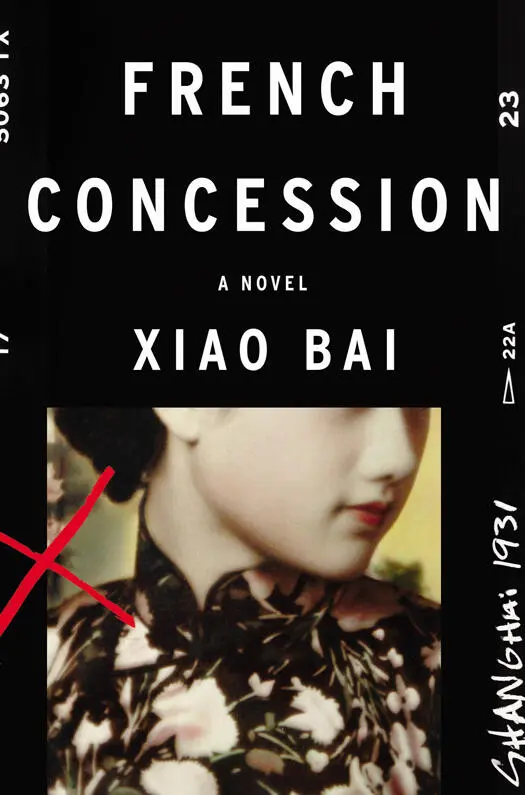
- Название:French Concession
- Автор:
- Издательство:HarperCollins
- Жанр:
- Год:2015
- ISBN:нет данных
- Рейтинг книги:3 / 5. Голосов: 1
-
Избранное:Добавить в избранное
- Отзывы:
-
Ваша оценка:
French Concession: краткое содержание, описание и аннотация
Предлагаем к чтению аннотацию, описание, краткое содержание или предисловие (зависит от того, что написал сам автор книги «French Concession»). Если вы не нашли необходимую информацию о книге — напишите в комментариях, мы постараемся отыскать её.
A boat from Hong Kong arrives in Shanghai harbor, carrying an important official in the Nationalist Party and his striking wife, Leng. Amid the raucous sound of firecrackers, gunshots ring out; an assassin has shot the official and then himself. Leng disappears in the ensuing chaos.
Hseuh, a Franco-Chinese photographer aboard the same boat, became captivated by Leng’s beauty and unconcealed misery. Now, she is missing. But Hsueh is plagued by a mystery closer to home: he suspects his White Russian lover, Therese, is unfaithful. Why else would she disappear so often on their recent vacation? When he’s arrested for mysterious reasons in the French Concession and forced to become a police collaborator, he realizes that in the seamy, devious world of Shanghai, no one is who they appear to be.
Coerced into spying for the authorities, Hseuh discovers that Therese is secretly an arms dealer, supplying Shanghai’s gangs with weapons. His investigation of Therese eventually leads him back to Leng, a loyal revolutionary with ties to a menacing new gang, led by a charismatic Communist whose acts of violence and terrorism threaten the entire country.
His aptitude for espionage draws Hseuh into a dark underworld of mobsters, smugglers, anarchists, and assassins. Torn between Therese and Leng, he vows to protect them both. As the web of intrigue tightens around him, Hsueh plays a dangerous game, hoping to stay alive.
French Concession — читать онлайн бесплатно полную книгу (весь текст) целиком
Ниже представлен текст книги, разбитый по страницам. Система сохранения места последней прочитанной страницы, позволяет с удобством читать онлайн бесплатно книгу «French Concession», без необходимости каждый раз заново искать на чём Вы остановились. Поставьте закладку, и сможете в любой момент перейти на страницу, на которой закончили чтение.
Интервал:
Закладка:
“Tell me why you are helping us. Tell me why,” Ku said, almost to himself. He smiled.
Hsueh shook his head. He had nothing to say. No one would believe him — he wasn’t very sure if he believed himself. He tried to make himself smile.
“Because of her?” Ku’s smile grew wider, as if he wasn’t used to telling jokes but was telling one now.
“Because of love. Is that a good reason?” Hsueh said, staring at a puddle by his feet. “I mean, is falling in love an acceptable reason for becoming a Communist?”
“Right. Becoming a Communist.” Ku took a long drag of his cigarette, and tossed the stub over the railing. “Are you telling me that what you’re doing is joining the Revolution?” Hsueh thought he saw a shadow of loneliness or grief in Ku’s eyes.
“Sure. Isn’t love supposed to transform you and make you want to alter your life?” This Ku is a canny type, Hsueh thought. He knows how to steer this conversation in the direction he wants.
“We can accept any reason for joining, but you have to be honest with us. Even if you’re in it for the money.” He waved his hand, as though he himself regretted this policy, as though he had only mentioned the basest possible motive to put Hsueh at ease.
“We always compensate well,” he said, stopping Hsueh from speaking with another wave. “No, not you. What I mean is that we can pay our sources if we have to. Your friend at the police station, for instance. Does he need money? Didn’t he come to China in order to make money? Of course it would be better if he were truly sympathetic to our cause, but if he would do it for the money, he could still be useful to us.” Ku’s voice grew fainter, nearly disappearing in the wind, and he spoke quickly, as if to avoid hurting Hsueh’s pride.
The break was over, and they went back inside. Leng had disappeared. The next part of the conversation felt like an interrogation. Ku took his place inside the horseshoe, and the curtains were closed. Hsueh’s own chair had been moved just opposite the curved table to face Ku directly. Park was still sitting behind him, but he was no longer sprawled on the sofa.
“We have a few questions for you. Standard procedure. Nothing to be nervous about.” Ku was laconic but his voice was gentle.
“Tell me your name.” Ku did not take notes; it was unnecessary. Hsueh guessed that the interrogation itself was not strictly necessary.
But the questions were full of double meanings, and they had a hypnotic effect on Hsueh, conditioning him to attempt to please his interrogator.
“Tell me where you met her.” The first set of questions was about Leng.
“On the ship.”
“On the ship?” The voice suddenly grew stern. It occurred to Hsueh that he had completely forgotten what Leng had said to him. The hypnotism was working. Leng hadn’t been clear about wanting Hsueh to say they were old acquaintances, so as not to give Ku the impression she had been lying — she’d mentioned it but told him it wasn’t all that important. Hsueh had thought it was because she didn’t want to look like a flirt. He now realized that Leng might not have been telling her cell the truth.
“How did you meet onboard?” Ku’s voice sounded calmer. Maybe he had only imagined it sounding stern.
“We didn’t — well, meet isn’t the right word. Leng was on deck, walking toward the bow by herself. It was cold and windy. I happened to see her there.” She had looked sad but resolute, her face almost transparent in the sunlight.
“She looked familiar, and I kept thinking I’d seen her before. We must know each other from somewhere, I later told her, and she agreed. Maybe sometimes a man and a woman just feel this way about each other. If she told you that we’d known each other for ages, it wouldn’t surprise me at all. Do you see?”
“I see. That’s a clever way to describe love at first sight, isn’t it?” His questioner smiled again. “You didn’t even have to flirt with her — it was just meant to be.”
“Maybe so,” Hsueh said.
“Very clever of you. You’re clever, but you’re also honest,” Ku said generously.
But after a pause, his voice grew stern again: “When was the next time you saw her?”
“In the newspapers, I think. There were pictures of her in all the papers.”
“So you fell in love the moment you saw her on the ship. Then her photograph appeared in the papers, and although you hadn’t had a chance to see her again, you couldn’t forget her face. We know you’re a photojournalist. So when you heard the police were planning to arrest her on Rue Amiral Bayle, did you track her down just so you could warn her?”
Hsueh knew he was being mocked. He knew he should get offended, jump up, and shove these questions in his interrogator’s face. But he didn’t have the energy to do that. He wouldn’t know how to justify himself, not even to Leng.
“That’s how it was,” he said simply.
“Very good. That’s how it was. We believe you. We believe you precisely because your story sounds so implausible. And you look like you could be a hopeless romantic. Aren’t you half French?”
Well, if Ku was going to fall for that, it only went to prove Hsueh’s conjectures about the power of words like love and revolution . Was a half-French man a hopeless romantic, by definition?
“I didn’t believe what the papers were saying about her. I’d talked to her. I’d looked into her eyes. I thought I knew her.”
But Ku stopped asking about love. Perhaps a few small untruths are permitted when ideals conflict with love.
Instead they started talking about Hsueh’s friend. Ku asked for his name and occupation. He was very interested to hear that this man belonged to Maron’s new detective squad, although Hsueh had already mentioned this fact in his written report. The previous night, Ku had instructed Leng over the phone to have Hsueh produce a report. Sitting alone at the table in his room, Hsueh had done his best to put something coherent together. Mr. Ku is like Lieutenant Sarly, he thought: they both believe in written documents. Although the report consisted of scraps of intelligence, some of the information was very valuable, and in any case, intelligence is fragmentary by nature. He included the police’s conjectures about Ku’s background, which he had heard from his friend the poet. They were not entirely consistent — but that only goes to show that they reflect a wide range of opinions, he thought.
Hsueh put all this in his report without fully understanding how valuable the information was. For instance, he did not realize that the police view of the Kin Lee Yuen assassination and reconstruction of events, as well as most of what the poet had told him, came from the Nanking investigators’ report. He also did not know that the police interpretation of the incident on Avenue Foch as a revenge killing had been influenced by the Green Gang’s view of events. And he had no way of knowing how relieved Ku was that Hsueh had handed him the report directly, instead of giving it to Leng. When he told Ku that Leng hadn’t read the report, he was just being honest, not trying to cover for her.
CHAPTER 37
JUNE 29, YEAR 20 OF THE REPUBLIC.
6:50 P.M.

During the half hour in which Park dined with their guest, Ku read Hsueh’s report carefully from beginning to end. West Avenue Joffre was lined with expensive houses, and the only shops on the street were custom tailors. Park had had to drive all the way to Avenue du Roi Albert to find a cheap restaurant. He came back with a box of roast duck and rice.
Читать дальшеИнтервал:
Закладка:
Похожие книги на «French Concession»
Представляем Вашему вниманию похожие книги на «French Concession» списком для выбора. Мы отобрали схожую по названию и смыслу литературу в надежде предоставить читателям больше вариантов отыскать новые, интересные, ещё непрочитанные произведения.










Обсуждение, отзывы о книге «French Concession» и просто собственные мнения читателей. Оставьте ваши комментарии, напишите, что Вы думаете о произведении, его смысле или главных героях. Укажите что конкретно понравилось, а что нет, и почему Вы так считаете.