Kathleen Alcott - Infinite Home
Здесь есть возможность читать онлайн «Kathleen Alcott - Infinite Home» весь текст электронной книги совершенно бесплатно (целиком полную версию без сокращений). В некоторых случаях можно слушать аудио, скачать через торрент в формате fb2 и присутствует краткое содержание. Год выпуска: 2015, Издательство: Riverhead Books, Жанр: Современная проза, на английском языке. Описание произведения, (предисловие) а так же отзывы посетителей доступны на портале библиотеки ЛибКат.
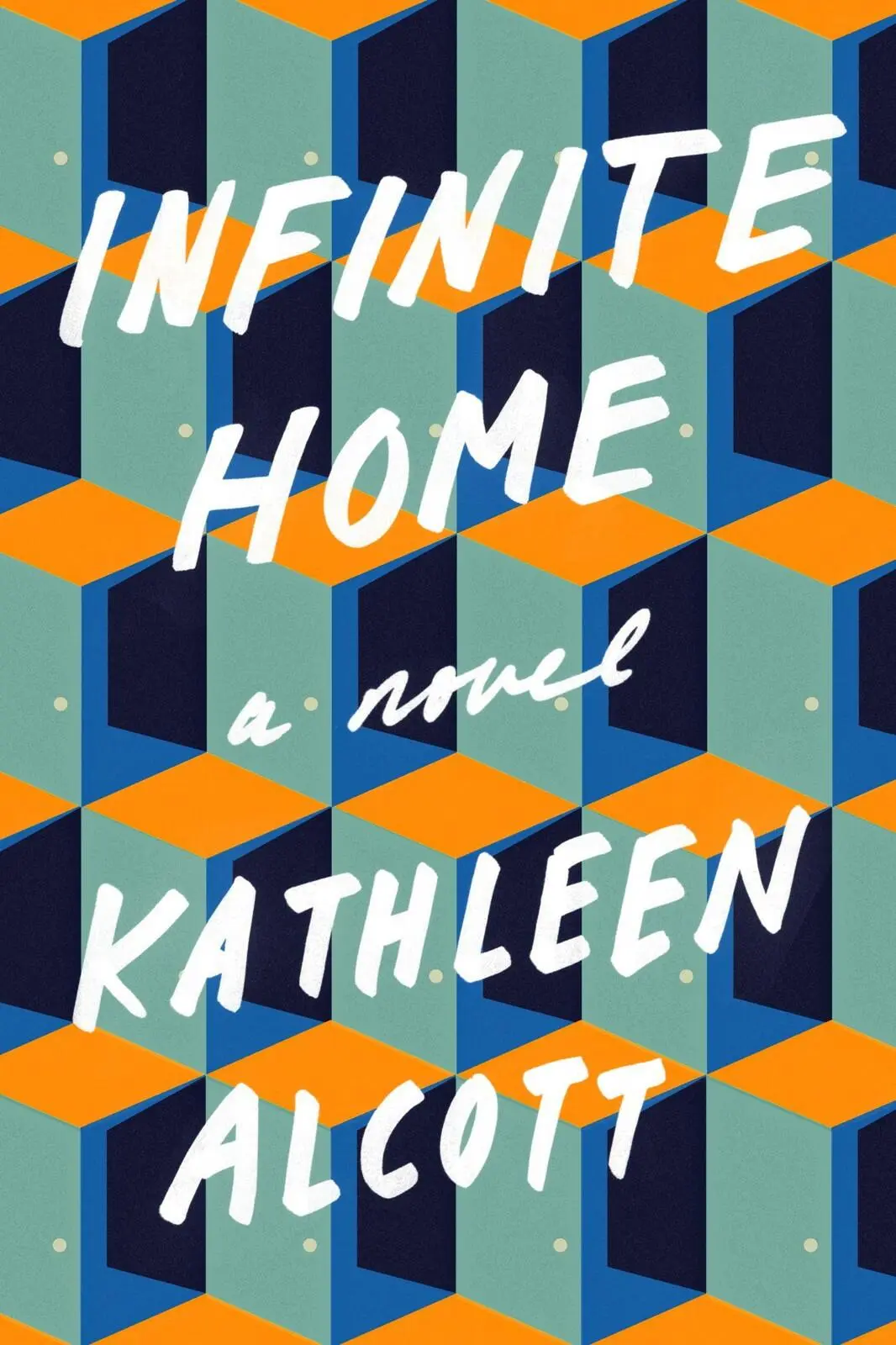
- Название:Infinite Home
- Автор:
- Издательство:Riverhead Books
- Жанр:
- Год:2015
- ISBN:нет данных
- Рейтинг книги:5 / 5. Голосов: 1
-
Избранное:Добавить в избранное
- Отзывы:
-
Ваша оценка:
Infinite Home: краткое содержание, описание и аннотация
Предлагаем к чтению аннотацию, описание, краткое содержание или предисловие (зависит от того, что написал сам автор книги «Infinite Home»). Если вы не нашли необходимую информацию о книге — напишите в комментариях, мы постараемся отыскать её.
Faced with eviction by Owen and his designs on the building, the tenants — Paulie, an unusually disabled man and his burdened sister, Claudia; Edward, a misanthropic stand-up comic; Adeleine, a beautiful agoraphobe; Thomas, a young artist recovering from a stroke — must find in one another what the world has not yet offered or has taken from them: family, respite, security, worth, love.
The threat to their home scatters them far from where they’ve begun, to an ascetic commune in Northern California, the motel rooms of depressed middle America, and a stunning natural phenomenon in Tennessee, endangering their lives and their visions of themselves along the way.
With humanity, humor, grace, and striking prose, Kathleen Alcott portrays these unforgettable characters in their search for connection, for a life worth living, for home.
Infinite Home — читать онлайн бесплатно полную книгу (весь текст) целиком
Ниже представлен текст книги, разбитый по страницам. Система сохранения места последней прочитанной страницы, позволяет с удобством читать онлайн бесплатно книгу «Infinite Home», без необходимости каждый раз заново искать на чём Вы остановились. Поставьте закладку, и сможете в любой момент перейти на страницу, на которой закончили чтение.
Интервал:
Закладка:
“They’re stunning,” Adeleine said, holding her left hand with her right. “They’re perfect.” She opened the two metal latches of the powder-blue vinyl suitcase, which she had also retrieved from the deep corners of the stale-smelling armoire, and began folding the items with care, smoothing creases, fastening clasps. She found some peace in doing so, and answered Edith’s mumbled concerns without hesitation, as though contending with matters of geography. Edith looked out the window as Adeleine talked, then stood to grip its cracked, whitewashed frame with her knuckles.
“Fall forward?” Edith asked, groping for any adage that explained time.
“Almost. Back. Spring forward, fall back.”
“Are we going on a vacation?”
“We’re going to see your daughter. We’re going to see Jenny.”
“Will Declan meet us there?”
“No, he won’t, Edith. I’m sorry.”
“They found Jenny? Did she get my letter?”
“She’s doing fine, Edith. She’s looking forward to your visit. She wants you to stay as long as you like.”
“Imagine,” Edith said. She was breathless and bright-eyed in a way that belonged exclusively to adolescent girls as they imagined the rest of their lives, the porches of houses where they might live, the gleaming offices where they might work, the forbearing men they might love. “Imagine. My daughter.” The possibility felled her, and she settled again on the bed.
“Edith,” said Adeleine, now behind her in the light, running a hand down her back, then kneeling before her, scouring the ruined face for an answer. “Is there anything else you’d like to bring with you? From home?”
Adeleine cupped Edith’s knees and held her gaze. After a brief quiet of consideration, Edith shook her head.
“Oh, no. No need to bring home with me, dear. I know what it feels like.”
An hour remained until the car Adeleine had called would come and take them to the airport, and at the thought of its horn inevitably sounding, even her teeth began to itch.
“What if I did your nails?”
“That would be nice ,” Edith said.
Adeleine returned with a small suede box of her own colors, metallic golds and creamy yellows and sheer whites, and asked Edith to choose one. As though choosing a color to paint her new home, she ran her hands over the bottles with concentration, finally settling on a robin’s egg blue. For the next twenty minutes, Adeleine kneeled, first filing, then daubing the tiny brush across tobacco-yellow ridges age had left, pausing to wipe any stray lacquer from the cuticles. She kept her head low, offering frequent praise, ushering Edith back to the moment. “It’s a perfect color,” she said. “It’ll match the sky out the window of the airplane.”
Adeleine’s body, in anticipation of their leaving, produced a trembling cover of sweat. She held up each individual nail and blew through her puckered mouth; she asked Edith to please stay still; she went to the neatly made bed and sat, imagining statues, stone hands folded. In her mind she counted back from one hundred, the digits pulsating black on white in rhythm with her pulse.
When the two complaints of the horn sounded outside, it was Edith who rose first, who placed a hat on her white head and reminded Adeleine it was time to go. Edith who allowed Adeleine to bury her head in her arm, who guided them down the stoop as though it were a wedding aisle, her shoulders thrown back for the loving audience. They watched as the driver lifted their suitcases and deposited them in the shadowed maw of the trunk. On the top floor, a curtain licked at the arid day through a window left open.
“It was a wonderful party, anyway,” Edith said.
~ ~ ~
THE EXPECTED ARRIVAL of the fireflies still long days away, they had little to contend with, save the fixing of simple meals, the constant presence of insects, the application of sunscreen to necks and backs. By dusk of the second day, Paulie showed more mosquito bites than regular skin, and followed Claudia and Edward around with a bottle of calamine lotion, asking they rub it on new itches. Claudia, clad in khaki shorts and a gray T-shirt that she had bought for the occasion and which clung to her body in stiff folds, began three books before finally settling into one. Edward took jogs that quickly turned into walks around the campground loop, and showered frequently in the forever-damp wooden stalls with concrete floors and bright acoustics. Paulie read a fantasy novel in the hammock for fifteen-minute stretches and sang along to music on his headphones and took naps in the tent, where he admired the diffusion of sunlight through the stretched green nylon and the way the sleeping bags looked lying together, like clouds flying low.
Their fourth morning there, his knees moving high in inverted V’s as he ran, Paulie made the mistake of following Edward on his jog.
“Hi, Eddy.”
“Hey, Paulie.”
“Where you running?”
“Nowhere. Just running. A pointless pastime I have bought into for reasons unknown to me.”
“Having fun?
“Eddy, are you having fun?”
“Medium.”
“Medium fun, huh?
“How you doing, Eddy?”
Edward stopped moving and bent over, put his hands on his knees and tried to breathe without sputtering. The humidity felt like some windowless waiting room, and the cardiovascular exertion seemed to have run him up some cliff rather than talking him down.
“Are you okay?”
“Paulie.” Edward snapped up from his curved position. “I need to be alone. I have thoughts to think, and they’re not perky or sparkly or good. I need you to not be here. Okay?”
Without gauging his effect, Edward turned and headed in the opposite direction, past a campsite where a large group of men, all clad in baseball hats, were eating hot dogs under an awning attached to their RV. They had looked up at the sound of his voice breaking, and they watched him pass as they chewed, at the patches of sweat that looked parenthetical on his shoulder blades, at his palms daubing at his eyes in jerky movements as he gained speed. There was nothing, he thought, more humiliating than weeping before an RV barbecue party.
Left behind, Paulie let the numb weight of his body carry him back to their site, and it may have appeared, to the few people sitting out in mesh chairs, that he was carried, the load of his head held by some invisible rope. When he reached his sister where she lay in her hammock, he clambered in, set it swinging. Claudia wrapped her arms around him, then wove her fingers through the cotton grid, securing the embrace, soothing him still, and they felt the diminishing rocking together.
“What is it, Paul?”
“Eddy didn’t want me around because he had thoughts he wanted to be with and he ran away crying.”
“Sweetie. Edward is, besides being entertaining and generous, an emotionally fucked-up individual. Imagine a broken radio that only plays one station, which is an asshole DJ who makes a greatest-hits playlist of your black days and worst mistakes.”
Paulie smiled slightly at this, as profanity had always felt to him like a seal of understanding, a shortcut to extreme feeling that people used when they needed it most.
“You know how his job used to be to make people laugh? That was because he wanted to make them laugh, but also, mostly, because he needed to make himself laugh, because it’s pretty dark and nasty inside his brain.”
“Dark like a tunnel or dark like the sky in the country?”
“Tunnel. Definitely, tunnel. As a for-instance, when he was a little boy, his parents used to keep him inside for days. And so he was sort of bad at being with other people. There was someone he loved very much, and he wasn’t able to hang on to her. And he is mostly good at keeping that to himself but sometimes not. It’s real quiet here, and there aren’t a bunch of competing noises to distract him. Have you noticed how quiet it is?”
Читать дальшеИнтервал:
Закладка:
Похожие книги на «Infinite Home»
Представляем Вашему вниманию похожие книги на «Infinite Home» списком для выбора. Мы отобрали схожую по названию и смыслу литературу в надежде предоставить читателям больше вариантов отыскать новые, интересные, ещё непрочитанные произведения.










Обсуждение, отзывы о книге «Infinite Home» и просто собственные мнения читателей. Оставьте ваши комментарии, напишите, что Вы думаете о произведении, его смысле или главных героях. Укажите что конкретно понравилось, а что нет, и почему Вы так считаете.