Richard Lange - Sweet Nothing
Здесь есть возможность читать онлайн «Richard Lange - Sweet Nothing» весь текст электронной книги совершенно бесплатно (целиком полную версию без сокращений). В некоторых случаях можно слушать аудио, скачать через торрент в формате fb2 и присутствует краткое содержание. Год выпуска: 2015, Издательство: Mulholland Books, Жанр: Современная проза, на английском языке. Описание произведения, (предисловие) а так же отзывы посетителей доступны на портале библиотеки ЛибКат.
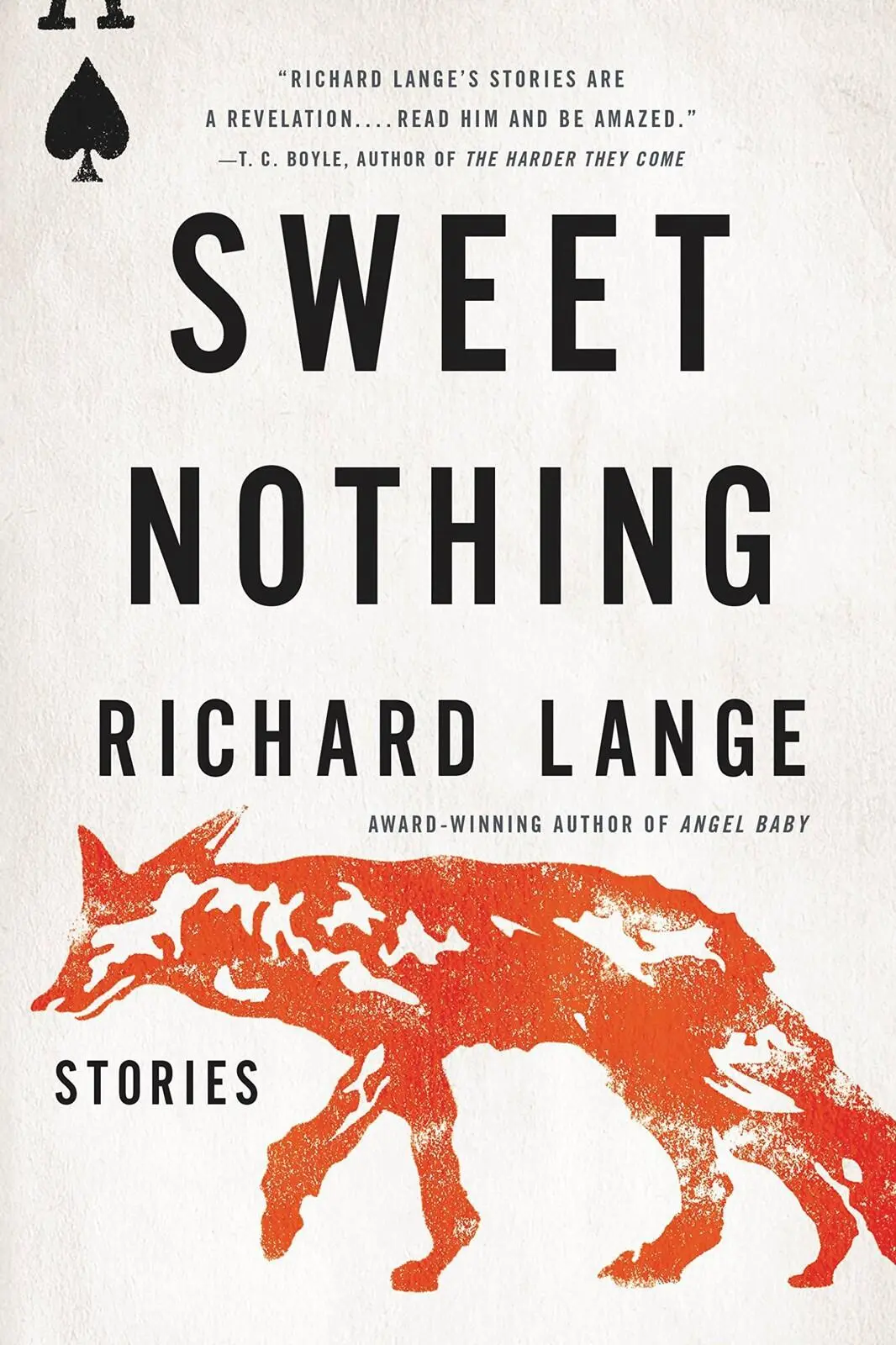
- Название:Sweet Nothing
- Автор:
- Издательство:Mulholland Books
- Жанр:
- Год:2015
- ISBN:нет данных
- Рейтинг книги:4 / 5. Голосов: 1
-
Избранное:Добавить в избранное
- Отзывы:
-
Ваша оценка:
Sweet Nothing: краткое содержание, описание и аннотация
Предлагаем к чтению аннотацию, описание, краткое содержание или предисловие (зависит от того, что написал сам автор книги «Sweet Nothing»). Если вы не нашли необходимую информацию о книге — напишите в комментариях, мы постараемся отыскать её.
Sweet Nothing
Sweet Nothing — читать онлайн бесплатно полную книгу (весь текст) целиком
Ниже представлен текст книги, разбитый по страницам. Система сохранения места последней прочитанной страницы, позволяет с удобством читать онлайн бесплатно книгу «Sweet Nothing», без необходимости каждый раз заново искать на чём Вы остановились. Поставьте закладку, и сможете в любой момент перейти на страницу, на которой закончили чтение.
Интервал:
Закладка:
BENNY WAS HURT by the Bear’s grousing but did with him what he did with his ma when she was down on him: He imagined him laughing. He thought of the night he hiked the hour from his house to the shantytown in the scrub, for some reason yearning to see where the Bear lived. He found him and a dozen other men circled around a bonfire, a bottle glinting as it moved from hand to hand. Their howls and scuffles and shady reputation kept Benny hidden in the bushes, but when he remembered it later, it was as if he’d been right up there with them, waving smoke, spitting into the flames, and roaring after a tug on the jug: Jesus Christ, someone call the doc, I think I been poisoned. The talk was of the old days, this geezer pining for hot water, that one going on about his dad’s truck to people who’d never seen one running. Some got sad and some got bored, so it was a relief when a big bald ape called for a song. Dirty Dick sang a silly one about some Irishmen digging a ditch, then someone else told a joke about two pickers who fucked a farmer’s daughter. Benny looked across the fire to see the Bear laughing like a man who’d needed to, his mouth haw-hawing and tears running down his cheeks. Thinking about him like that now, in their cold, dark camp, made Benny smile all over again. The Bear still had some happy in him, he was sure of it.
ON THE FOURTH day, the trail dropped into a deep canyon while the road ran high above, clinging to the canyon’s sheer north wall. A trickle of water snaked along the bottom of the gorge, where Benny and the Bear hopped from boulder to bone-white boulder. The Bear told Benny how it used to be a river full of fish and frogs, good eating all. Then he said, But, see, what’s bad on one hand is good on the other, ’cause drought down here proves the lake up there is likely dry too, meanin’ my dream now has the blessin’ of science. Just before the trail began its long climb to rejoin the road, they came upon a cabin standing vacant in a grove of cottonwoods. Everything useful had been stripped from it, but the Bear nonetheless went to work with his hammer and screwdriver and in no time was stuffing twelve feet of wire, some tiny springs from a toaster, and a couple of door hinges into his pack. You know what that is? he asked Benny about a dusty, broken something lying on the floor. A TV, Benny said. What about that? the Bear asked. Computer. And that? A whatchacallit, fan, for hot days. A clearing out back held two graves, one long, one short, no marker on either. If you weren’t here, I’d dig those up too, the Bear said. No, you wouldn’t, Benny replied. I surely would, the Bear said. I’m just too ashamed to do it in front of you. It took the rest of the day to hike out of the canyon. Benny was glad to be close to the road again. He trusted the pavement more than he did the dirt.
THE BEAR GOT no rest that night. He told himself it was excitement about reaching the lake the next day, but he hadn’t been excited about anything in years. He stared at the stars until his eyes burned, then rolled over and watched Benny sleep, envying the boy’s peace. This mess, the after, was all the kid knew. Life was tough for him now and would be tough for him forever. It sometimes seemed worse, though, for old dogs like the Bear, who had memory, however faded and fading, of what it was like before. There you’d be, marching along, doing okay, when a childhood recollection of an ice-cold Popsicle on a hot summer day knocked you all the way back to mourning again. The Bear spent the rest of the night pondering how many times a man could start over and calculating the dragged dead weight of the past. He’d come to no conclusions by dawn but was cheered nonetheless by the start of the new day, the rosy reappearance of the world being a wonder that never failed to sweep away his gloom and fill his sails with enough wind to get him moving.
I ALREADY GOT my share spent, Benny said. Oh, yeah? Yeah. I made a list. They were drawing close to the bridge where they’d first catch sight of the lake and see once and for all. The cool morning had given way to a swelter, the murderous sun scorching even the air they winced into their lungs. Me and Ma can do a lot better than the old roof we got now, Benny said. Bitch is so rusted out, the rain dribbles right through. And I want a bicycle, like yours, only with chrome. There was also a dude stopped by the other week who said electricity’d be back soon and he could wire us for it. Said his rate’d be cheaper now than then, when everybody’ll be after him all at once. The Bear paused in the narrow shade of a dead pine and reached under his hood to swipe the sweat off his face. Peddlers been runnin’ that scam since I was a kid, he said. Ain’t no electricity comin’. Benny bent for a stone, tossed it. You don’t know that, he said. A grunt told me he saw lights in houses in Frisco. The Bear started walking again, couldn’t stand the stupidity. If so, it was a rich man, he said over his shoulder. Richer than you no matter how many Krugerrands we find. He and Benny plodded in silence for a bit, through the heat, through the dust, thorny shrubs tugging at their pant legs. Then Benny said, You ever meet a rich man? I’ve seen a few, the Bear said, and it looked as if they died just like the poor ones. Better pickin’, though. Well, Benny said, lucky for us all, the body’s just a shell our souls moan through.
WHERE THE LAKE had been there was now nothing but a mudflat dried so hard it’d take a pickax to get through. Out in the middle lay the ruins of the town Benny and the Bear had come seeking, half sunk in the crust, a dun hump against the horizon in which the only signs of the hand of man were the straight lines and right angles of concrete foundations and crumbling brick walls. That it? Benny asked after he and the Bear had stared awhile from the bridge. He’d expected houses and stores, derelict cars and faded billboards. The Bear was disappointed too, but didn’t show it. The water ate up most of the iron and wood, he said, but gold don’t rust, so grab your gear and let’s go. They walked out onto the flat, heat rippling around them. Benny raced ahead, determined to reach the town first. When he got there he slapped the wall of one of the buildings and shouted, Mine! Peering into the structure through an empty window frame, he saw more mud, clumps of dead weeds, and a few fish skeletons. Flies hovered over the mess, and the smell made his nose wrinkle. The Bear tromped among the ruins until the footprint of the town became apparent to him. He pointed out to Benny where the main drag had run and the narrower residential streets that branched off it. They found a corroded gas pump lying on its side and a couple of truck tires embedded like fossils in the dried muck.
305 Willis was the address that had been passed down in the Bear’s family, the location of the house where Grandpa Pete died clutching his fortune. There were no street signs to consult, and the mailboxes had floated away. The Bear was reduced to walking around with one arm held out in front of him like a dowser’s wand, counting on some ancestral polarity to lead him to his kin’s remains. He gave up after an hour and started barking orders. We’ll camp here. Be ready to work at first light. Stop whistlin’. They fetched water from a creek at the edge of the flat and ate dinner in silence. Not that there was any need to talk. Benny found answers to most of his questions in the Bear’s downcast eyes and muttered curses.
THE BEAR WAS already busy when Benny awoke. Kneeling next to the husk of what was once a house, he broke the dried mud that surrounded it with his screwdriver, then scraped away the dirt he made with his free hand. When he reached the foundation, he began to move along it, jabbing and digging, in search of passage into the basement. As soon as Benny approached, he tossed the kid a chisel and said, Pick yourself a house and go for it. Benny went to the next ruin and followed the Bear’s lead. Stab, twist, stab, twist, scoop. Stab, twist, stab, twist, scoop. They kept to the shade, working on whatever side of the houses the sun chased it to. The Bear unearthed a faucet that still had a hose attached and called Benny over to look. A short time later, he showed him a plastic flower, part of a thing to feed birds.
Читать дальшеИнтервал:
Закладка:
Похожие книги на «Sweet Nothing»
Представляем Вашему вниманию похожие книги на «Sweet Nothing» списком для выбора. Мы отобрали схожую по названию и смыслу литературу в надежде предоставить читателям больше вариантов отыскать новые, интересные, ещё непрочитанные произведения.




Обсуждение, отзывы о книге «Sweet Nothing» и просто собственные мнения читателей. Оставьте ваши комментарии, напишите, что Вы думаете о произведении, его смысле или главных героях. Укажите что конкретно понравилось, а что нет, и почему Вы так считаете.