Richard Lange - Sweet Nothing
Здесь есть возможность читать онлайн «Richard Lange - Sweet Nothing» весь текст электронной книги совершенно бесплатно (целиком полную версию без сокращений). В некоторых случаях можно слушать аудио, скачать через торрент в формате fb2 и присутствует краткое содержание. Год выпуска: 2015, Издательство: Mulholland Books, Жанр: Современная проза, на английском языке. Описание произведения, (предисловие) а так же отзывы посетителей доступны на портале библиотеки ЛибКат.
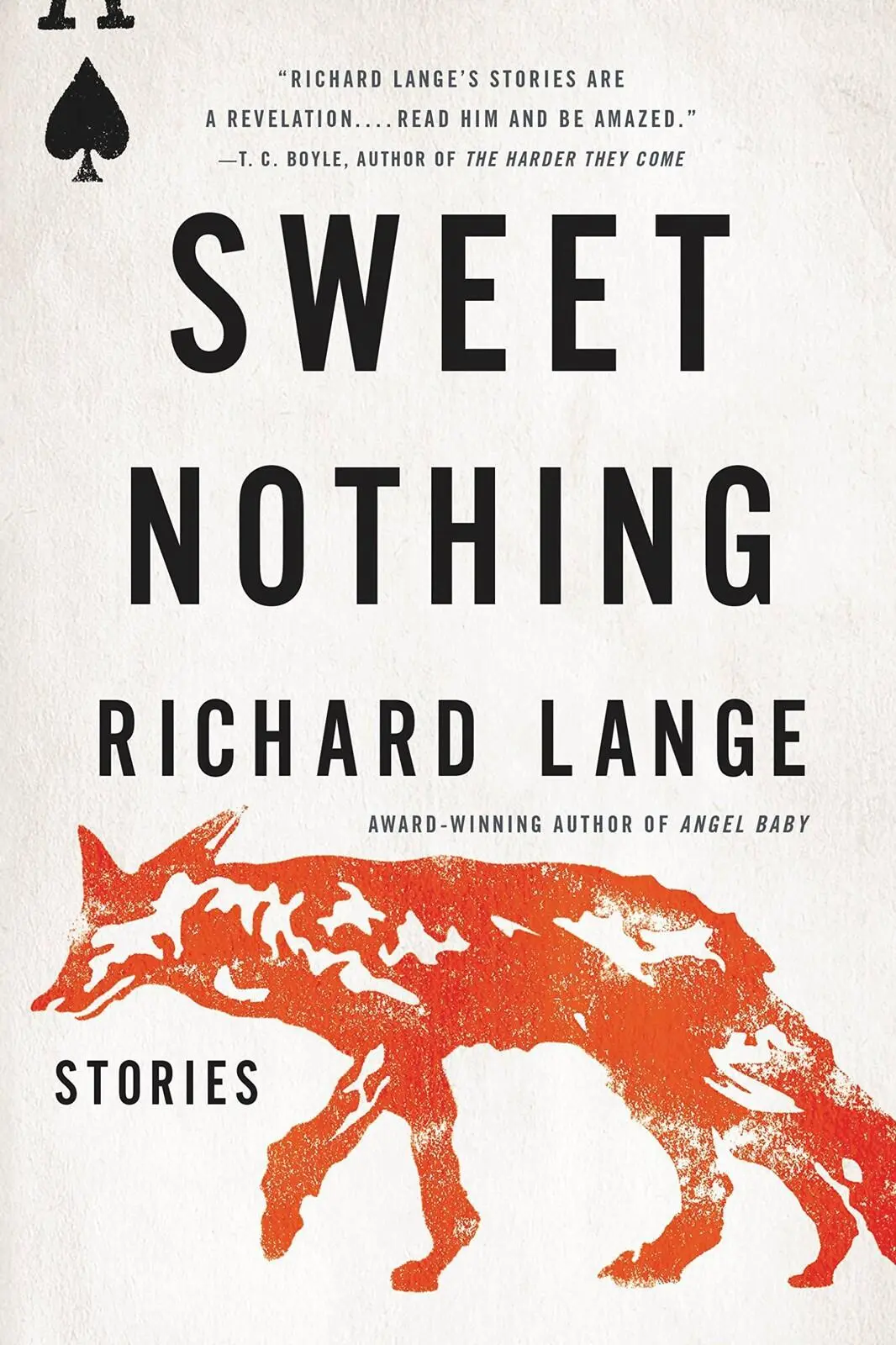
- Название:Sweet Nothing
- Автор:
- Издательство:Mulholland Books
- Жанр:
- Год:2015
- ISBN:нет данных
- Рейтинг книги:4 / 5. Голосов: 1
-
Избранное:Добавить в избранное
- Отзывы:
-
Ваша оценка:
Sweet Nothing: краткое содержание, описание и аннотация
Предлагаем к чтению аннотацию, описание, краткое содержание или предисловие (зависит от того, что написал сам автор книги «Sweet Nothing»). Если вы не нашли необходимую информацию о книге — напишите в комментариях, мы постараемся отыскать её.
Sweet Nothing
Sweet Nothing — читать онлайн бесплатно полную книгу (весь текст) целиком
Ниже представлен текст книги, разбитый по страницам. Система сохранения места последней прочитанной страницы, позволяет с удобством читать онлайн бесплатно книгу «Sweet Nothing», без необходимости каждый раз заново искать на чём Вы остановились. Поставьте закладку, и сможете в любой момент перейти на страницу, на которой закончили чтение.
Интервал:
Закладка:
For Patricia Barbe-Girault
THE NEWSPAPERS CALLED HIM “the Wolf,” but his real name was Armand, or perhaps Louis. He gave both when he was captured. He didn’t look like a wolf; he looked like a schoolteacher or a customs agent, a clerk of some sort. His hands were soft, his pale eyes unremarkable, and he barely cast a shadow when a light was shined upon him. The authorities said he’d murdered eight children.
“Do you believe them?” he asked me once.
“If they say it’s so, it must be so,” I replied.
“But of course,” he said.
“Shut your mouth,” I said.
He dwelled in darkness during his stay in Fort du Hâ, entombed deep in a section of the prison that we called the pit, locked in a dank, miserable cell far from the other inmates. How he wailed when they first brought him in, how he raved, sending up mad, desperate prayers to the saints, then working his way through various devils. He beat his fists bloody on the stones, tore out his hair, and covered himself with his filth.
“A light! A light! Mother! Father! A light!”
I couldn’t bear to hear it, had nightmares even, so I offered him a deal: If he’d remain quiet while I was on duty, I’d open the feeding slot in the door of his cell and hang a lantern near it. He readily agreed, and for part of the day, at least, his blackness was broken, and he could see the hell he’d tumbled into.
HE ANGERS ME, I told my commander.
Not for long, my commander replied, drawing a finger across his throat. Justice will be swift.
He scares me, I told my wife.
Shhh, my wife replied. The children can hear you.
He knows me, I told my priest.
Only God knows you, my priest replied, while demons seek to deceive.
WE WERE WARNED not to talk to the men we guarded, especially not those facing the guillotine, “Le Rasoir National.” But when you spend hour after hour in that cold, dripping gloom so far from the sun, so far from the pulse of the earth in the grass and the trees, so far from air not freighted with dread and despair, you sometimes need to hear the sound of another voice in order to be reassured that you haven’t died yourself and aren’t now rotting in your grave.
“Bonjour,” the prisoner would say when I opened the slot at the beginning of my watch. “Or perhaps bonsoir ?”
One morning I finally replied.
“It’s day,” I said.
“What day?”
“April twentieth.”
“Ah, spring is here. And what year?”
“You don’t know the year?”
“Time has gotten away from me.”
“Still 1899. You've been down here two months.”
For the most part we spoke of simple things, he on his side of the door, I on mine. He asked if the hydrangeas had bloomed in the Jardin Public, whether peas were showing up at the market yet, and how high the river was running. This last query disturbed me, because he was said to have thrown the bodies of the children into the Garonne after strangling and mutilating them. I answered without thinking when he asked, however, brooding over the question only later.
“It’s running higher than normal,” I said.
“What I wouldn’t give,” he said, “for a plate of lamprey.”
AS THE TRIAL drew near, La Petite Gironde printed a list of the victims: Charlotte Le Conte, age ten; Albert Hérisson, age eight; Laure Capdeville, age seven; and so on. Eight in all, though only five corpses had been found. The newspaper reported that the Wolf refused to confirm that the missing children had indeed met death at his hands, thereby denying the grieving parents even the cold comfort of certainty regarding the fates of their sons and daughters. In fact, the bastard hadn’t uttered a single word about the crimes, not even to proclaim his innocence.
It made me sick to contemplate. I thought of my own girls, Simone and little Lolo, mes mignonnes, and what a horror it would be if they were snatched away from their mother and me. I’m one of those men who are occasionally plagued by bouts of melancholy, and on my worst days back then, my daughters were the only roots I had, my only anchors against a billowing sea of despondence. I imagined the parents of the missing children suddenly lost in houses and on streets they’d known their whole lives. I saw them staring blankly at little beds and little spoons and little shoes and wondering, How? and Where? and Why?
For a few days after the list appeared, the feeding slot in the prisoner’s door remained closed. I decided that the beast who’d caused such misery deserved no kindness, no matter how small. I stopped my ears against his pleas for light and passed the long hours of my watch hunting for meaning in the flickering shadows the lanterns threw across the stone walls.
And it was there late one afternoon that I beheld the scales — justice — and a dove — God — and understood that I’d overstepped my bounds, realized that only He has the right to pass judgment. As much as it pained me, I opened the slot again, placed a lantern near it, and fetched a bucket of water so the prisoner could wash himself.
“How long has it been?” he asked.
“Three days,” I said.
“Why?”
I passed the list of dead children through the slot. The prisoner glanced at it briefly, then handed it back.
“So I’ve been found guilty?” he said.
“The trial hasn’t started yet,” I said.
“Yes, it has,” he said.
AS I STATED before, for the most part we spoke of the everyday, the mundane, the tiny beautiful details of the world outside, a world the prisoner knew he’d never see again. Occasionally, however, a certain humor came over him and he’d play at reminiscence.
“My father was a butcher, my mother a whore,” he told me on one such day. “I was born in the gutter, and the only reason they didn’t leave me there is that they needed something to blame.
“My first memory is of my mother sucking off a customer in whatever flophouse we were living in then. My second memory is of my father skinning a rabbit alive and chasing me with its still-kicking, still-screaming carcass, laughing at my pleas that he stop. They kept me in a closet. They used me as a footstool, a garbage pail, a chamber pot. They beat me ceaselessly and with much glee.
“Did your parents beat you?” he asked me.
“Not enough to boast about,” I replied.
“I grew to enjoy the brutality,” he continued. “At least there was the relief that came afterward, when the blows stopped.”
I left the prison that evening thinking I had some insight into the stresses that twist some men’s minds. Imagine my chagrin when, the very next day, the whole story was changed.
“Every Sunday the family sat down to an enormous lunch,” the prisoner said then. “Maman, Papa, my brother and sister. The cook labored all morning to prepare the meal, and the serving girl brought in dish after dish after dish. We ate until we couldn’t eat anymore, leaving just a bit of room for dessert, of course.
“Then we all went out to the garden, where Papa read his newspapers and Maman dozed over her embroidery while we children played escargot and bilboquet . At night Maman would tuck me in with three kisses, one on each cheek and the last on my forehead, to sweeten my sleep.”
“What’s your family name?” I asked, thinking that even though he was lying, he might still slip and reveal some fact that would help the authorities identify him.
“What’s yours?” he replied.
“That’s not important,” I said.
“Exactly,” he said.
“And what will it be tomorrow?” I said. “Descended from kings? A gypsy foundling?”
Читать дальшеИнтервал:
Закладка:
Похожие книги на «Sweet Nothing»
Представляем Вашему вниманию похожие книги на «Sweet Nothing» списком для выбора. Мы отобрали схожую по названию и смыслу литературу в надежде предоставить читателям больше вариантов отыскать новые, интересные, ещё непрочитанные произведения.









Обсуждение, отзывы о книге «Sweet Nothing» и просто собственные мнения читателей. Оставьте ваши комментарии, напишите, что Вы думаете о произведении, его смысле или главных героях. Укажите что конкретно понравилось, а что нет, и почему Вы так считаете.