William Gay - The Long Home
Здесь есть возможность читать онлайн «William Gay - The Long Home» весь текст электронной книги совершенно бесплатно (целиком полную версию без сокращений). В некоторых случаях можно слушать аудио, скачать через торрент в формате fb2 и присутствует краткое содержание. Год выпуска: 1999, Издательство: MacMurray & Beck, Жанр: Современная проза, на английском языке. Описание произведения, (предисловие) а так же отзывы посетителей доступны на портале библиотеки ЛибКат.
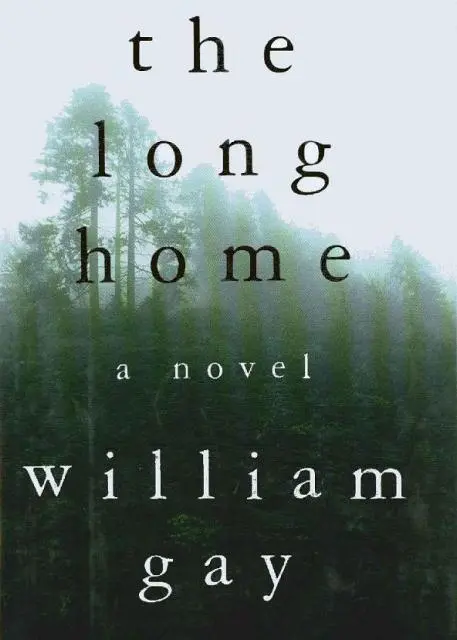
- Название:The Long Home
- Автор:
- Издательство:MacMurray & Beck
- Жанр:
- Год:1999
- ISBN:нет данных
- Рейтинг книги:3 / 5. Голосов: 1
-
Избранное:Добавить в избранное
- Отзывы:
-
Ваша оценка:
The Long Home: краткое содержание, описание и аннотация
Предлагаем к чтению аннотацию, описание, краткое содержание или предисловие (зависит от того, что написал сам автор книги «The Long Home»). Если вы не нашли необходимую информацию о книге — напишите в комментариях, мы постараемся отыскать её.
The Long Home — читать онлайн бесплатно полную книгу (весь текст) целиком
Ниже представлен текст книги, разбитый по страницам. Система сохранения места последней прочитанной страницы, позволяет с удобством читать онлайн бесплатно книгу «The Long Home», без необходимости каждый раз заново искать на чём Вы остановились. Поставьте закладку, и сможете в любой момент перейти на страницу, на которой закончили чтение.
Интервал:
Закладка:
They fought all over the backyard pulling hair and cursing and falling over one another. Winer swung himself onto the top plate the better not to be mistaken for a participant. Hardin tried to yell them down, then he saw Wymer moved among them like dogs snapping at the heels of milling cattle, first with blackjacks then Hardin slipping on his Sunday knucks and wading in.
When they subsided no one seemed to know what the fight had been about and they all went back inside to discuss it save one soldier sitting crying in the grass with his jaw hanging crazily. He sat there awhile by himself and then he got up and hobbled around the corner like a very old man. Winer went on back to work and after a while the old men came up from the branch laughing and seated themselves again.
Leo Huggins sold throughout a three-country area what he described as waterless cookware. He canvassed the backroads in his old green Studebaker, sitting with housewives on their porches, beseeching, wheedling, his eyes black and glossy with whatever obsession bulged behind them, the present one being that this waterless cookware was the only thing of moment in all the world.
He’d demonstrate it in the comfort of your own home. He’d have you invite the neighbors over and he would go into the kitchen and prepare and serve a meal in these marvelous pans. Many a husband came in hot and sweaty from the sawmill to find his yard clotted with cars and the house full of folks he hadn’t expected. Huggins’s Studebaker likely blocking the driveway. Huggins himself humming busily in the kitchen, his sleeves rolled up, supper on the stove. The wife sitting waiting with mounting apprehension, wondering how she had let herself be talked into this.
So there were times when Huggins had to depart in haste, the meal left halfprepared, the pots and pans abandoned until another day when the husband was once again at work.
“Your mama tell me you a wood butcher.”
“I reckon.”
“I reckon it’s all right if you can make any money at it,” Huggins said, then turned the conversation neatly to himself. “I never could make a livin at public work. Had to do what I could with my brains.”
And your mouth, Winer thought, then immediately decided he wasn’t being fair, that he did not know Huggins well enough to criticize him and was not giving him a chance. Yet he caught himself staring at the big white hands that did not look as if they’d ever done an hour’s labor, the fingers soft and freckled as bleached sausages, the still upturned palms tender and virginal as a baby’s.
Huggins fell to talking about himself. He liked this topic of conversation, figured the rest of the world was afflicted in a like manner. He had come up from nothing in Arkansas, he told Winer and his mother, from folks who never had nothing nor wanted nothing, folks in shotgun shacks with cracks in the floor so you could keep an eye on the chickens, and he figured if he was ever going to be anything he had to do it on his own hook. He had begun by selling fancy overpriced coaloil lamps to the colored folks in the underside of Little Rock, later taking on a line of bibles with Negro Jesuses.
Winer sat only halflistening to this oral history. He had worked hard and his shoulders ached from nailing and he kept yawning. Weariness seemed to have crept up from his ankles and he could still hear and feel the rhythmic swing of the hammer in some dreamlike part of his mind. Amber Rose’s face drifted unbidden into his thoughts and would not leave. Huggins’s car was paid off free and clear, he learned, there was no man in all the world who could claim Huggins owned him a dime. Winer stared across the yard wishing himself elsewhere. The day was waning, the blue timberline across the field already an indecipherable stain, the sedge washed by broad swaths of failing light.
The trio formed a curious tableau on the porch of the unlit house, teacher and disciples perhaps, the boy pretending to listen, the man preaching softly the arcane gospel of himself, speaking so earnestly he might have been imparting hidden knowledge of the workings of the world or spinning a web to draw them into some dadaistic conspiracy. The woman sat in her chair, still, unrocking, hands momentarily stayed from their darning. Her eyes were downcast to her lap, the yellow lids slick and veined with a delicate blue tracery of capillaries. She seemed rapt, transfixed, and Winer realized that he did not know her, felt a brief and bitter stab of regret that he had never tried to learn her. She was less real to him than the yellowing daguerreotypes of other strangers in her own picturebox.
Hardin had square, boxlike hands with thick fingers and he kept the nail cut straight across almost into the quick. The nails were hornlike and scrupulously clean. He was forever paring them when he spoke with Winer.
“Where did you get that knife?”
“Lord. son, I don’t know. I had it I guess ten or twelve year.”
“Let me see it a minute.”
Hardin handed him the knife handle first.
The grips were bone the color of oxblood. CASE, the trademark said. Winer sat for a time holding it. “This is my father’s knife,” he said.
“Seems like I did find it somewheres.”
A small, irregular W was filed into the base of the blade the way all tools were marked but Winer would have known it anyway. The knife was an integral part of the memory of his father, the knife and the black slouch hat and the cold, remote way the eyes had of looking at the world. But they had never looked at Winer that way. The knife was wound up with the way his father had glanced at him when he started to town or to the field to plow. Winer the child would be hesitant, uncertain whether he should go or stay. “Well are you comin or not?” his father would ask. “You know I can’t get nothin done without you to supervise.”
He smelled the knife.
“What’d you do that for?”
Winer flushed. “I don’t know. He always had a plug of tobacco in the same pocket with the knife. The knife always had crumbled-up chewing tobacco inside it and it always smelled just like old Red Ox twist.”
“I remember where I got that knife now. I hadn’t thought about it in years. It was a holler or two over across your line. Seems like kind of a cedar grove in there, where I reckon he’d been cuttin fencepost. The knife was layin on a sandbar down by a spring in the mouth of the holler. But it was like I said ten or twelve year ago and any smell of chewin tobacco would be long gone.”
“I don’t know why I did that.”
“Your pa lit out, didn’t he?”
“I don’t know what happened to him I never did believe he lit out and I don’t believe it now.”
“Well, folks is funny. I don’t care how close you think you know somebody, you don’t know what wheels is turnin in their head. Course you don’t remember but times was hard for folks back then. Times was tightern a banjo string. Lots of folks was on the road. He might’ve just throwed up his hands and said fuck it and lit out.”
“No.”
“Well. I ain’t tryin to tell you what to think about your own daddy. But seems to me me and you’s a lot alike.”
No, Winer thought, still looking at the knife lying open in his hand. I am not like you. I’ll never be like you. I’m not like Oliver either but both of you want to tell me what do. What to think. Both of you are always sayin, I’m not tryin to tell you, but you’re tellin me just the same. I am like myself. If I am like anybody then I am like him.
“My own daddy cut out on me in February of the year I was eight years old. This was in Cullman, Alabama. I never will forget it, not forget Christmas that year. They always told us Santy Clause and me and my sister used to go out and hunt for reindeer tracks. The ground was froze as hard as rock but we use to hunt anyway. Course they never was much, a apple, and a orange and a handful of penny candy. A few nuts. But this year they wadnt nothin in our socks. I wondered what the hell it was we’d done. I went out where Pa was standin in the yard. He was lookin off down the road though there wadnt nothin to see. Just what you see when you look down a road. After a while Pa noticed us and reached in his pocket and handed me a quarter. ‘Here,’ he said. ‘Git yins some Santy Clause.’ That was when I was eight years old. Before I was nine he was long gone and we was livin with our aunt. She was sleepin with a sectionhand used to take a strop to us just to hear us yell.”
Читать дальшеИнтервал:
Закладка:
Похожие книги на «The Long Home»
Представляем Вашему вниманию похожие книги на «The Long Home» списком для выбора. Мы отобрали схожую по названию и смыслу литературу в надежде предоставить читателям больше вариантов отыскать новые, интересные, ещё непрочитанные произведения.





Обсуждение, отзывы о книге «The Long Home» и просто собственные мнения читателей. Оставьте ваши комментарии, напишите, что Вы думаете о произведении, его смысле или главных героях. Укажите что конкретно понравилось, а что нет, и почему Вы так считаете.