William Gay - The Long Home
Здесь есть возможность читать онлайн «William Gay - The Long Home» весь текст электронной книги совершенно бесплатно (целиком полную версию без сокращений). В некоторых случаях можно слушать аудио, скачать через торрент в формате fb2 и присутствует краткое содержание. Год выпуска: 1999, Издательство: MacMurray & Beck, Жанр: Современная проза, на английском языке. Описание произведения, (предисловие) а так же отзывы посетителей доступны на портале библиотеки ЛибКат.
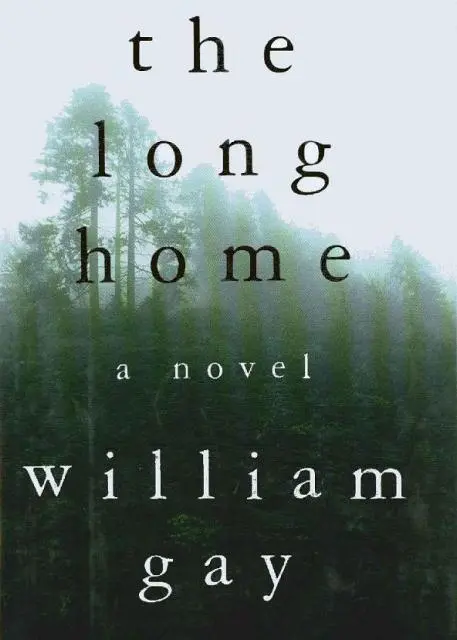
- Название:The Long Home
- Автор:
- Издательство:MacMurray & Beck
- Жанр:
- Год:1999
- ISBN:нет данных
- Рейтинг книги:3 / 5. Голосов: 1
-
Избранное:Добавить в избранное
- Отзывы:
-
Ваша оценка:
The Long Home: краткое содержание, описание и аннотация
Предлагаем к чтению аннотацию, описание, краткое содержание или предисловие (зависит от того, что написал сам автор книги «The Long Home»). Если вы не нашли необходимую информацию о книге — напишите в комментариях, мы постараемся отыскать её.
The Long Home — читать онлайн бесплатно полную книгу (весь текст) целиком
Ниже представлен текст книги, разбитый по страницам. Система сохранения места последней прочитанной страницы, позволяет с удобством читать онлайн бесплатно книгу «The Long Home», без необходимости каждый раз заново искать на чём Вы остановились. Поставьте закладку, и сможете в любой момент перейти на страницу, на которой закончили чтение.
Интервал:
Закладка:
“Why, hellfire,” Winer said. “I called you twice but you was so busy making a damn fool out of yourself you couldn’t be bothered.”
“Ahh, the hell with you and him both,” Lipscomb said, turning away. He laid the square in the box and took up the box by its rope handles. He started toward the door. “I’d like to stay and see the mess you’ll make out of things. You couldn’t build a fuckin chicken coop if you had a book to go by.”
After a while Hardin came out and climbed onto the subfloor. He sat on a box of nails watching Winer work. He had a slim cigar clamped in his jaw. He wore expensivelooking gabardine slacks and a yellow shirt. He began paring his nails with a bonehandled knife.
“Well, I had to let ye runnin mate go,” he said. “I couldn’t afford union scale for winderpeepin.”
Winer went on working.
“Hold up a minute. You ain’t gettin paid by the nail nohow.”
Winer ceased and stood waiting.
“Ain’t you worked past quittin time anyhow?”
“I don’t know. I don’t have a watch, we used his. Besides, I wasn’t sure what you wanted.”
“I told you what I wanted when I hired you. I want a honkytonk built. Can you do it?”
“Well, I can do most of it. There’s some things it’s hard for one man to do, like puttin up the joists and rafters. And I can’t raise the walls and plumb them by myself.”
“That’s all I wanted to hear you say. You measure em and nail em together and I’ll grab a handful of these highbinders I’m always waistdeep in and we’ll raise em for you. You run into anything requires more than two hands, just holler. All right?”
“I’ll give it a try.”
“Shore you will. You can do it. Ain’t you goin to ast me about the money?”
“What about it?”
“About how much I was payin him. I’m payin it to you now, you’re the architect and the carpenter and the hired help too. You fuck up we’ll know who to blame it on.”
Winer grinned.
“Come on and I’ll run you home. Can’t have my builder walkin to work totin his tools. Folks’ll be talkin about me.”
Winer was still wonderstruck. I am rich, he thought. I am a wealthy man.
Lately Winer’s mother had taken to cleaning herself up more and doing her hair. She seemed always to have on a clean dress and there was something foreign about her. Winer realized for the first time how much she had let herself go down through the years. She was not pretty but had she been less dour and practical she would have qualified as plain.
He noticed tiretracks even before she got the pans.
“Had company today?”
“No. A salesman stopped by.”
“A salesman? Selling what?”
“Sellin pots and pans,” she said irritably as if there were no other kind of salesman, as if he was interrogating her.
A week later she had the pans. He saw them when he came in from Hardin’s, a great motley collection of them, coppercolored, gleaming, skillets and cookers and spatulas and doubleboilers and seemingly a pan for every purpose the mind of man could devise.
“Great God,” he said.
“What?”
“Where’d you get all that stuff?”
“I bought em.”
“Bought em? Why?”
“Because I wanted em is why. I always wanted me a set of cookers like that.”
He was a little awed by them. “Well.” He paused. “What’d they cost?”
“Never you mind what they cost. It won’t be a nickel of your pocket.”
He took his razor and mirror and a bar of soap down to the branch. Beyond the barn it curved and there was a hole of water deep enough to swim in. He washed and shaved and came back out of the woods and onto the stoop and she was awaiting him. Apparently their conversation was not yet over.
She laid a hand on his arm. “I got a friend,” she said. “Sells them pots and pans.”
He thought, a friend, not understanding at first. Then he saw in her sallow face some commingling of shame and pride, the eyes imbued simultaneously with humility and stubbornness, and he thought, she means a man. He didn’t know what to say though her face expected something, she looked as if she were ashamed of whatever it was she was doing but had no plans to stop.
“I think you’d like him, Nathan. He wants to see you.”
“Well. Sure.” He was looking all about. “Where is he?”
“He’s supposed to be here next Friday,” she said. Not “He’ll be here Friday,” Winer noticed, not yet with sureness or even confidence, she was uncertain of her hold on him, or did not believe it yet.
Monday he was there long before worktime planning his day. There was more to know than he had realized and now there was no one to ask. Old questions on the pitch of roofs, the cuts on rafters, troubled him. Yet as the week wore on he discovered an affinity for planes and angles, for the simple rightness of things. His corners formed perfect squares and they stood as plumb as a level could plumb them. There were things he did not know how to do but he found there were several ways to do everything and that even if he took the long way it did not matter if the end result was the same.
He seemed always to work with an audience. With the weather holding fair Hardin’s coterie of convivial drunks used to follow the sun and in the afternoon they’d align themselves on Coke crates or folding chairs or old ladderbacks as spindly and loosejointed as themselves and against the whitewashed concrete blocks of Hardin’s addition they took on the character of a sepia daguerreotype, old felthatted and overalled rogues watching time pass with attentive eyes out of dead faces. Watching anything that life chose to parade before them. There was a great calm about these old men, they seemed to have arrived at some compromise with life long ago and nothing much surprised them anymore.
The young men were mostly furloughed or shellshocked soldiers or over-the-hill sailors far from any seas and they would be inside drinking and trying to get the girl to ride down the road with them. Finally drunk they settled for whatever whore chanced to be in attendance or even Pearl herself should the need be acute.
Winer was comfortable with the old men but he could never become comfortable with the soldiers, there was an air of desperation about them. They acted as if time were the commodity they were shortest on, as if they did not have the leisure to take life as it came but were eternally seeking shortcuts, must twist each moment until it suited their purpose, bend every event to their own amusement. Something had to be happening for them every minute. They were wound too tight, Winer thought. He knew why and he didn’t guess he blamed them but he thought they were wound too tight anyway. They reminded him of a war being fought that had heretofore been just a disembodied voice in a radio and he knew that unless things changed it would not be long before he was fighting it too.
All the soldiers looked alike to Winer and he thought if he ever saw one sober he might think about them differently but around Hardin’s he wasn’t likely to. All the ones he saw were a little drunk and a lot belligerent. They always wanted to fight the sailors but if there were no sailors they’d fight each other.
One afternoon he paused nailing weatherboarding on the walls when a fight erupted inside and boiled out the back door, the old men picking up their jars or jellyglasses or whatever and retreating to more neutral territory. Two soldiers were rolling in the yard and when a stringyheaded blond broke a beerbottle over the topmost one’s head a girl with red hair knocked her down with a two-by-four and fell upon her. Winer, watching their exposed white thighs and rent clothing, ultimately counted eighteen participants and he wondered how they kept up with who was fighting whom and which side they were on.
Читать дальшеИнтервал:
Закладка:
Похожие книги на «The Long Home»
Представляем Вашему вниманию похожие книги на «The Long Home» списком для выбора. Мы отобрали схожую по названию и смыслу литературу в надежде предоставить читателям больше вариантов отыскать новые, интересные, ещё непрочитанные произведения.










Обсуждение, отзывы о книге «The Long Home» и просто собственные мнения читателей. Оставьте ваши комментарии, напишите, что Вы думаете о произведении, его смысле или главных героях. Укажите что конкретно понравилось, а что нет, и почему Вы так считаете.