William Gay - The Long Home
Здесь есть возможность читать онлайн «William Gay - The Long Home» весь текст электронной книги совершенно бесплатно (целиком полную версию без сокращений). В некоторых случаях можно слушать аудио, скачать через торрент в формате fb2 и присутствует краткое содержание. Год выпуска: 1999, Издательство: MacMurray & Beck, Жанр: Современная проза, на английском языке. Описание произведения, (предисловие) а так же отзывы посетителей доступны на портале библиотеки ЛибКат.
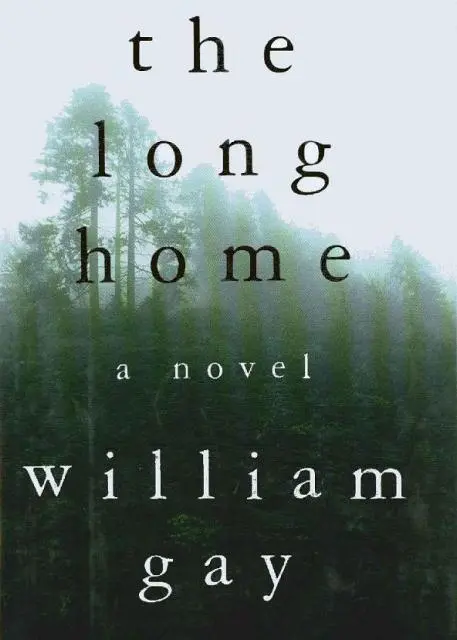
- Название:The Long Home
- Автор:
- Издательство:MacMurray & Beck
- Жанр:
- Год:1999
- ISBN:нет данных
- Рейтинг книги:3 / 5. Голосов: 1
-
Избранное:Добавить в избранное
- Отзывы:
-
Ваша оценка:
The Long Home: краткое содержание, описание и аннотация
Предлагаем к чтению аннотацию, описание, краткое содержание или предисловие (зависит от того, что написал сам автор книги «The Long Home»). Если вы не нашли необходимую информацию о книге — напишите в комментариях, мы постараемся отыскать её.
The Long Home — читать онлайн бесплатно полную книгу (весь текст) целиком
Ниже представлен текст книги, разбитый по страницам. Система сохранения места последней прочитанной страницы, позволяет с удобством читать онлайн бесплатно книгу «The Long Home», без необходимости каждый раз заново искать на чём Вы остановились. Поставьте закладку, и сможете в любой момент перейти на страницу, на которой закончили чтение.
Интервал:
Закладка:
The sight of the rifle had raked his forehead and a fine, bright line of blood crept down his face unnoticed. I will lay for him and shoot him, he thought, but he knew already he wouldn’t. I am old, he admitted for the first time, old, tired of it all. All I want is to be let alone, all I want is for things to run along smoothly. All I want is peace, and an old man ought to have that, if nothin else.
Book Two
1
The girl had black hair as coarse and glossy as a well-kept horse’s mane and it was cropped straight across below her shoulders as it if had been sheared. The first few days after school started Winer would see he come out and await the schoolbus, her books clutched against her breasts, her face self-absorbed and touched with a kind of sullen insolence, staring down the road the way the bus would come. Then after a few days she didn’t come out of the house when the bus blew its horn. The bus turned and paused momentarily a few mornings and then it didn’t come anymore.
These warm days of Indian summer she used to bring out on old metal lunge chair and sit on the sunny side of the house and watch them work. Winer, looking up from the pile of corners and tees he was nailing together or the blocking he was cutting with a handsaw, would see her sitting with calm indifference, her fingers laced across her stomach, watching the progress of the work not as if it interested her very much but as it if were just something to watch, a motion, like a cat watching anything that moves.
She would sit with a kind of studied unawareness of her spread legs, the glimpses they stole of her white thighs. Her eyes were halfshut beneath the weight of her long lashes and she might have been asleep but she was not.
“She’s got a case on one of us,” Gobel Lipscomb told him. “And somehow I just don’t believe it’s you.” Lipscomb was the carpenter. He took to working shirtless so she could watch the play of muscles in his sunbrowned back, to ordering Winer around more. He used to drop his tape or hammer and stoop floorward for it and pause staring upward at the juncture of her thighs and he’d straighten with a look on his face near pain. “Black drawers,” he would say. “Godadmighty damn. Black drawers.”
Hardin’s business seemed to keep him pretty well occupied but sometimes on slow days he would come out and sit beside the girl and watch. Once he laid his hand on her knee and said something to her and glanced toward Lipscomb and laughed and she smiled a small smile and said nothing. When Hardin was about, Lipscomb found a higher gear in his nailing arm and seemed unaware of anything that transpired beyond the maze of partition walls he was erecting.
Carrying a beachtowel the girl came out of the trees above the abyss. Her bathing suit was wet and her black hair plastered seallike and glossy to her head. She passed the building where they worked without glancing toward them and walked on toward the house, her hips rolling like something meshing on ball bearings.
Lipscomb was suddenly frozen, the hammer frozen in midstroke as it if had come up against some invisible barrier. Even the jaws that were perpetually kneading tobacco were still. He stood for a moment and then with great deliberation he laid his hammer aside.
“If that ain’t a invite then I don’t know one,” he said. “Here goes nothin.”
He stood before the bedroom window with his hands shading the sundrenched glass.
“Hey,” Winer called.
Lipscomb might not have heard him. He didn’t turn. Stood leaning back to the sun staring into the room. Whatever he saw there seemed to have rendered him immobile as stone.
“Hey, Lipscomb,” Winer called again.
When Lipscomb turned he threw a hand to his eyes as if struck blind or perhaps paradoxically illuminated by divine revelation and he staggered across the yard. “Oh, Lord,” he said. “Oh Lord.” He wiped his brow and flung off imaginary beads of perspiration. He crossed the yard in great rolling seafarer’s strides and thrust his pelvis forward spasmodically, his hands and hips miming masturbation of an enormous phallus. His tongue lolled, his eyes rolled in his head.
“How high a fever you run with the fits?” Hardin asked him. Hardin leaning against the corner of the house smoking a cigarette. “You reckon I ought to send that boy after Ratcliff?”
Lipscomb ran a hand through his sandy hair. He seemed tonguetied. His face was so engorged with blood it looked swollen. “There ain’t nothin wrong with me,” he finally said.
“The hell there’s not,” Hardin told him.
Winer fell very busy. He knew intuitively that he had never seen a man so close to dying. His hand counting the nails in his nail apron. One, two, three, his busy fingers counted.
Hardin didn’t say anything to Lipscomb all day. He just got in the black Packard and left. At lunch they ate leaning against the wall they’d erected. “You see that bastard, how he looked at me?” Lipscomb asked. “If looks killed I’d be lookin at the underside of a casketlid right this minute. I’ve about decided he’s got the hots for that little gal hisself.”
Winer didn’t reply. He drank cold coffee from a pint fruitjar and ate his sandwich and thought about the way Hardin had looked at Lipscomb. Winer did not anticipate ever being looked at by anyone in just that way.
“Hell, he looks like one of these killdees,” Lipscomb said. “And they aint nothin to him but legs and pocketbook.” He studied his own thickly muscled forearms, his big hands. He seemed to draw comfort from them. “He fucks with me I’ll fold him up like a rule and stick him in my pocket,” he said. “Or else come upside his head with a clawhammer.”
Winer judged he’d about decided Hardin wasn’t going to say anything.
A few minutes before four they heard the Packard drive up and the door slam to, then Hardin came around the corner of the house. He stood there for a time watching them.
“Lipscomb, you want to step around here a minute? I need a word with you.”
“Here it comes,” Lipscomb said in a low voice. He slid his hammer into the strap on the leg of his overalls.
Winer went on nailing a wall together. He kept waiting for threats, blows, the sound of violence. All he could hear when he paused in his nailing was the murmur of the brook, doves mourning softly from the hollow.
Lipscomb was gone only a few minutes. When he came back his face was red all the way down into the collar of his blue chambray shirt and he was not pleased. He had an old plywood toolbox with a length of rope knotted through each end of for a handle. He began gathering his tools up and slinging them into the box.
“Get you shit gathered up,” he told Winer. “We’re draggin up.”
“What?”
“We’re quittin, by God. We’re goin to the house.”
“We, hell,” Winer said. “I didn’t know we came in a set like salt and pepper shakers.”
Lipscomb straightened with a square in his hand. He looked as if he’d just as soon take it out on Winer as not.
“What are you, some kind of Goddamned scab?”
“I’ll make up my own mind when to go the house. You never hired me.”
“Why, you snotty little bastard. I ought to just slap the hell out of you.”
“Why don’t you just fold me up like you did Hardin?”
“By God, I believe I will.” He took a step toward Winer but Winer held the hammer and he did not retreat under Lipscomb’s tentative advance, just stood with an almost sleepy look in his eyes. Lipscomb dropped his hands and stood staring at him, his eyes fierce and malignant. “You little backstabbin shitass. You set this whole mess up, didn’t you? Now you think you got the job and the girl too. All you had to do was holler, but hell no.”
Читать дальшеИнтервал:
Закладка:
Похожие книги на «The Long Home»
Представляем Вашему вниманию похожие книги на «The Long Home» списком для выбора. Мы отобрали схожую по названию и смыслу литературу в надежде предоставить читателям больше вариантов отыскать новые, интересные, ещё непрочитанные произведения.











Обсуждение, отзывы о книге «The Long Home» и просто собственные мнения читателей. Оставьте ваши комментарии, напишите, что Вы думаете о произведении, его смысле или главных героях. Укажите что конкретно понравилось, а что нет, и почему Вы так считаете.