Pasha Malla - People Park
Здесь есть возможность читать онлайн «Pasha Malla - People Park» весь текст электронной книги совершенно бесплатно (целиком полную версию без сокращений). В некоторых случаях можно слушать аудио, скачать через торрент в формате fb2 и присутствует краткое содержание. Год выпуска: 2012, Издательство: House of Anansi Press, Жанр: Современная проза, на английском языке. Описание произведения, (предисловие) а так же отзывы посетителей доступны на портале библиотеки ЛибКат.
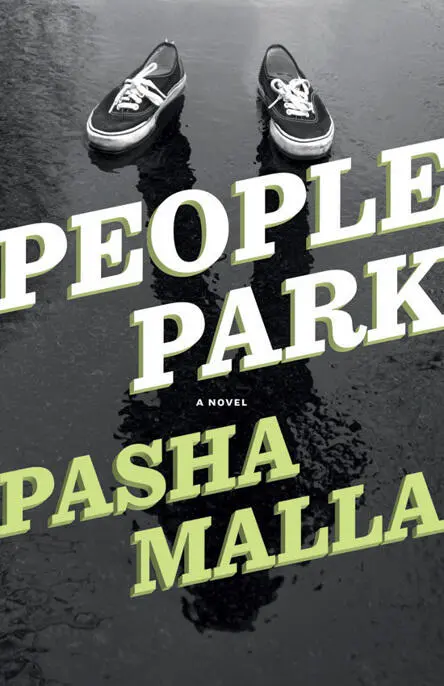
- Название:People Park
- Автор:
- Издательство:House of Anansi Press
- Жанр:
- Год:2012
- ISBN:нет данных
- Рейтинг книги:3 / 5. Голосов: 1
-
Избранное:Добавить в избранное
- Отзывы:
-
Ваша оценка:
People Park: краткое содержание, описание и аннотация
Предлагаем к чтению аннотацию, описание, краткое содержание или предисловие (зависит от того, что написал сам автор книги «People Park»). Если вы не нашли необходимую информацию о книге — напишите в комментариях, мы постараемся отыскать её.
People Park is a tour de force of eerily prescient, grotesque, and hilarious observation and a narrative of gripping, unrelenting suspense. Malla writes as if the twin demons of Stephen King and Flannery O'Connor were resting on his shoulders. You've never read anything quite like People Park.
People Park — читать онлайн бесплатно полную книгу (весь текст) целиком
Ниже представлен текст книги, разбитый по страницам. Система сохранения места последней прочитанной страницы, позволяет с удобством читать онлайн бесплатно книгу «People Park», без необходимости каждый раз заново искать на чём Вы остановились. Поставьте закладку, и сможете в любой момент перейти на страницу, на которой закончили чтение.
Интервал:
Закладка:
The proprietor slipped into her shop, studied him through a little window in the door.
Hi? said Kellogg. Sorry, we just want directions.
I’m closed, she said, voice muffled. Open by appointment only.
We’re just looking for island flats, he said. Or anything really. Food.
Pearl came up, holding Gip’s and Elsie-Anne’s hands. Raven! screamed Gip, and pointed at the storefront display, a tower of Illustrations: A Grammar.
My family, said Kellogg, gesturing grandly.
The woman spoke to Pearl: It’s food you’re after? Flats?
Or anything. Anywhere to eat.
Only stuff that’s open now this far north is in UOT. But you don’t want to go there. Not this late. You’d do better down on Knock Street. Lots of restaurants there.
For tourists, said Pearl.
The woman stared.
My wife’s from here, Kellogg explained.
Oh, said the woman.
We’re here for the Jubilee!
Well good luck, said the woman, and trotted off into her store.
Pearl snorted, shook her head. What a charmer. See why I left?
Oh come on now, said Kellogg. Probably gave her a shock is all! But how bad is OUT?
UOT, Upper Olde Towne. I guess there are patrols and stuff now, they’ve cleaned it up a bunch. My friend Debbie lives out there. It’s where we’re meeting later.
So then, really, said Kellogg, how bad can it be?

THE BANQUET HALL was in darkness. From Loopy’s bird sculpture, packed away in the hotel’s meatlocker between two gory sides of beef, one of the catering staff chiselled a few feathers into his end-of-shift schnapps, chugged it, then locked everything up and went home for the night. All but one head table had been cleared and folded up and stacked in a backroom. At this table, swirling a goblet of milk, sat the illustrationist. Beside him was the Mayor, or the two halves of the Mayor: her torso erect on the top shelf of the dessert cart, and below, heaped on the lower tier, her legs. She had the defeated look of a child promised a pony and whose parents instead have divorced.
The illustrationist spoke: This is not what I intended. I had thought to fill these folk with trembling and awe. With desire.
He sighed, swirled his milk, took a sip, swallowed.
The Mayor stared into the shadows of the banquet hall, saying nothing.
Something, anything. I wanted to make them feel . But they long only to be entertained. If that! One wonders if they know what they truly want. . I’m a showman to them, nothing else. One would assume a show then is a means to attract their attention, to ignite some flicker in their spirits that gives way to —
Please fix me, said the Mayor.
Raven shook his head, continued: That gives way not to empty sentiment, Mrs. Mayor, but true, desirous feeling .
I feel something, if that counts. I feel annoyed. I feel you should fix me.
Oh, my sweet queen. That’s not at all what I mean.
PEARL LED THE WAY OUT of Mount Mustela, around a bend, down an alley painted black from road to roof, and out onto a different sort of street: one side all crumbling rowhouses, the other pawnshops and cheque-cashers, windows barred. Trash clotted the gutters, many streetlights were burnt out, the air was sickly and foul with sewage and rot. At the first corner huddled men who went silent as the Pooles approached. Pearl held Gip’s hand, Kellogg hoisted Elsie-Anne onto his shoulders, her purse atop his head, her legs yoked his neck. They hurried past the quiet men with a rigidity Kellogg hoped conveyed purpose, rather than fear.
No problems here, he whispered, in his pocket lacing keys between his fingers.
The Pooles went west along Tangent 7, the rowhouses of A Street gave way to the squat shapes of warehouses and storage facilities between C and D, many of the windows punched out in spiky dark shapes. At F Street they headed north. Beyond the empty stockyards to the west shone the oily glint of the lake.
The only sounds were footsteps: Kellogg’s, with Pearl’s and Gip’s echoing half a block behind. The air was still and cold.
Pearl called, The Golden Barrel’s just ahead.
A motion sensor light flicked on as Kellogg passed what he mistook for another painted square, but a breeze wafted from it — an alley. He gripped his keys, ready should a drunk stumble out of the dark, to shred the man’s face with a razory punch.
Around the corner on Tangent 10 the Taverne’s blinking sign lit the sidewalk in orange flashes. Upon its roof was a movie-screen — sized billboard: the obelisk of the Island Flat Company’s logo and Food at the edge of forever scrawled beneath.
Suddenly Kellogg’s footsteps were without echo. He stopped, looked back: no Pearl, no Gip. The corner sat in darkness, they’d somehow not tripped the motion sensor.
Pearl? Kellogg called. Gip?
Nothing.
He lowered Elsie-Anne into his arms. Guys?
No reply.
Clutching his daughter he jogged back down F. The motion sensor triggered. Kellogg stopped. The light went off. He called his wife’s and son’s names again, with Elsie-Anne held close his heart thudded through both their bodies. He faced the alley: a murk too dark to be shadows, a void that existed beyond light.
Kellogg moved to the alley’s edge. He squinted. Nothing became clearer, nothing took form or shape. Pearl, Gip, he said, his voice weak. The blackness seemed wet. His pulse filled his ears, surged through his hands.
He hitched Elsie-Anne onto his hip and stepped forward. The shadows closed in. Another step, the ground sloped down. He pushed in a little farther and thought he saw movement. Then, faint and faraway, came a rushing, airy sound, and the breath of something huge whisked hot and cobwebby over his face.
Kellogg wheeled, stumbled, whispered, We’re okay, we’re okay, into his daughter’s hair, ran and nearly fell inside the Golden Barrel.
The bar’s half-dozen patrons swivelled to inspect him, and in disinterest or disappointment returned to their drinks.
Kell!
Pearl and Gip were in a booth by the bathrooms. Kellogg took the seat opposite, moved Elsie-Anne off his lap, gaped across the table at his wife and son.
What’s going on? said Pearl. You look like you’ve seen a ghost.
Yeah, Dad, said Gip. Your hands are shivering. Dorkus, what’d you do to Dad?
Elsie-Anne spoke into her purse.
I don’t, began Kellogg. You were. . behind us. What happened?
Kell, sorry, I’m confused. What are you so shaken up about?
Sensing the whole bar watching, Kellogg hid behind the menu. So, he said, what’s good?
Mummy already ordered, said Gip. Wings.
Hope that’s okay, they don’t have flats. Pearl touched his arm. Kellogg?
Wings! he shouted — too bright, too loud, with a maniac’s grin. Hear that, Annie? Mummy’s ordered wings, who needs flats. . He trailed off. On the floor was Gip’s knapsack. Be right back, he said, scooped it up, and tumbled out of the booth.
In the bathroom he dug past Raven’s Illustrations: A Grammar , his CityGuide, the extra sweaters he’d packed (just in case), their permits, apple juice, a first-aid kit, until his fingers closed around the cold smooth container of Gip’s meds. He tapped two of the white tablets onto his palm, looked from them to his reflection in the mirror — wide-eyed and weak — shook out two more, opened the tap, filled his mouth with water, and choked all four pills down.
PUT MY LEGS BACK.
Back? Mrs. Mayor, who is to say they were ever otherwise?
Читать дальшеИнтервал:
Закладка:
Похожие книги на «People Park»
Представляем Вашему вниманию похожие книги на «People Park» списком для выбора. Мы отобрали схожую по названию и смыслу литературу в надежде предоставить читателям больше вариантов отыскать новые, интересные, ещё непрочитанные произведения.





Обсуждение, отзывы о книге «People Park» и просто собственные мнения читателей. Оставьте ваши комментарии, напишите, что Вы думаете о произведении, его смысле или главных героях. Укажите что конкретно понравилось, а что нет, и почему Вы так считаете.