Hedi Kaddour - Waltenberg
Здесь есть возможность читать онлайн «Hedi Kaddour - Waltenberg» весь текст электронной книги совершенно бесплатно (целиком полную версию без сокращений). В некоторых случаях можно слушать аудио, скачать через торрент в формате fb2 и присутствует краткое содержание. Год выпуска: 2009, Издательство: Vintage, Жанр: Современная проза, на английском языке. Описание произведения, (предисловие) а так же отзывы посетителей доступны на портале библиотеки ЛибКат.
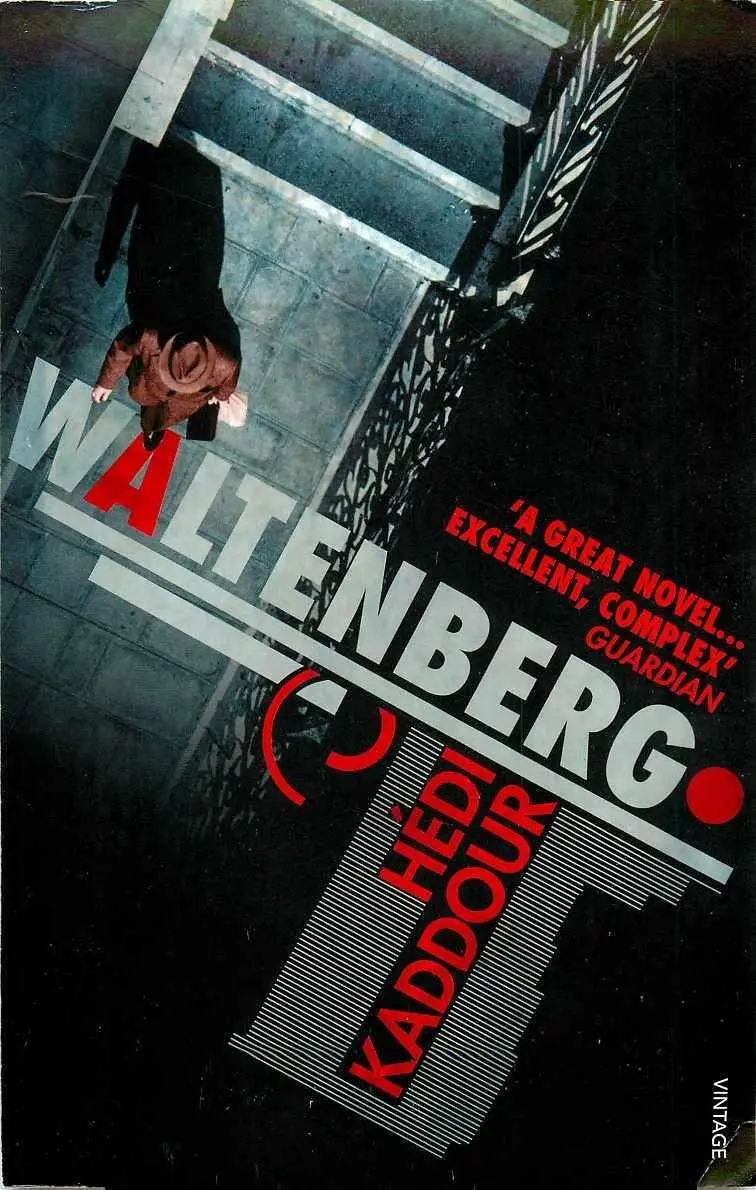
- Название:Waltenberg
- Автор:
- Издательство:Vintage
- Жанр:
- Год:2009
- ISBN:нет данных
- Рейтинг книги:3 / 5. Голосов: 1
-
Избранное:Добавить в избранное
- Отзывы:
-
Ваша оценка:
Waltenberg: краткое содержание, описание и аннотация
Предлагаем к чтению аннотацию, описание, краткое содержание или предисловие (зависит от того, что написал сам автор книги «Waltenberg»). Если вы не нашли необходимую информацию о книге — напишите в комментариях, мы постараемся отыскать её.
Waltenberg
Waltenberg — читать онлайн бесплатно полную книгу (весь текст) целиком
Ниже представлен текст книги, разбитый по страницам. Система сохранения места последней прочитанной страницы, позволяет с удобством читать онлайн бесплатно книгу «Waltenberg», без необходимости каждый раз заново искать на чём Вы остановились. Поставьте закладку, и сможете в любой момент перейти на страницу, на которой закончили чтение.
Интервал:
Закладка:
And instead, he’d met another man altogether, unexpected, genial, with big ears, who’d flung those words at him: ‘The Great Adventure is buggered!’
On the quais, de Vèze has passed the Pont Royal, is approaching the Pont des Arts, suddenly he turns and retraces his steps, a moment ago he spotted a book in one of the booksellers’ boxes, the title had caught his eye, he can’t recall it now, a yarning sort of title, an author who wrote of faraway places, the sort of book that makes you want to pack a bag and go, or write something yourself, just the thing you want when you’re on holiday, the volume was displayed face up, on the extreme left-hand side of one of the book boxes, who was it by? Not Pierre Loti, de Vèze passes along the boxes, who on earth is going to buy all those German newspapers published during the Occupation? no not a book by Morand either, Kessel maybe, there’d been only two booksellers with anything by Kessel, de Vèze retraces his steps, slaloming through the tourists, comes to a halt before the cover of a volume wrapped in cellophane, Wagon-lit, that was the title, and the name of the author guarantees that it won’t be another Madonna of the Sleeping-Cars, Kessel, a name to reckon with.
Tonight, in his hotel room, de Vèze will have what he needs to go roaming, a big book, wide-open spaces, no big words, pace, but check first, the bookseller is rather unhelpful, he refuses to remove the cellophane, that’s three times today I’ve been asked, it’s a first edition, keep opening them and books get damaged, and the pages aren’t cut, anything by Kessel you snap up, oh go on then, I’ll open it for you, de Vèze doesn’t care for the man, he leaves him to it and walks on, then he remembers that the book he’d seen hadn’t been wrapped in cellophane.
He looks for the other bookseller, there it is, Wagon-lit, and it’s half the price, and the pages have been cut.
A few metres from him, the bookseller is busy, he’s talking about another author to a customer, a woman, yes, I’ve a copy of the first edition, de Vèze tries to overhear the conversation, blare of car horns, the swish of a bus passing along the quais, I paid five hundred old francs for it, the cover was badly damaged, roar of a passing motorcycle, did you know it was turned down by Gide no less? Which is why it was privately published, it has a dedication, I had it rebound for my own collection, I’ve kept it, sometimes I run my finger over the dedication.
De Vèze opens Wagon-lit, yes, an account of a long journey across Europe, going east, the Gare du Nord, one evening on a whim, Paris, Cologne, Berlin, Olsztyn, Siauliai, Riga, beyond, just took off, a woman, yonder, de Vèze reads: ‘I felt the thrill of the fever, the frenzy, the wild call, gradually fill me, grip me, swamp me.’
No way! all those kilometres and what you get is shop girl effusions and words that come in threes, and that ‘wild call’, at this point the author has reached Riga but the phrase hasn’t left Paris, de Vèze thinks he’s not being fair, he looks for something more succulent, turns Kessel’s pages with childish anticipation, he’d really like to go travelling with this book, ‘as if she were regaining consciousness, a fierce fold formed in the space between her eyebrows’, he holds the book in his hand, ‘fierce fold formed’, two thousand kilometres for a fierce fold to form, he puts the book down, his eyes fill with tears, you can’t count on anybody, a Minister, a plumber, months of madness ahead.
He doesn’t feel like reading any more, he’s had a bellyful of booksellers, he turns and walks back, still following the quais, finds himself back opposite the Place de la Concorde, thinks about crossing the bridge, he doesn’t care for the Champs-Élysées, he stays on the left bank, quickens his step as he walks past his Ministry, carries on as far as the Pont de l’Alma, then, drawing level with the Eiffel Tower, the Pont d’Iéna, just at the start of the bridge is a small fair, with a merry-go-round framed by two rearing horses, each on a plinth, loudspeakers blaring the song ‘Ah, le petit vin blanc’, the horses in rows of three rise and fall along their axis as the merry-go-round turns, then ‘Ah, le petit vin blanc’ is followed by ‘La Mer’.
Between the rows of horses are two elephants with seats for tiny tots, the horses are hideous, cream and gilt with manes that are variously brown, green, blue, purple, one of the tots is accompanied by his mother, he is crying, he wants to get off, the merry-go-round revolves; among the horses is a donkey, just the one, the ticket office advertises a free cuddly toy for anyone buying six tickets. There is also Snack-Go-Round which sells everything, popcorn, Belgian waffles, frites, ice-cream, two-scoop cornets, beef tea, candy-floss, crêpes, sausages: two cherubs float above the till. Next to it is a gift-and-souvenir stall which sells Eiffel Towers in various sizes, plus key-rings, scarves, spoons, ash-trays, paper-knives and pens, all with the Eiffel Tower on them. There is also a man selling roast chestnuts.
De Vèze does not linger, he looks over towards the other end of the Pont d’lena where the Palais de Chaillot rises, on the left, he crosses the Pont d’Iéna.
He reaches the other side: an even bigger roundabout, a two-tier merry-go-round, the horses are superior, the colours less gaudy, there’s no donkey but there is a black horse, night is falling, there’s no one on the upper tier, de Vèze strides up to the ticket office, buys a ticket, waits until the previous ride has finished, leaps boldly and decisively up the stairs to the top deck, loudspeakers are playing ‘Ah, le petit vin blanc’, de Vèze is up there all by himself, Paris spins around him, the decorated façade of the Palais de Chaillot, the ornamental pool, the roofs, the trees, the Seine, the pool again and the bas-reliefs, the bridge, the Tower, he feels good.
In Paris, the good times have returned, listening devices disguised as transistors, the whole business has left everyone feeling relieved, France had been caught out by machines, but there weren’t any moles, moles were for the English and the Germans.
In the land of Joan of Arc, the native breed remained untainted.
After a six-week leave, de Vèze flew back to Moscow, a smile on his face, in the end he did not go on his pilgrimage to Singapore as planned, someone had told him that the black-and-white villa had been sold.
In Moscow he began seeing Vassilissa again, quite openly, de Vèze never hid any aspect of his private life, it means he doesn’t have to answer questions put to him by underlings or short-arsed bantams, he notes everything in his desk diary, and makes no bones in doing so, entries that read ‘visit from Mademoiselle Soloviev’, or ‘out with Mademoiselle Soloviev’, often writing ‘ma demoiselle’ as two separate words, in the diary which after all is an official record, quite deliberately, hide nothing, you don’t get bothered that way, Vassilissa is tall, blonde, a mathematician whose field is non-commutative algebras, niece of a marshal, no less, who has a seat on the Central Committee, that’s the main reason why they are left alone, Vassilissa has brisk movements and a tight little bottom.
No one except Berthier has ever dared raise this subject with de Vèze. How would you do it? A man with a record like his is untouchable, the minute you ask him a question which he himself has not prompted, he looks straight at you, and you feel he is about to ask what the hell you did between 1940 and 1944, not in 1945 when there were already too many on the bandwagon, he has time only for survivors who were in it from the very start, like him, and when they send him a survivor who speaks to him candidly, the said survivor limits himself to making some trivial observation, because you don’t treat a man like de Vèze as some minion.
Читать дальшеИнтервал:
Закладка:
Похожие книги на «Waltenberg»
Представляем Вашему вниманию похожие книги на «Waltenberg» списком для выбора. Мы отобрали схожую по названию и смыслу литературу в надежде предоставить читателям больше вариантов отыскать новые, интересные, ещё непрочитанные произведения.







Обсуждение, отзывы о книге «Waltenberg» и просто собственные мнения читателей. Оставьте ваши комментарии, напишите, что Вы думаете о произведении, его смысле или главных героях. Укажите что конкретно понравилось, а что нет, и почему Вы так считаете.