Hedi Kaddour - Waltenberg
Здесь есть возможность читать онлайн «Hedi Kaddour - Waltenberg» весь текст электронной книги совершенно бесплатно (целиком полную версию без сокращений). В некоторых случаях можно слушать аудио, скачать через торрент в формате fb2 и присутствует краткое содержание. Год выпуска: 2009, Издательство: Vintage, Жанр: Современная проза, на английском языке. Описание произведения, (предисловие) а так же отзывы посетителей доступны на портале библиотеки ЛибКат.
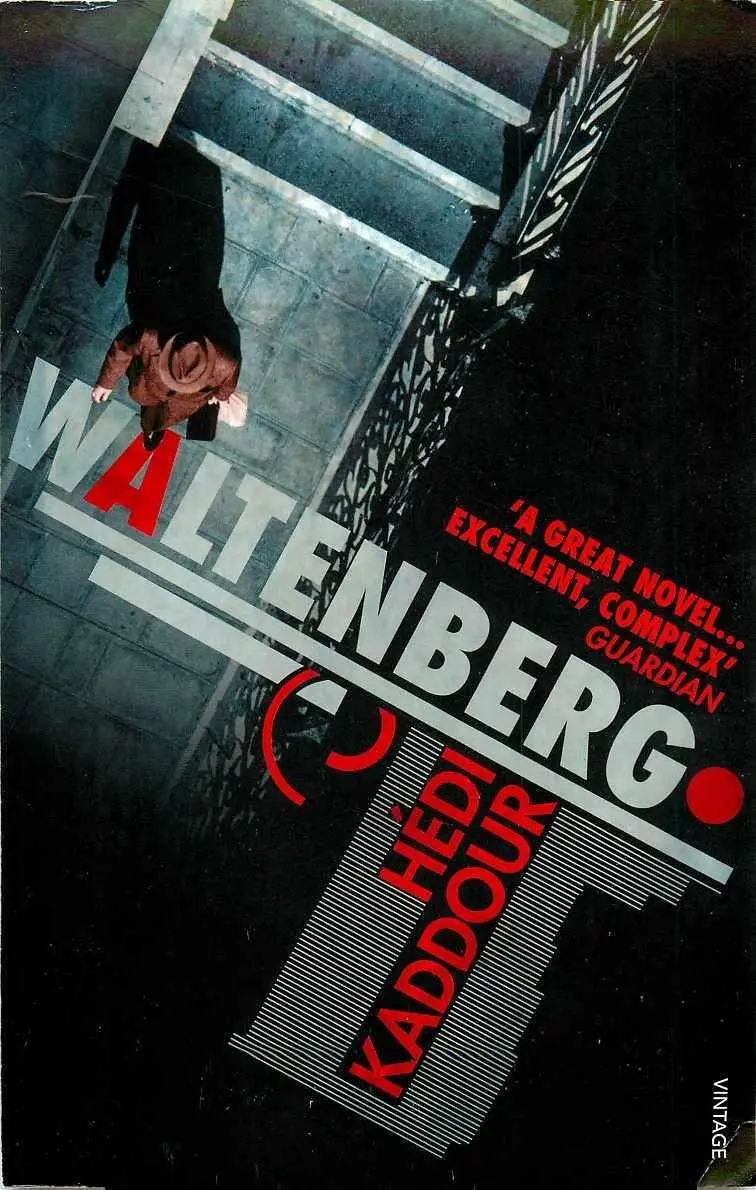
- Название:Waltenberg
- Автор:
- Издательство:Vintage
- Жанр:
- Год:2009
- ISBN:нет данных
- Рейтинг книги:3 / 5. Голосов: 1
-
Избранное:Добавить в избранное
- Отзывы:
-
Ваша оценка:
Waltenberg: краткое содержание, описание и аннотация
Предлагаем к чтению аннотацию, описание, краткое содержание или предисловие (зависит от того, что написал сам автор книги «Waltenberg»). Если вы не нашли необходимую информацию о книге — напишите в комментариях, мы постараемся отыскать её.
Waltenberg
Waltenberg — читать онлайн бесплатно полную книгу (весь текст) целиком
Ниже представлен текст книги, разбитый по страницам. Система сохранения места последней прочитанной страницы, позволяет с удобством читать онлайн бесплатно книгу «Waltenberg», без необходимости каждый раз заново искать на чём Вы остановились. Поставьте закладку, и сможете в любой момент перейти на страницу, на которой закончили чтение.
Интервал:
Закладка:
‘He came up trumps, you know, always spoke up in your defence.’
In the late afternoon, de Vèze left the Quai d’Orsay, wanted a breath of air, felt like going at his own speed, he went out by the side door, thought he’d make a brief pilgrimage, walked by the plaque put up to the memory of the crew of the Quimper, a tank belonging to the 2nd Armoured Division, which the Germans had shot up on this spot during the Liberation, de Vèze had known the crew.
On the wall of the Ministry, old bullet holes had been left deliberately.
De Vèze walked on, turning right on to the left bank, along the tall iron railings of the Palace, the monument to Aristide Briand, very kitsch, the bronze bas-relief, Briand receives a procession of grateful women, the women vertical, very straight dresses, hair gathered into plaits and the plaits pinned up like crowns on the top of their heads, one frieze dominates the rest: a ploughman, a shepherd, cattle, ears of corn, the France of 1932, a blacksmith is included though, but tucked away in a corner, the age when Poincaré expressed satisfaction that France had achieved a balance, with half her people in towns, an ideal to be perpetuated, unlike the Americans who were descending into decadence and industrial chaos, well spotted, 1932, a France already behind the times by thirty years and happy to be so.
On the sides of the bas-relief, in columns, a hotchpotch of contradictory quotations about peace and country, disarmament and defending the nation, all jumbled up, but absent are Briand’s most famous words, ‘Away with the cannon, away with the machine guns’, from his great speech in the League of Nations, it was the one their teacher had given them as a dictation, at Cluses, the great dream, and they’d had to learn the dream by heart. Didn’t quite square with the plaque, thinks de Vèze with a smile, but at least it’s got a certain something. He’d liked his teacher very much even if he’d only realised it much later. A fairly young man, a pacifist, who put on shorts to take them to the sports field, he taught them to walk in step in the street, football under one arm, because in the long run, it’s discipline, it’s team spirit!
De Vèze is fifty-five, but it’s only now that he notices that he is a fifty-year-old man, your sixth decade a woman friend pointed out to him, even if you’ve given up wearing braces you are a man of mature years, he’s not thinking straight, he looks down on the Seine, Paris, the water of the river, it has this green colour, it’s weary too, the light scatters sparkles on it when a gust of wind blows against the current, Vassilissa hasn’t written, de Vèze pauses uncertainly as he looks at the Seine, he invariably has a moment of uncertainty when he goes for a walk along the quais.
Shall it be the booksellers on the right? Or the quieter way to the left, towards Passy and the île aux Cygnes?
He has nothing to read at the moment, he has many books in his flat but not one he feels like opening before going to sleep, such as Capitaine Fracasse or The Count of Monte-Cristo, a ripping yarn, nothing depressing, or how about a biography? it would have to be well written, with some thought in it.
He opts for the booksellers and turns right along the quais in the direction of the National Assembly, he’s just received three invitations to dine with old wartime comrades but he’s not taken in, all he has left are memories, he’s like a stopped watch, which can make you do silly things.
He walks along the quais, another marble plaque on a parapet: it commemorates one of his best friends, Varin de La Brunnelière of the 1st Chad Foot, volunteered at eighteen, killed a hundred metres from the Place de la Concorde, gold letters on a white background, de Vèze reminds himself that he still has a few acquaintances hereabouts, on marble plaques, the same thought that occurred to his old friend Hatzfeld the day they walked up towards Belleville, Roland Hatzfeld, a communist, but not a card-carrier, or if he did have a card no one knew, a fellow-traveller as the expression went, a big lawyer with his feet under many tables, had chambers on the île Saint-Louis though he still lives in the same part of Belleville where there’s hardly a street where a Kherlakian or a Leibowitz wasn’t murdered by the Nazis.
During their walk, Hatzfeld had stopped several times at plaques, the old pals circuit he’d said, then they’d sat down together in an Algerian coffee shop, not big, with stools, and ordered baklavas, honey, ground almonds, real puff pastry, the proprietor had made a point of coming over to say hello to Hatzfeld.
‘The most important element is the puff pastry,’ said Hatzfeld, ‘it should retain its bite beneath the honey, crunchy but not hard, baklava keeps for two days maximum, after that you’ve been had, I trust them here, and they don’t use chickpeas or hazelnuts instead of almonds.’
With one hand Hatzfeld motioned to the streets outside along which they’d just walked:
‘You see, the Resistance was like Marxism: lots of Jews and dagos.’
‘Yes,’ said de Vèze, licking his fingers, ‘but there were aristocrats too, Boyer de La Tour, du Chastellar, and there was that man Robin de Margueritte who passed you your orders in 1944, they’ve got plaques too, down on the quais by the Seine.’
‘Much grander, but on German posters our lot were scum, and we were proud of it, we wouldn’t have changed places for a king’s ransom, even if there are high-minded people nowadays who accuse the Party of sending us out to get killed.’
‘I was sent out to be killed too, every day,’ said de Vèze, ‘they do say that’s what war’s all about.’
‘You have to have been through it,’ concluded Hatzfeld.
When they left the coffee shop, de Vèze laid his hand on his friend’s shoulder, he squeezed it as he walked along by his side. Hatzfeld is the sole surviving member of a family of sixteen. After a moment, de Vèze asked:
‘Your Algerian friend, is he in the Party?’
Hatzfeld, why not give Hatzfeld a ring, go back and eat more baklavas? De Vèze walks along the quais towards Notre-Dame, here are the first booksellers after the Place de la Concorde.
A short while ago, at the Quai d’Orsay, in the middle of all that handshaking, he’d been given a specific order, it came from the President, it had been passed on by the Minister: a month before going back to his posting, the President is only too happy about this, he thinks it will hang over the Soviets the threat of a recall of the French Ambassador, the fact is that Monsieur de Vèze is remaining in Paris, for talks, no, he hasn’t been recalled, not officially, but we do not know whether or not he might also take a spell of leave, you know, life in Moscow isn’t all that restful, yes, vital to maintain our great friendship but not, my dear fellow, at any price.
De Vèze walks along the quais and starts thinking about maybe a trip to Singapore, a short pilgrimage, a journey back to the sixties, to that evening in the villa, he wants to see it all again, why does he feel this so strongly? A colonial black-and-white villa bought from the English which was used as an annexe for the French consulate, the gleaming black of dominos on the façade basking in late afternoon sunshine bouncing the white back at the tropical green of the garden, the admirable pitch of the red-tiled roof and the huge living room displaying its collection of mahogany furniture to the plants in the garden, with a veranda where the table has already been set, white tablecloth, Sarreguemines plates, blue pattern; above the table there is a delicate chandelier, when lit it casts an indulgent glow over people’s faces.
What de Vèze remembers particularly is the surprise he’d felt that evening, in 1965, he’d come specially from his posting at Rangoon, he’d travelled to Singapore specifically to say hello to a man he had always admired.
Читать дальшеИнтервал:
Закладка:
Похожие книги на «Waltenberg»
Представляем Вашему вниманию похожие книги на «Waltenberg» списком для выбора. Мы отобрали схожую по названию и смыслу литературу в надежде предоставить читателям больше вариантов отыскать новые, интересные, ещё непрочитанные произведения.









Обсуждение, отзывы о книге «Waltenberg» и просто собственные мнения читателей. Оставьте ваши комментарии, напишите, что Вы думаете о произведении, его смысле или главных героях. Укажите что конкретно понравилось, а что нет, и почему Вы так считаете.