Hedi Kaddour - Waltenberg
Здесь есть возможность читать онлайн «Hedi Kaddour - Waltenberg» весь текст электронной книги совершенно бесплатно (целиком полную версию без сокращений). В некоторых случаях можно слушать аудио, скачать через торрент в формате fb2 и присутствует краткое содержание. Год выпуска: 2009, Издательство: Vintage, Жанр: Современная проза, на английском языке. Описание произведения, (предисловие) а так же отзывы посетителей доступны на портале библиотеки ЛибКат.
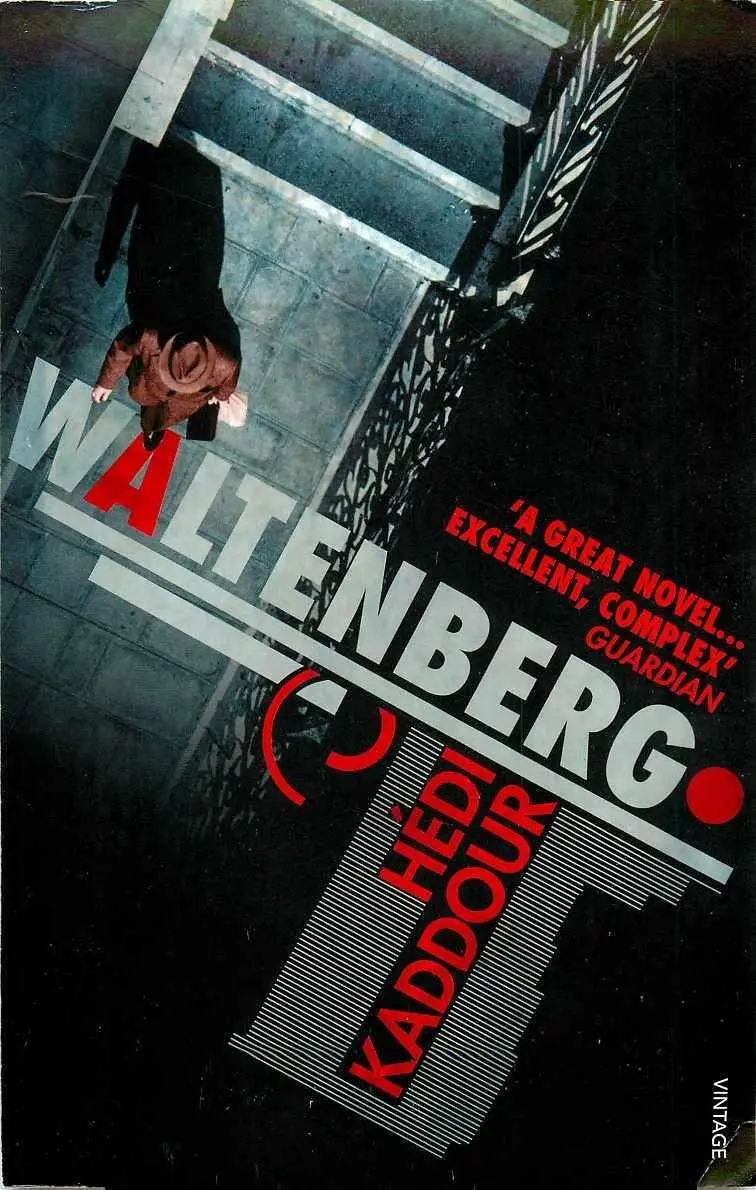
- Название:Waltenberg
- Автор:
- Издательство:Vintage
- Жанр:
- Год:2009
- ISBN:нет данных
- Рейтинг книги:3 / 5. Голосов: 1
-
Избранное:Добавить в избранное
- Отзывы:
-
Ваша оценка:
Waltenberg: краткое содержание, описание и аннотация
Предлагаем к чтению аннотацию, описание, краткое содержание или предисловие (зависит от того, что написал сам автор книги «Waltenberg»). Если вы не нашли необходимую информацию о книге — напишите в комментариях, мы постараемся отыскать её.
Waltenberg
Waltenberg — читать онлайн бесплатно полную книгу (весь текст) целиком
Ниже представлен текст книги, разбитый по страницам. Система сохранения места последней прочитанной страницы, позволяет с удобством читать онлайн бесплатно книгу «Waltenberg», без необходимости каждый раз заново искать на чём Вы остановились. Поставьте закладку, и сможете в любой момент перейти на страницу, на которой закончили чтение.
Интервал:
Закладка:
‘Not invariably,’ Briand says again, ‘Max here is a demagogue, Max is always trying to please the ladies and casts them as reconcilers, but he’s wrong.’
Briand has a fine voice, full, he uses it the way singers do, he places the sound of his voice in front of his face, with chiaroscuro effects, and as you listen you forget everything else, women are not always on the side of reconciliation, it’s not just a question of dalliance, I could, adds Briand, tell you stories about musical Maenads whose way with a suitor could hardly be described as dalliance, but we’ll let that lie, I’m thinking particularly about politics, always about politics, where women can be the real cause of disasters, smile from Briand at the Baroness who is wondering where President Briand is going with this, she knows that he is her friend, she also knows that he’ll do anything for a witty remark.
Max has set Briand off, he wouldn’t like to be in the Baroness’s shoes, she needs Briand, she smiles back at Briand to show him that everyone’s listening, and in part of her smile there is also the idea that eating salad with Burgundy is something that’s simply not done, at least in the manuals written for young wives, but it’s all right if you’re someone like Briand, always assuming that you do it in the presence of someone like the Baroness who has seen it all before, the idea of getting Merken and Briand together over a cup of tea isn’t terribly attractive, Briand’s Anglophilia.
‘I’m quite serious,’ says Briand, ‘women and disaster, I’m speaking of the past, of History, Joan of Arc, for instance.’
Silence, even Max says nothing, Madame de Valréas ventures with a thin, rather forced smile:
‘It’s a good few years since I’ve been anything like Joan of Arc.’
But Briand, in his full-bottomed voice, launches forth, in tragic vein:
‘Joan should have stayed in her field counting her sheep and spinning their wool, instead of behaving like an amazon! There would have been excellent Plantagenet marriages, a Franco-English kingdom which would have been invincible and would have maintained the peace in Europe for many centuries, ah! the monstrous regiment of virgins!’
Briand turns to Madame de Valréas pointing his fork at Max:
‘As for the salad, you should know that I’m not a barbarian, the dressing was made in the kitchen by my favourite gourmet, it’s a Goffard dressing, that’s how it shall be known from this day forth, Max perfected it last winter, a salad dressing designed to go with red wine: olive oil, hazel-nut oil, a home-made vinegar derived from a very good wine, sea salt, mild pepper, Strasbourg mustard with herbs, a sliver of Emmenthal, and an artichoke heart.’
‘A quarter of an artichoke heart,’ says Max.
‘All right, a quarter!’
Briand holds up a lettuce leaf and a small piece of camembert on the end of his fork, and let us not forget the yolk of an egg, a thick but creamy dressing, brings out the flavour of the lettuce, he turns his fork round and round before his eyes, it discreetly enhances the cheese, with his left hand he raises his wineglass, and with the wine it is unassertive, an accompaniment, Max, once more I take my hat off to you!
Behind Briand, at another table, a small one, in a corner, two men engrossed in their plates, they speak without even looking at each other, Maynes looks at them, says to Max: do you know them?
‘The tall one, yes,’ says Max, ‘he’s called Münzenberg, Willi to his friends, and they form a large constituency, he’s everywhere, Paris, Berlin, London, I’m surprised you don’t know him, he’s the sort of man who in forty-eight hours could find you a couple of thousand bodies and by no means of the humblest class to fill a cinema or a music-hall provided that it was in the anti-fascist cause or to defend Bolshevik Russia.’
‘A Moscow agent?’
‘It’s more elegant than that, he’s a volunteer, enrols in great causes, an artist, he is capable of creating a first-rate newspaper in forty-eight hours, or of financing a film, he doesn’t mince his words, says he doesn’t understand what’s going on right now among the Soviets, I don’t know the man with him.’
Münzenberg glances up, looks across at Max and Maynes, Max gives him a little wave.
The man sitting opposite Münzenberg says this Seminar bores me, Willi, you’re right comrade Vaïno, these capitalists and their guard dogs are boring, but there are two or three young people here who should be of interest to you, especially one of them, very committed, he wants a revolution, he’s very cultured, he’s older than he looks, in two, three years he’ll be absolutely ready, he’s more or less ready now, just a small Trotskyite tendency but I think that could easily be taken care of, I have every confidence in you, you’ll find a way of getting him to denounce two or three saboteurs, there’s also a girl, a philosopher, but I think she is less committed, she’s the daughter of Baroness de Valréas, our fascist Baroness, not a hundred per cent fascist nowadays, I’ve heard her say better the Reds than America, could be useful to us, the international movement is going to need people like that, the girl has a very logical mind, she lives under Merken’s roof, he’s the favourite philosopher of the ultra-conservatives, but she should be coming back to Paris one of these days, she doesn’t like the old world, take it from me, these young people have great futures, the young man is called Lilstein, anyway, I leave you to judge, you’ll be the one who decides, I mean the appropriate authorities.
The man who answers to the first name of Vaïno is less than keen on this mention of the appropriate authorities but he says nothing to Münzenberg, Münzenberg is very good at getting things moving, he does much good work in the struggle against fascism, and Vaïno Vaatinen fully acknowledges his worth, he finds him a little casual at times, Münzenberg has told him that this is necessary for his work, but if Münzenberg is allowed to remain for too long so far from Moscow, in Paris or London, he’ll deteriorate, he should be called back more often, you realise we’re being watched? Yes, says Münzenberg, it’s the Frenchman, the journalist who’s sitting next to Maynes, steer clear of him, I nearly forgot, adds Münzenberg, there’s another very interesting young man, a physicist, a disciple of Nils Bohr, he was born in Prussia but lives in France, his mother is a dressmaker, his father is a mechanic, he’s young, has no ideology, but he has the right class reflexes, his name’s Tellheim, I saw him turn pale when Neuville explained the experiment with the two working-girls, when he was explaining his model of the scientific organisation of work, he has the gall to call it scientific, the young physicist could have strangled him.
Neuville on his couch, the circle of admirers around him, elegant exposition delivered in a slow voice, the omniscience of the rich, two working-girls, seated side by side, in front of them two heaps of pens and two display cabinets, the young man is sickened by Neuville who talks about them as though they were guinea-pigs, they put the pens vertically in the slots in the cabinet, one of them picks up a dozen pens in her left hand and inserts them one at a time with her right hand, when no pens remain in her left hand she takes another dozen and continues to insert them with her right hand and so forth, there are fifty slots in the cabinet, when she is two-thirds of the way through her task the other girl has already finished and is resting, hands on knees, she hasn’t worked any faster, but though following the same rhythm she has not inserted the pens in the same way, she also picked up her pens from the pile one by one, but using both hands together, her two hands doing the same thing at the same time, moving directly from the pile to the cabinet without an interval between, rationalise, you see she has time to rest, she previously worked in textiles, she made dresses by machine, the kind you work with your legs, with your feet on a treadle which rocks and engages the pulleys, which make the needle move, apparently this movement of the lower limbs gave the girls ideas, so bromide was added to their food in the canteen, nobody asked them.
Читать дальшеИнтервал:
Закладка:
Похожие книги на «Waltenberg»
Представляем Вашему вниманию похожие книги на «Waltenberg» списком для выбора. Мы отобрали схожую по названию и смыслу литературу в надежде предоставить читателям больше вариантов отыскать новые, интересные, ещё непрочитанные произведения.












Обсуждение, отзывы о книге «Waltenberg» и просто собственные мнения читателей. Оставьте ваши комментарии, напишите, что Вы думаете о произведении, его смысле или главных героях. Укажите что конкретно понравилось, а что нет, и почему Вы так считаете.