Hedi Kaddour - Waltenberg
Здесь есть возможность читать онлайн «Hedi Kaddour - Waltenberg» весь текст электронной книги совершенно бесплатно (целиком полную версию без сокращений). В некоторых случаях можно слушать аудио, скачать через торрент в формате fb2 и присутствует краткое содержание. Год выпуска: 2009, Издательство: Vintage, Жанр: Современная проза, на английском языке. Описание произведения, (предисловие) а так же отзывы посетителей доступны на портале библиотеки ЛибКат.
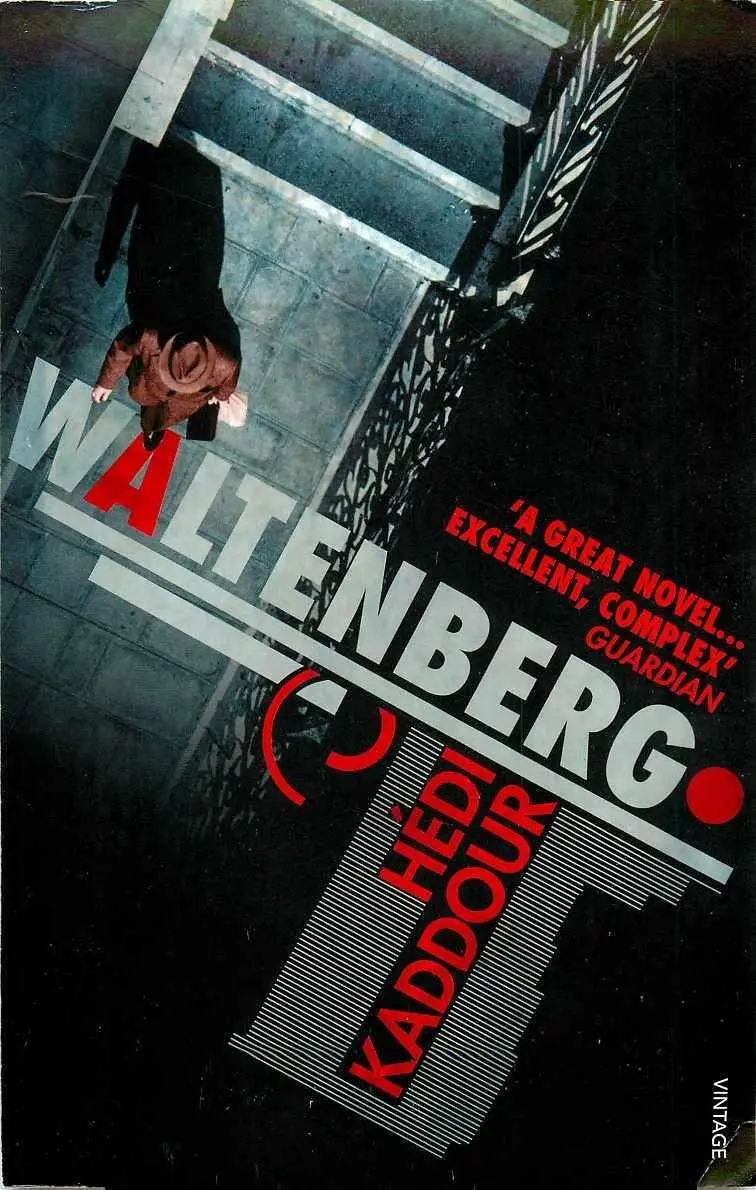
- Название:Waltenberg
- Автор:
- Издательство:Vintage
- Жанр:
- Год:2009
- ISBN:нет данных
- Рейтинг книги:3 / 5. Голосов: 1
-
Избранное:Добавить в избранное
- Отзывы:
-
Ваша оценка:
Waltenberg: краткое содержание, описание и аннотация
Предлагаем к чтению аннотацию, описание, краткое содержание или предисловие (зависит от того, что написал сам автор книги «Waltenberg»). Если вы не нашли необходимую информацию о книге — напишите в комментариях, мы постараемся отыскать её.
Waltenberg
Waltenberg — читать онлайн бесплатно полную книгу (весь текст) целиком
Ниже представлен текст книги, разбитый по страницам. Система сохранения места последней прочитанной страницы, позволяет с удобством читать онлайн бесплатно книгу «Waltenberg», без необходимости каждый раз заново искать на чём Вы остановились. Поставьте закладку, и сможете в любой момент перейти на страницу, на которой закончили чтение.
Интервал:
Закладка:
‘It is truly a symptom, a symptom of moral relativism, the rationalist cowardice in which Europe has been mired since the eighteenth century, the generalised relativisation of values against which Max does not flinch under the Pole’s scrutiny and interrupts using his grandest manner:
‘I am not at all surprised that you do not care for the boastful sheep, since your country is entirely governed by…’
‘Please, gentlemen, this is a friendly gathering,’ sighs Madame de Valréas.
She takes them both by the hand.
The Pole smiles, kisses the hand of the Baroness, this man Max is exactly what I was told he would be like, he’s been ordered to undermine the reputation of our newly regenerated Poland, he loses his temper the moment anyone denounces moral relativism, he is a Franco-Bolshevik agent, a godless spy, who scoffs at all values, Max smiles at Madame de Valréas, the Baroness places Max’s hand in the hand of the Pole, she is happy, people tell her amusing stories, there is a clash of ideas but people shake hands, this is the greatest week of her life, she is surrounded by French, Germans, Italians, English, Luxembourgers, Poles, two Scots in kilts, socialists, almost every nationality in Europe, pacifists, a general, agrarians, free-marketeers, federalists and nationalists, a Buddhist, suffragettes, Christians, Marxists, colonialists and conservatives, adolescents and emancipators, dignified matrons, Luddites, a physicist, economists and steel-men, there are no communists in the strict sense but some intellectuals here agree with what is happening in Moscow, and Madame de Valréas herself invited them, must get them to speak, must know what’s going on in Moscow, otherwise their revolution will come here and put the wind up our body politic.
There aren’t any Nazis either, because as a party they are discredited, marginalised, with just twelve per cent of the vote they are less and less of a force in the political life of a Weimar Republic which now, early in 1929, is back on the road to recovery, Madame de Valréas goes out of her way to give star treatment to certain participants, Neuville, of course, but not forgetting Wolkenhove, Kurt Wolkenhove, born in Japan, brought up in Bohemia and Vienna, he heads a movement which he has simply called Europa, it’s the biggest idea of the century, to build Europe, Aristide Briand chairs the French committee of Europa.
Wolkenhove is a friend of Madame de Valréas, for some months now she has been trying to bring him closer to her industrialist friends, my dear Kurt, ideas are all very well but you must be able to base them on tangible ground, if you succeed in convincing people from the iron and steel cartel and their bankers, then the future of our European movement is guaranteed, Madame de Valréas is also very fond of Hans, he has one passion, to reconcile France and Germany, one day he declared ‘we were all born in France’, he has thanked Madame de Valréas publicly, with your invaluable help European thought is about to give a tangible form to the teachings of Kant, you’ll have to go careful with Hans, don’t talk to him about the iron and steel cartel, Hans thinks in terms of the destiny of peoples, he might not go along with us, even so he must be made to agree to serve as chairman of the Committee for the United States of Europe which is to be set up at the end of the Seminar, he’s so inconsistent, so difficult.
Hans found Elisabeth Stirnweiss very likeable, he’d never seen her before, young, chubby, fair-haired, turned-up nose, she was in the middle of a rehearsal but she gave Hans and the Baroness the warmest of welcomes.
‘May I introduce Werner, my accompanist, he is also my husband, my producer, my manager and my teacher, we never agree about anything, we were about to have an argument, he always says I sing with too much feeling, he would like me to sing in public the way I do when we rehearse, but singing is life, it’s supposed to express something, even tears, but if I do tears he says he can hear rain in my voice, I think that’s hateful, yes, I’m more mezzo than soprano, it’s quite a recent thing, you never know what’s going on with a voice.’
Hans congratulated Elisabeth Stirnweiss, her husband found Hans very intimidating, he used the Baroness’s departure as an excuse to stretch his legs, actually he’s going out to smoke a cigar, says Elisabeth Stirnweiss, I don’t let him smoke when we’re working, he can’t abide it, but I can’t abide his tobacco even more, so whoever can’t abide the most wins, I’m one of your admirers, says she, and I am fast becoming one of your admirers, says he, Hans isn’t thinking too clearly about what he’s saying, in his view not enough thought has been put into what Elisabeth Stirnweiss does, but nonetheless he tells the young woman that he is fast becoming one of her admirers, it’s relaxing to pay an artist compliments, and too bad if you end up believing that you mean them.
‘So everything is all right,’ says Elisabeth Stirnweiss, there are red blotches on her neck and shoulders, ‘let’s talk about cheerful things.’
Thus Hans was able to listen in on a whole afternoon’s rehearsal in Elisabeth Stirnweiss’s suite, she sings without asking herself questions, Hans finds that relaxing, she has a body of full, soft curves, when she breathes, you might almost think she is offering herself.
That evening they met again around the table of Madame de Valréas, along with Briand in the place of honour, Max, the Mayneses, Madame de Valréas’s daughter, her name is Frédérique, by means of some slick footwork she has managed to sit next to Hans, Madame de Valréas is on Briand’s left, Briand looks across at another table, the second from the end, just next to the large papyrus plant, Madame de Valréas says to him:
‘Keeping an eye on Professor Merken? I must invite you to tea with him, there’s a gulf between you, I want to bridge that gulf.’
Hans is sitting on Madame de Valréas’s left, Max and Maynes are directly opposite, Briand having glanced across at Merken now launches into a eulogy of Great Britain, he revels in provoking his hostess, he speaks nostalgically of what might have been, Max knows Briand like the back of his hand, he waits for the cheese and the salad, for the wines to be changed, a 1911 Burgundy, Briand looks at the label, relaxes, selects a goat and a little of a camembert that is not too ripe, Max delivers a eulogy of Madame de Valréas, I’m sure that you’ll be able to bring the Chairman and the Professor together, women are invariably on the side of reconciliation and unity, Madame de Valréas summons a modest blush, Briand snaps:
‘Not invariably, not invariably.’
Smiles, Briand helps himself to the lion’s share of the salad, tastes it, raises his glass to his lips.
More smiles, putting salad in a mouth with a 1911 Burgundy, the man’s a boor, no, Baroness, women are not invariably on the side of reconciliation, and I’m not thinking only in terms of dalliance, which always goes hand in hand with opulence, his right hand moves through space and designates the whole table, Hans thinks that Briand has rather short arms, my dear Baroness, in fact she is a republican Baroness, she couldn’t care less about her title, especially when it’s Briand who uses it on her, but all the same there’s etiquette, silver knives and forks, they bear the Valréas crest, all brought here by the Baroness’s staff so that everything shall be as it ought, Briand sinks back in his chair, the more he ages the more like a hunchback he sometimes looks, but he does not slump, he’s a frump, his nails are clean but Max saw him in the lift ploughing them with a visiting card, Briand is happy to believe that the barony is now just a crest on a set of forks and that the Baroness doesn’t care for the idea, the important thing is that the title should be retained in conversation.
Читать дальшеИнтервал:
Закладка:
Похожие книги на «Waltenberg»
Представляем Вашему вниманию похожие книги на «Waltenberg» списком для выбора. Мы отобрали схожую по названию и смыслу литературу в надежде предоставить читателям больше вариантов отыскать новые, интересные, ещё непрочитанные произведения.






Обсуждение, отзывы о книге «Waltenberg» и просто собственные мнения читателей. Оставьте ваши комментарии, напишите, что Вы думаете о произведении, его смысле или главных героях. Укажите что конкретно понравилось, а что нет, и почему Вы так считаете.