Chimamanda Adichie - Americanah
Здесь есть возможность читать онлайн «Chimamanda Adichie - Americanah» весь текст электронной книги совершенно бесплатно (целиком полную версию без сокращений). В некоторых случаях можно слушать аудио, скачать через торрент в формате fb2 и присутствует краткое содержание. Год выпуска: 2013, Издательство: Knopf, Жанр: Современная проза, на английском языке. Описание произведения, (предисловие) а так же отзывы посетителей доступны на портале библиотеки ЛибКат.
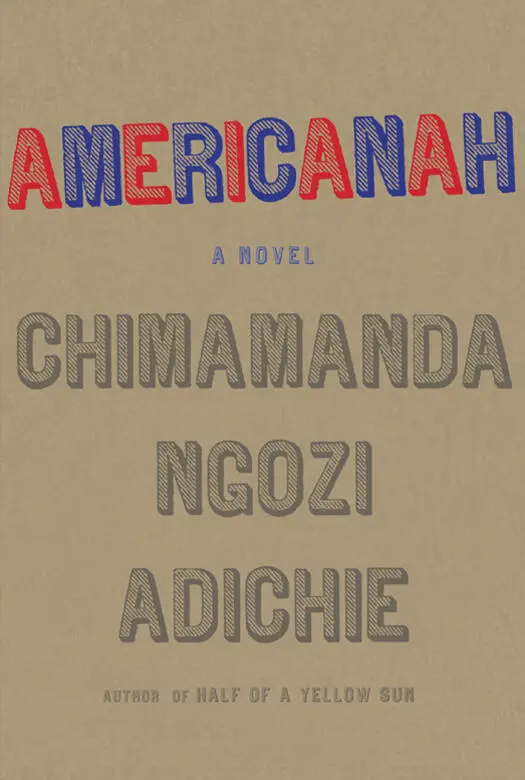
- Название:Americanah
- Автор:
- Издательство:Knopf
- Жанр:
- Год:2013
- ISBN:нет данных
- Рейтинг книги:4 / 5. Голосов: 1
-
Избранное:Добавить в избранное
- Отзывы:
-
Ваша оценка:
Americanah: краткое содержание, описание и аннотация
Предлагаем к чтению аннотацию, описание, краткое содержание или предисловие (зависит от того, что написал сам автор книги «Americanah»). Если вы не нашли необходимую информацию о книге — напишите в комментариях, мы постараемся отыскать её.
, a dazzling new novel: a story of love and race centered around a young man and woman from Nigeria who face difficult choices and challenges in the countries they come to call home.
As teenagers in a Lagos secondary school, Ifemelu and Obinze fall in love. Their Nigeria is under military dictatorship, and people are leaving the country if they can. Ifemelu — beautiful, self-assured — departs for America to study. She suffers defeats and triumphs, finds and loses relationships and friendships, all the while feeling the weight of something she never thought of back home: race. Obinze — the quiet, thoughtful son of a professor — had hoped to join her, but post-9/11 America will not let him in, and he plunges into a dangerous, undocumented life in London.
Years later, Obinze is a wealthy man in a newly democratic Nigeria, while Ifemelu has achieved success as a writer of an eye-opening blog about race in America. But when Ifemelu returns to Nigeria, and she and Obinze reignite their shared passion — for their homeland and for each other — they will face the toughest decisions of their lives.
Fearless, gripping, at once darkly funny and tender, spanning three continents and numerous lives,
is a richly told story set in today’s globalized world: Chimamanda Ngozi Adichie’s most powerful and astonishing novel yet.
Americanah — читать онлайн бесплатно полную книгу (весь текст) целиком
Ниже представлен текст книги, разбитый по страницам. Система сохранения места последней прочитанной страницы, позволяет с удобством читать онлайн бесплатно книгу «Americanah», без необходимости каждый раз заново искать на чём Вы остановились. Поставьте закладку, и сможете в любой момент перейти на страницу, на которой закончили чтение.
Интервал:
Закладка:
“Vincent, ahn-ahn. How much am I making? You know I am saving money to do this marriage thing.”
“Forty-five percent,” Vincent said, and hung up.
Obinze decided to ignore him. He knew Vincent’s type; they would push to see how far they could go and then they would step back. If he called and tried to negotiate, it might embolden Vincent to make more demands. That he walked in every week to Vincent’s bank to deposit money into his account was something Vincent would not risk losing entirely. And so when, a week later, in the morning bustle of drivers and trucks, Roy said, “Vinny Boy, step into my office for a minute,” Obinze thought nothing of it. On Roy’s desk was a newspaper, folded at the page with the photo of the big-breasted woman. Roy slowly put his cup of coffee on top of the newspaper. He seemed uncomfortable, not looking directly at Obinze.
“Somebody called yesterday. Said you’re not who you say you are, that you’re illegal and working with a Brit’s name.” There was a pause. Obinze was stung with surprise. Roy picked up the coffee cup again. “Why don’t you just bring in your passport tomorrow and we’ll clear it up, all right?”
Obinze mumbled the first words that came to him. “Okay. I’ll bring my passport tomorrow.” He walked out of the office knowing that he would never remember what he had felt moments ago. Was Roy merely asking him to bring his passport to make the dismissal easier for him, to give him an exit, or did Roy really believe that the caller had been wrong? Why would anybody call about such a thing unless it was true? Obinze had never made as much of an effort as he did the rest of the day to seem normal, to tame the rage that was engulfing him. It was not the thought of the power that Vincent had over him that infuriated him, but the recklessness with which Vincent had exercised it. He left the warehouse that evening, for the final time, wishing more than anything that he had told Nigel and Roy his real name.
Some years later in Lagos, after Chief told him to find a white man whom he could present as his General Manager, Obinze called Nigel. His mobile number had not changed.
“This is Vinny Boy.”
“Vincent! Are you all right, mate?”
“I’m fine, how are you?” Obinze said. Then, later, he said, “Vincent is not my real name, Nigel. My name is Obinze. I have a job offer for you in Nigeria.”
CHAPTER 29
The Angolans told him how things had “gone up,” or were more “tough,” opaque words that were supposed to explain each new request for more money.
“This is not what we agreed to,” Obinze would say, or “I don’t have any extra cash right now,” and they would reply, “Things have gone up, yeah,” in a tone that he imagined was accompanied by a shrug. A silence would follow, a wordlessness over the phone line that told him that it was his problem, not theirs. “I’ll pay it in by Friday,” he would say finally, before hanging up.
Cleotilde’s gentle sympathy assuaged him. She told him, “They’ve got my passport,” and he thought this vaguely sinister, almost a hostage holding.
“Otherwise we could just do this on our own,” she added. But he did not want to do it on his own, with Cleotilde. It was too important and he needed the weight of the Angolans’ expertise, their experience, to make sure all went well. Nicholas had already lent him some money, he had been loath enough to ask at all, because of the judgment in Nicholas’s unsmiling eyes, as though he was thinking that Obinze was soft, spoiled, and many people did not have a cousin who could lend them money. Emenike was the only other person he could ask. The last time they spoke, Emenike had told him, “I don’t know if you’ve seen this play in the West End, but Georgina and I have just been and we loved it,” as though Obinze, in his delivery job, saving austerely, consumed by immigration worries, would ever even think of seeing a West End play. Emenike’s obliviousness had upset him, because it suggested a disregard, and, even worse, an indifference to him, and to his present life. He called Emenike and said, speaking quickly, pushing the words out, that he needed five hundred pounds, which he would pay back as soon as he could find another job, and then, more slowly, he told Emenike about the Angolans, and how close he was to finally doing the marriage ceremony, but there were so many extra costs that he had not budgeted for.
“No problem. Let’s meet Friday,” Emenike said.
Now, Emenike sat across from Obinze in a dimly lit restaurant, after shrugging off his jacket to reveal a tan cashmere sweater that looked faultless. He had not put on weight like most of his other friends now living abroad, didn’t look different from the last time Obinze had seen him in Nsukka.
“Man, The Zed, you look well!” he said, his words aflame with dishonesty. Of course Obinze did not look well, shoulders hunched from stress, in clothes borrowed from his cousin. “Abeg, sorry I haven’t had time to see you. My work schedule is crazy and we’ve also been traveling a lot. I would have asked you to come and stay with us but it’s not a decision I can take alone. Georgina won’t understand. You know these oyinbo people don’t behave like us.” His lips moved, forming something that looked like a smirk. He was making fun of his wife, but Obinze knew, from the muted awe in his tone, that it was mockery colored by respect, mockery of what he believed, despite himself, to be inherently superior. Obinze remembered how Kayode had often said about Emenike in secondary school: He can read all the books he wants but the bush is still in his blood.
“We’ve just come back from America. Man, you need to go to America. No other country like it in the world. We flew to Denver and then drove to Wyoming. Georgina had just finished a really tough case, you remember I told you when I was going to Hong Kong? She was there for work and I flew over for a long weekend. So I thought we should go to America, she needed the holiday.” Emenike’s phone beeped. He took it out of his pocket, glanced at it and grimaced, as though he wanted to be asked what the text was about, but Obinze did not ask. He was tired; Iloba had given him his own National Insurance card, even though it was risky for both of them to work at the same time, but all the job agencies Obinze had tried so far wanted to see a passport and not just the card. His beer tasted flat, and he wished Emenike would just give him the money. But Emenike resumed talking, gesturing, his movements fluid and sure, his manner still that of a person convinced they knew things that other people would never know. And yet there was something different in him that Obinze could not name. Emenike talked for a long time, often prefacing a story with “The thing you have to understand about this country is this.” Obinze’s mind strayed to Cleotilde. The Angolans said at least two people from her side had to come to Newcastle, to avoid any suspicion, but she had called him yesterday to suggest that she bring only one friend, so he would not have to pay for the train and hotel bills of two extra people. He had found it sweet, but he asked her to bring the two anyway; he would take no chances.
Emenike was talking about something that had happened at work. “I had actually arrived at the meeting first, kept my files, and then I went to the loo, only to come back and for this stupid oyinbo man to tell me, Oh, I see you are keeping to African time. And you know what? I just told him off. Since then he has been sending me e-mails to go for a drink. Drink for what?” Emenike sipped his beer. It was his third and he had become looser and louder. All his stories about work had the same arc: somebody would first underestimate or belittle him, and he would then end up victorious, with the final clever word or action.
Читать дальшеИнтервал:
Закладка:
Похожие книги на «Americanah»
Представляем Вашему вниманию похожие книги на «Americanah» списком для выбора. Мы отобрали схожую по названию и смыслу литературу в надежде предоставить читателям больше вариантов отыскать новые, интересные, ещё непрочитанные произведения.








Обсуждение, отзывы о книге «Americanah» и просто собственные мнения читателей. Оставьте ваши комментарии, напишите, что Вы думаете о произведении, его смысле или главных героях. Укажите что конкретно понравилось, а что нет, и почему Вы так считаете.