Chimamanda Adichie - Americanah
Здесь есть возможность читать онлайн «Chimamanda Adichie - Americanah» весь текст электронной книги совершенно бесплатно (целиком полную версию без сокращений). В некоторых случаях можно слушать аудио, скачать через торрент в формате fb2 и присутствует краткое содержание. Год выпуска: 2013, Издательство: Knopf, Жанр: Современная проза, на английском языке. Описание произведения, (предисловие) а так же отзывы посетителей доступны на портале библиотеки ЛибКат.
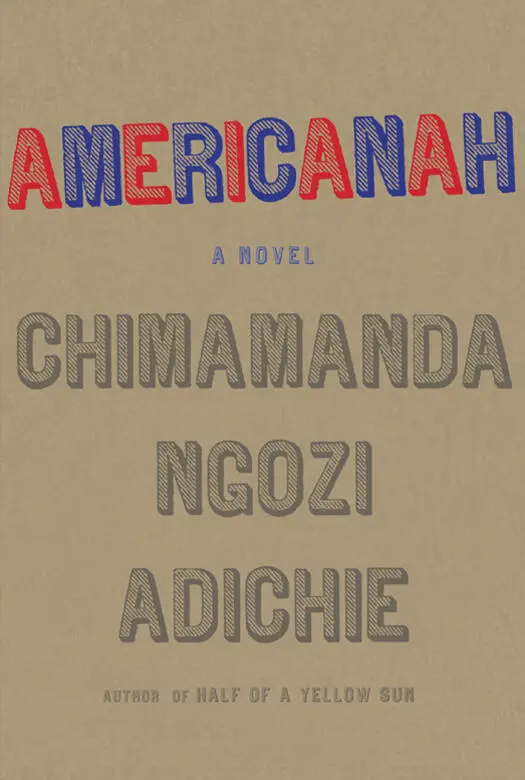
- Название:Americanah
- Автор:
- Издательство:Knopf
- Жанр:
- Год:2013
- ISBN:нет данных
- Рейтинг книги:4 / 5. Голосов: 1
-
Избранное:Добавить в избранное
- Отзывы:
-
Ваша оценка:
Americanah: краткое содержание, описание и аннотация
Предлагаем к чтению аннотацию, описание, краткое содержание или предисловие (зависит от того, что написал сам автор книги «Americanah»). Если вы не нашли необходимую информацию о книге — напишите в комментариях, мы постараемся отыскать её.
, a dazzling new novel: a story of love and race centered around a young man and woman from Nigeria who face difficult choices and challenges in the countries they come to call home.
As teenagers in a Lagos secondary school, Ifemelu and Obinze fall in love. Their Nigeria is under military dictatorship, and people are leaving the country if they can. Ifemelu — beautiful, self-assured — departs for America to study. She suffers defeats and triumphs, finds and loses relationships and friendships, all the while feeling the weight of something she never thought of back home: race. Obinze — the quiet, thoughtful son of a professor — had hoped to join her, but post-9/11 America will not let him in, and he plunges into a dangerous, undocumented life in London.
Years later, Obinze is a wealthy man in a newly democratic Nigeria, while Ifemelu has achieved success as a writer of an eye-opening blog about race in America. But when Ifemelu returns to Nigeria, and she and Obinze reignite their shared passion — for their homeland and for each other — they will face the toughest decisions of their lives.
Fearless, gripping, at once darkly funny and tender, spanning three continents and numerous lives,
is a richly told story set in today’s globalized world: Chimamanda Ngozi Adichie’s most powerful and astonishing novel yet.
Americanah — читать онлайн бесплатно полную книгу (весь текст) целиком
Ниже представлен текст книги, разбитый по страницам. Система сохранения места последней прочитанной страницы, позволяет с удобством читать онлайн бесплатно книгу «Americanah», без необходимости каждый раз заново искать на чём Вы остановились. Поставьте закладку, и сможете в любой момент перейти на страницу, на которой закончили чтение.
Интервал:
Закладка:
“I miss Naija. It’s been so long but I just haven’t had the time to travel back home. Besides, Georgina would not survive a visit to Nigeria!” Emenike said, and laughed. He had cast home as the jungle and himself as interpreter of the jungle.
“Another beer?” Emenike asked.
Obinze shook his head. A man trying to get to the table behind them brushed Emenike’s jacket down from behind his chair.
“Ha, look at this man. He wants to ruin my Aquascutum. It was my last birthday present from Georgina,” Emenike said, hanging the jacket back behind his chair. Obinze did not know the brand but he knew from the stylish smirk on Emenike’s face that he was supposed to be impressed.
“Sure you don’t want another beer?” Emenike asked, looking around for the waitress. “She is ignoring me. Did you notice how rude she was earlier? These Eastern Europeans just don’t like serving black people.”
After the waitress had taken his order, Emenike brought out an envelope from his pocket. “Here it is, man. I know you asked for five hundred but it’s one thousand. You want to count it?”
Count it? Obinze nearly said, but the words did not leave his mouth. To be given money in the Nigerian manner was to have it pushed into your hands, fists closed, eyes averted from yours, your effusive thanks — and it had to be effusive — waved away, and you certainly did not count the money, sometimes did not even look at it until you were alone. But here was Emenike asking him to count the money. And so he did, slowly, deliberately, moving each note from one hand to the other, wondering if Emenike had hated him all those years in secondary school and university. He had not laughed at Emenike as Kayode and the other boys did, but he had not defended Emenike either. Perhaps Emenike had despised his neutrality.
“Thanks, man,” Obinze said. Of course it was a thousand pounds. Did Emenike think a fifty-pound note might have slipped out on his way to the restaurant?
“It’s not a loan,” Emenike said, leaning back on his seat, smiling thinly.
“Thanks, man,” Obinze said again, and despite it all he was grateful and relieved. It had worried him, how many things he still had to pay for before the wedding, and if this was what it took, counting a cash gift while Emenike watched with power in his gaze, then so be it.
Emenike’s phone rang. “Georgina,” he said happily before he took the call. His voice was slightly raised, for Obinze’s benefit. “It’s fantastic to see him again after so long.” Then, after a pause, “Of course, darling, we should do that.”
He put his phone down and told Obinze, “Georgina wants to come and meet us in the next half hour so we can all go to dinner. Is that okay?”
Obinze shrugged. “I never say no to food.”
Just before Georgina arrived, Emenike told him, in a lowered tone, “Don’t mention this marriage thing to Georgina.”
He had imagined Georgina, from the way Emenike spoke of her, as a fragile innocent, a successful lawyer who nonetheless did not truly know the evils of the world, but when she arrived, square-faced with a big square body, brown hair crisply cut, giving her an air of efficiency, he could see right away that she was frank, knowing, even world-weary. He imagined her clients instantly trusting her ability. This was a woman who would check up on the finances of charities she gave to. This was a woman who could certainly survive a visit to Nigeria. Why had Emenike portrayed her as a hapless English rose? She pressed her lips to Emenike’s, then turned to shake Obinze’s hand.
“Do you fancy anything in particular?” she asked Obinze, unbuttoning her brown suede coat. “There’s a nice Indian place nearby.”
“Oh, that’s a bit tatty,” Emenike said. He had changed. His voice had taken on an unfamiliar modulation, his delivery slower, the temperature of his entire being much lower. “We could go to that new place in Kensington, it’s not that far.”
“I’m not sure Obinze will find it very interesting, darling,” Georgina said.
“Oh, I think he’ll like it,” Emenike said. Self-satisfaction, that was the difference in him. He was married to a British woman, lived in a British home, worked at a British job, traveled on a British passport, said “exercise” to refer to a mental rather than a physical activity. He had longed for this life, and never quite believed he would have it. Now his backbone was stiff with self-satisfaction. He was sated. In the restaurant in Kensington, a candle glowed on the table, and the blond waiter, who seemed too tall and handsome to be a waiter, served tiny bowls of what looked like green jelly.
“Our new lemon and thyme aperitif, with the compliments of the chef,” he said.
“Fantastic,” Emenike said, instantly sinking into one of the rituals of his new life: eyebrows furrowed, concentration sharp, sipping sparkling water and studying a restaurant menu. He and Georgina discussed the starters. The waiter was called to answer a question. It struck Obinze, how seriously Emenike took this initiation into the voodoo of fine dining, because when the waiter brought him what looked like three elegant bits of green weed, for which he would pay thirteen pounds, Emenike rubbed his palms together in delight. Obinze’s burger was served in four pieces, arranged in a large martini glass. When Georgina’s order arrived, a pile of red raw beef, an egg sunnily splayed on top of it, Obinze tried not to look at it as he ate, otherwise he might be tempted to vomit.
Emenike did most of the talking, telling Georgina about their time together at school, barely letting Obinze say anything. In the stories he told, he and Obinze were the popular rogues who always got into glamorous trouble. Obinze watched Georgina, only now becoming aware of how much older than Emenike she was. At least eight years. Her manly facial contours were softened by frequent brief smiles, but they were thoughtful smiles, the smiles of a natural skeptic, and he wondered how much she believed of Emenike’s stories, how much love had suspended her reason.
“We’re having a dinner party tomorow, Obinze,” Georgina said. “You must come.”
“Yes, I forgot to mention it,” Emenike said.
“You really must come. We’re having a few friends over and I think you’ll enjoy meeting them,” Georgina said.
“I would love to,” Obinze said.

THEIR TERRACED HOME in Islington, with its short flight of well-preserved steps that led to the green front door, smelled of roasting food when Obinze arrived. Emenike let him in. “The Zed! You’re early, we’re just finishing up in the kitchen. Come and stay in my study until the others come.” Emenike led him upstairs, and into the study, a clean, bright room made brighter by the white bookshelves and white curtains. The windows ate up large chunks of the walls, and Obinze imagined the room in the afternoon, flooded gloriously with light, and himself sunk in the armchair by the door, lost in a book.
“I’ll come and call you in a bit,” Emenike said.
There were, on a window ledge, photos of Emenike squinting in front of the Sistine Chapel, making a peace sign at the Acropolis, standing at the Colosseum, his shirt the same nutmeg color as the wall of the ruin. Obinze imagined him, dutiful and determined, visiting the places he was supposed to visit, thinking, as he did so, not of the things he was seeing but of the photos he would take of them and of the people who would see those photos. The people who would know that he had participated in these triumphs. On the bookshelf, Graham Greene caught his eye. He took The Heart of the Matter down and began to read the first chapter, suddenly nostalgic for his teenage years when his mother would reread it every few months.
Читать дальшеИнтервал:
Закладка:
Похожие книги на «Americanah»
Представляем Вашему вниманию похожие книги на «Americanah» списком для выбора. Мы отобрали схожую по названию и смыслу литературу в надежде предоставить читателям больше вариантов отыскать новые, интересные, ещё непрочитанные произведения.










Обсуждение, отзывы о книге «Americanah» и просто собственные мнения читателей. Оставьте ваши комментарии, напишите, что Вы думаете о произведении, его смысле или главных героях. Укажите что конкретно понравилось, а что нет, и почему Вы так считаете.