Chimamanda Adichie - Americanah
Здесь есть возможность читать онлайн «Chimamanda Adichie - Americanah» весь текст электронной книги совершенно бесплатно (целиком полную версию без сокращений). В некоторых случаях можно слушать аудио, скачать через торрент в формате fb2 и присутствует краткое содержание. Год выпуска: 2013, Издательство: Knopf, Жанр: Современная проза, на английском языке. Описание произведения, (предисловие) а так же отзывы посетителей доступны на портале библиотеки ЛибКат.
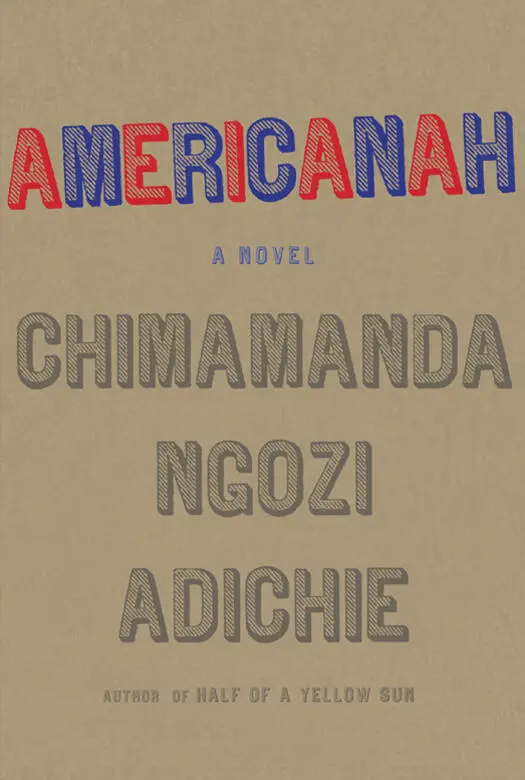
- Название:Americanah
- Автор:
- Издательство:Knopf
- Жанр:
- Год:2013
- ISBN:нет данных
- Рейтинг книги:4 / 5. Голосов: 1
-
Избранное:Добавить в избранное
- Отзывы:
-
Ваша оценка:
Americanah: краткое содержание, описание и аннотация
Предлагаем к чтению аннотацию, описание, краткое содержание или предисловие (зависит от того, что написал сам автор книги «Americanah»). Если вы не нашли необходимую информацию о книге — напишите в комментариях, мы постараемся отыскать её.
, a dazzling new novel: a story of love and race centered around a young man and woman from Nigeria who face difficult choices and challenges in the countries they come to call home.
As teenagers in a Lagos secondary school, Ifemelu and Obinze fall in love. Their Nigeria is under military dictatorship, and people are leaving the country if they can. Ifemelu — beautiful, self-assured — departs for America to study. She suffers defeats and triumphs, finds and loses relationships and friendships, all the while feeling the weight of something she never thought of back home: race. Obinze — the quiet, thoughtful son of a professor — had hoped to join her, but post-9/11 America will not let him in, and he plunges into a dangerous, undocumented life in London.
Years later, Obinze is a wealthy man in a newly democratic Nigeria, while Ifemelu has achieved success as a writer of an eye-opening blog about race in America. But when Ifemelu returns to Nigeria, and she and Obinze reignite their shared passion — for their homeland and for each other — they will face the toughest decisions of their lives.
Fearless, gripping, at once darkly funny and tender, spanning three continents and numerous lives,
is a richly told story set in today’s globalized world: Chimamanda Ngozi Adichie’s most powerful and astonishing novel yet.
Americanah — читать онлайн бесплатно полную книгу (весь текст) целиком
Ниже представлен текст книги, разбитый по страницам. Система сохранения места последней прочитанной страницы, позволяет с удобством читать онлайн бесплатно книгу «Americanah», без необходимости каждый раз заново искать на чём Вы остановились. Поставьте закладку, и сможете в любой момент перейти на страницу, на которой закончили чтение.
Интервал:
Закладка:

GINIKA WAS BUSY, working long hours at her internship and studying for her law school exams, but she called often to check up on Ifemelu’s job searching, and always with that upbeat voice, as though to urge Ifemelu towards hope. “This woman I did an internship with her charity, Kimberly, called me to say her babysitter is leaving and she’s looking. I told her about you and she’d like to meet you. If she hires you, she’ll pay cash under the table so you won’t have to use that fake name. When do you finish tomorrow? I can come and take you to her for an interview.”
“If I get this job, I will give you my first month’s salary,” Ifemelu said, and Ginika laughed.
Ginika parked in the circular driveway of a house that announced its wealth, the stone exterior solid and overbearing, four white pillars rising portentously at the entrance. Kimberly opened the front door. She was slim and straight, and raised both hands to push her thick golden hair away from her face, as though one hand could not possibly tame all that hair.
“How nice to meet you,” she said to Ifemelu, smiling, as they shook hands, her hand small, bony-fingered, fragile. In her gold sweater belted at an impossibly tiny waist, with her gold hair, in gold flats, she looked improbable, like sunlight.
“This is my sister Laura, who’s visiting. Well, we visit each other almost every day! Laura practically lives next door. The kids are in the Poconos until tomorrow, with my mother. I thought it would be best to do this when they’re not here anyway.”
“Hi,” Laura said. She was as thin and straight and blond as Kimberly. Ifemelu, describing them to Obinze, would say that Kimberly gave the impression of a tiny bird with fine bones, easily crushed, while Laura brought to mind a hawk, sharp-beaked and dark-minded.
“Hello, I’m Ifemelu.”
“What a beautiful name,” Kimberly said. “Does it mean anything? I love multicultural names because they have such wonderful meanings, from wonderful rich cultures.” Kimberly was smiling the kindly smile of people who thought “culture” the unfamiliar colorful reserve of colorful people, a word that always had to be qualified with “rich.” She would not think Norway had a “rich culture.”
“I don’t know what it means,” Ifemelu said, and sensed rather than saw a small amusement on Ginika’s face.
“Would you like some tea?” Kimberly asked, leading the way into a kitchen of shiny chrome and granite and affluent empty space. “We’re tea drinkers, but of course there are other choices.”
“Tea is great,” Ginika said.
“And you, Ifemelu?” Kimberly asked. “I know I’m mauling your name but it really is such a beautiful name. Really beautiful.”
“No, you said it properly. I’d like some water or orange juice, please.” Ifemelu would come to realize later that Kimberly used “beautiful” in a peculiar way. “I’m meeting my beautiful friend from graduate school,” Kimberly would say, or “We’re working with this beautiful woman on the inner-city project,” and always, the women she referred to would turn out to be quite ordinary-looking, but always black. One day, late that winter, when she was with Kimberly at the huge kitchen table, drinking tea and waiting for the children to be brought back from an outing with their grandmother, Kimberly said, “Oh, look at this beautiful woman,” and pointed at a plain model in a magazine whose only distinguishing feature was her very dark skin. “Isn’t she just stunning?”
“No, she isn’t.” Ifemelu paused. “You know, you can just say ‘black.’ Not every black person is beautiful.”
Kimberly was taken aback, something wordless spread on her face and then she smiled, and Ifemelu would think of it as the moment they became, truly, friends. But on that first day, she liked Kimberly, her breakable beauty, her purplish eyes full of the expression Obinze often used to describe the people he liked: obi ocha . A clean heart. Kimberly asked Ifemelu questions about her experience with children, listening carefully as though what she wanted to hear was what might be left unsaid.
“She doesn’t have CPR certification, Kim,” Laura said. She turned to Ifemelu. “Are you willing to take the course? It’s very important if you are going to have children in your care.”
“I’m willing to.”
“Ginika said you left Nigeria because college professors are always on strike there?” Kimberly asked.
“Yes.”
Laura nodded knowingly. “Horrible, what’s going on in African countries.”
“How are you finding the U.S. so far?” Kimberly asked.
Ifemelu told her about the vertigo she had felt the first time she went to the supermarket; in the cereal aisle, she had wanted to get corn flakes, which she was used to eating back home, but suddenly confronted by a hundred different cereal boxes, in a swirl of colors and images, she had fought dizziness. She told this story because she thought it was funny; it appealed harmlessly to the American ego.
Laura laughed. “I can see how you’d be dizzy!”
“Yes, we’re really about excess in this country,” Kimberly said. “I’m sure back home you ate a lot of wonderful organic food and vegetables, but you’re going to see it’s different here.”
“Kim, if she was eating all of this wonderful organic food in Nigeria, why would she come to the U.S.?” Laura asked. As children, Laura must have played the role of the big sister who exposed the stupidity of the little sister, always with kindness and good cheer, and preferably in the company of adult relatives.
“Well, even if they had very little food, I’m just saying it was probably all organic vegetables, none of the Frankenfood we have here,” Kimberly said. Ifemelu sensed, between them, the presence of spiky thorns floating in the air.
“You haven’t told her about television,” Laura said. She turned to Ifemelu. “Kim’s kids do supervised TV, only PBS. So if she hired you, you would need to be completely present and monitor what goes on, especially with Morgan.”
“Okay.”
“I don’t have a babysitter,” Laura said, her “I” glowing with righteous emphasis. “I’m a full-time, hands-on mom. I thought I would return to work when Athena turned two, but I just couldn’t bear to let her go. Kim is really hands-on, too, but she’s busy sometimes, she does wonderful work with her charity, and so I’m always worried about the babysitters. The last one, Martha, was wonderful, but we did wonder whether the one before her, what was her name again, let Morgan watch inappropriate shows. I don’t do any television at all with my daughter. I think there’s too much violence. I might let her do a few cartoons when she’s a little older.”
“But there’s violence in cartoons, too,” Ifemelu said.
Laura looked annoyed. “It’s cartoon. Kids are traumatized by the real thing.”
Ginika glanced at Ifemelu, a knitted-brow look that said: Just leave it alone. In primary school, Ifemelu had watched the firing squad that killed Lawrence Anini, fascinated by the mythologies around his armed robberies, how he wrote warning letters to newspapers, fed the poor with what he stole, turned himself into air when the police came. Her mother had said, “Go inside, this is not for children,” but halfheartedly, after Ifemelu had already seen most of the shooting anyway, Anini’s body roughly tied to a pole, jerking as the bullets hit him, before slumping against the criss-cross of rope. She thought about this now, how haunting and yet how ordinary it had seemed.
“Let me show you the house, Ifemelu,” Kimberly said. “Did I say it right?”
Читать дальшеИнтервал:
Закладка:
Похожие книги на «Americanah»
Представляем Вашему вниманию похожие книги на «Americanah» списком для выбора. Мы отобрали схожую по названию и смыслу литературу в надежде предоставить читателям больше вариантов отыскать новые, интересные, ещё непрочитанные произведения.








Обсуждение, отзывы о книге «Americanah» и просто собственные мнения читателей. Оставьте ваши комментарии, напишите, что Вы думаете о произведении, его смысле или главных героях. Укажите что конкретно понравилось, а что нет, и почему Вы так считаете.